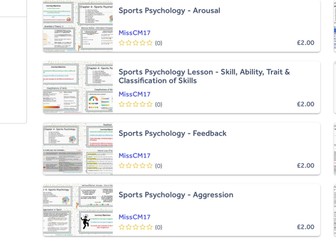
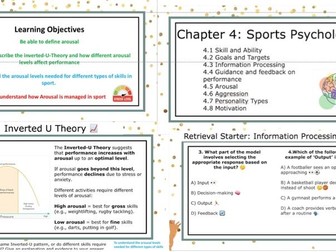
This resource helps students understand arousal in sports performance, focusing on how different arousal levels affect skill execution and overall performance. Students will explore the Inverted-U Theory, the effects of arousal on the body and mind, and the arousal levels required for different skills, with real-world sporting examples.
Through interactive tasks, sporting scenarios, and exam-style questions, students will apply their knowledge to practical situations, developing a deeper understanding of how athletes manage arousal for optimal performance.
The PowerPoint includes learning objectives, clear explanations, engaging visuals, retrieval quizzes, differentiated challenge tasks, and discussion activities to support learning and exam preparation.
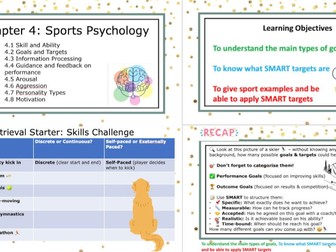
This resource helps students understand SMART targets and the difference between performance and outcome goals in sports. Students will learn to structure goals effectively using the SMART framework and categorise them into performance or outcome-based goals.
Through interactive tasks and sporting examples, they will apply this knowledge improving their goal-setting skills in sport and physical activity.
The powerpoint includes learning objectives and outcomes, group tasks, low-level retrieval quizes and stretch and challenge tasks.
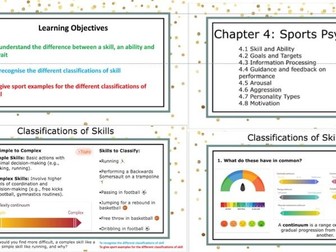
This resource helps students understand skill, ability, and trait in sports psychology, and how skills are classified based on various characteristics. Students will learn to classify skills into different types and apply this knowledge with sporting examples.
The powerpoint includes learning objectives and outcomes, group tasks, low-level retrieval quizes and stretch and challenge tasks.
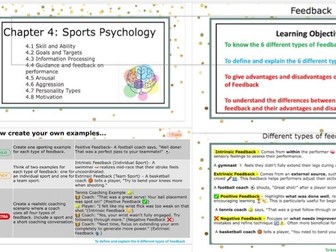
This resource helps students understand Feedback and Guidance in sports performance, focusing on how different types of feedback impact learning and skill development. Students will explore Intrinsic and Extrinsic Feedback, Positive and Negative Feedback, and Knowledge of Performance vs. Knowledge of Results, with real-world sporting examples.
Through interactive tasks, coaching scenarios, and exam-style questions, students will apply their knowledge to practical situations, enhancing their understanding of how feedback influences performance and progression in sport.
The PowerPoint includes learning objectives, clear explanations, engaging visuals, retrieval quizzes, differentiated challenge tasks, and discussion activities to deepen learning and exam readiness.
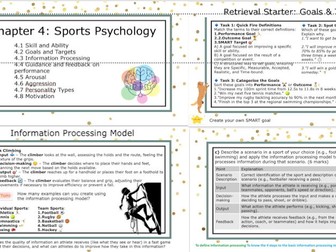
This resource helps students understand the Information Processing Model and how it applies to sports performance. Students will learn about the four stages of the model (Input, Decision-making, Output, Feedback) and how athletes use these stages to process information during performance.
Through group tasks, practical scenarios, and interactive activities, students will apply the model to various sports, helping them improve their understanding of how athletes make decisions, perform actions, and learn from feedback.
The PowerPoint includes learning objectives, clear explanations of each stage, real-life examples, group discussions, retrieval quizzes, and stretch tasks for deeper understanding.
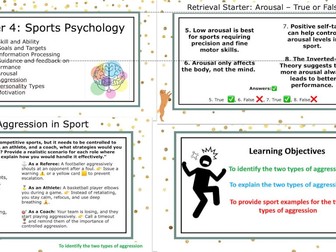
This resource helps students understand aggression in sports performance, focusing on the differences between direct and indirect aggression and their impact on athletes’ behaviour and competition. Students will analyse how aggression can be controlled and managed in different sporting contexts, considering the role of referees, athletes, and coaches in maintaining fair play.
Through interactive tasks, real-world sporting scenarios, and exam-style questions, students will apply their knowledge to practical situations, developing a deeper understanding of how aggression influences performance and fair play.
The PowerPoint includes learning objectives, clear explanations, engaging visuals, retrieval quizzes, differentiated challenge tasks, and discussion activities to support learning and exam preparation.
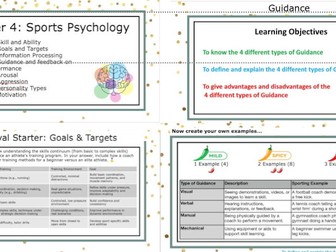
This resource helps students understand the four types of guidance (Visual, Verbal, Manual, and Mechanical) and how they are used in sports coaching to support skill development. Students will learn the characteristics of each type, their advantages and disadvantages, and how they apply to different sporting situations.
Through group discussions, practical demonstrations, and interactive tasks, students will explore how coaches and athletes use guidance to enhance learning and performance. They will also evaluate which type of guidance is most effective for different skill levels and sports.
The PowerPoint includes learning objectives, clear explanations, real-life sporting examples, retrieval quizzes, discussion tasks, and stretch activities to deepen understanding and encourage critical thinking.
CREATED FOR VCERT HEALTH & FITNESS - VERSION JULY 2018
WORK BOOK WITH A VARIETY OF TASKS
16 PAGES OF ACTIVITIES THAT INCLUDE:
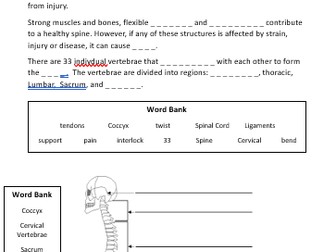
1.1 SKELETAL SYSTEM
1.1.1 STRUCTURE OF THE SKELETON
1.1.2 FUNCTIONS OF THE SKELETAL SYSTEM
1.1.3 TYPES OF BONES
1.1.4 TYPES OF JOINTS
1.1.5 JOINT ACTIONS
1.1.6 STRUCTURE OF A SYNOVIAL JOINT (KNEE)
1.1.7 STRUCTURE OF SPINE AND POSTURE
CREATED FOR VCERT HEALTH & FITNESS - VERSION JULY 2018
WORK BOOK WITH A VARIETY OF TASKS
10 PAGES OF ACTIVITIES THAT INCLUDE:
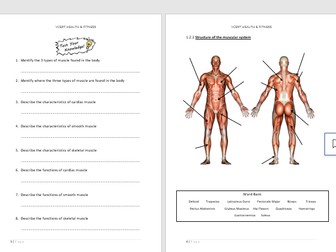
1.2.1 TYPES OF MUSCLE
1.2.2 STRUCTURE OF THE MUSCULAR SYSTEM
1.2.3 MUSCLE MOVEMENT AND CONTRACTION
1.2.4 MUSCLE FIBRE TYPES
CHECK OUT MY OTHER VCERT RESOURCES!
CREATED FOR VCERT HEALTH & FITNESS - VERSION JULY 2018
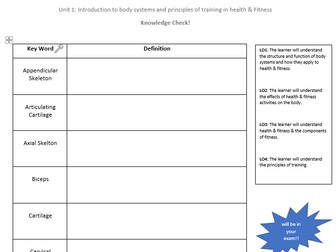
KEY WORD KNOWLEDGE CHECK FOR UNIT 1
INCLUDES KEY WORDS ON:
1.1 SKELETAL SYSTEM
1.1.1 STRUCTURE OF THE SKELETON
1.1.2 FUNCTIONS OF THE SKELETAL SYSTEM
1.1.3 TYPES OF BONES
1.1.4 TYPES OF JOINTS
1.1.5 JOINT ACTIONS
1.1.6 STRUCTURE OF A SYNOVIAL JOINT (KNEE)
1.1.7 STRUCTURE OF SPINE AND POSTURE
CREATED FOR VCERT HEALTH & FITNESS - VERSION JULY 2018
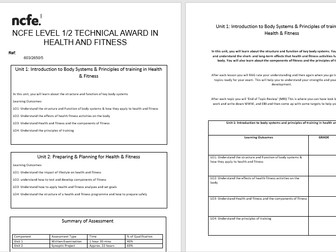
WHOLE COURSE TITLE PAGES THAT INCLUDE:
UNIT 1
LO1 UNDERSTAND THE STRUCTURE & FUNCTION OF BODY SYSTEMS & HOW THEY APPLY TO HEALTH & FITNESS
LO2 UNDERSTAND THE EFFECTS OF HEALTH FITNESS ACTIVITIES ON THE BODY
LO3 UNDERSTAND HEALTH & FITNESS & THE COMPONENTS OF FITNESS
LO4 UNDERSTAND THE PRINCIPLES OF TRAINING
UNIT 2
LO1 UNDERSTAND THE IMPACT OF LIFESTYLE ON HEALTH & FITNESS
LO2 UNDERSTAND HOW TO TEST & DEVELOP COMPONENTS OF FITNESS
LO3 UNDERSTAND HOW TO APPLY HEALTH & FITNESS ANALYSES & SET GOALS
LO4 UNDERSTAND THE STRUCTURE OF A HEALTH & FITNESS PROGRAMME & HOW TO PREPARE SAFELY
CREATED FOR VCERT HEALTH & FITNESS - VERSION JULY 2018
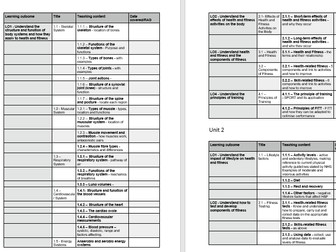
3 YEAR SCHEME OF WORK THAT INCLUDES:
UNIT 1
LO1 UNDERSTAND THE STRUCTURE & FUNCTION OF BODY SYSTEMS & HOW THEY APPLY TO HEALTH & FITNESS
LO2 UNDERSTAND THE EFFECTS OF HEALTH FITNESS ACTIVITIES ON THE BODY
LO3 UNDERSTAND HEALTH & FITNESS & THE COMPONENTS OF FITNESS
LO4 UNDERSTAND THE PRINCIPLES OF TRAINING
UNIT 2
LO1 UNDERSTAND THE IMPACT OF LIFESTYLE ON HEALTH & FITNESS
LO2 UNDERSTAND HOW TO TEST & DEVELOP COMPONENTS OF FITNESS
LO3 UNDERSTAND HOW TO APPLY HEALTH & FITNESS ANALYSES & SET GOALS
LO4 UNDERSTAND THE STRUCTURE OF A HEALTH & FITNESS PROGRAMME & HOW TO PREPARE SAFELY
 Quick View

 Quick View
 Quick View
 Quick View
 Quick View
 Quick View
 Quick View
 Quick View
 Quick View
 Quick View
 Quick View
 Quick View
 Quick View