Cambridge IGCSE Sociology: Positivism and Interpretivism – Research Methods LessonQuick View
djstuition

Cambridge IGCSE Sociology: Positivism and Interpretivism – Research Methods Lesson

(0)
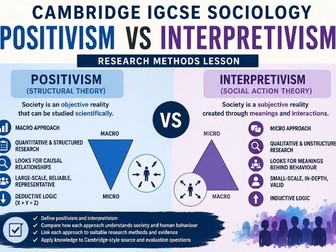
This resource is a Cambridge IGCSE Sociology lesson PowerPoint introducing students to the key methodological approaches of positivism and interpretivism. It is designed to help learners understand how different sociological perspectives study society and human behaviour, while making clear links to research methods and exam application. The lesson covers the main features of positivist research, including the idea that society has an objective reality that can be studied scientifically. Students are introduced to concepts such as the macro approach, quantitative methods, structured research, causal relationships, reliability, representativeness, large-scale research and deductive logic. It also explores interpretivism, focusing on the view that society is socially constructed through individual meanings and interactions. Students examine the micro approach, qualitative and unstructured research methods, validity, small-scale in-depth research and inductive logic. The visual diagrams help reinforce the contrast between macro and micro approaches. The learning objectives are structured to help students define positivism and interpretivism, compare the two approaches, connect each perspective with appropriate research methods and evidence, and apply their understanding to Cambridge-style source and evaluation questions.
Cambridge IGCSE Sociology: Longitudinal Research – Research Methods LessonQuick View
djstuition

Cambridge IGCSE Sociology: Longitudinal Research – Research Methods Lesson

(0)
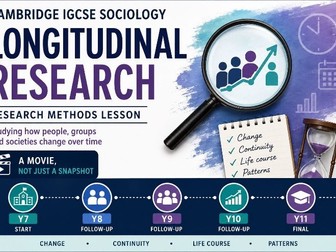
This comprehensive Cambridge IGCSE Sociology Research Methods PowerPoint introduces students to longitudinal research and helps them understand how sociologists study change, continuity and development over time. The lesson uses the simple idea of a “movie, not just a snapshot” to distinguish longitudinal research from cross-sectional research. Students learn how to define longitudinal research, recognise different longitudinal designs and explain why sociologists use them. The resource covers prospective panel studies, repeat cross-sectional studies and retrospective studies, alongside the distinction between qualitative and quantitative longitudinal research. The lesson also develops students’ research-methods evaluation skills by examining key strengths and limitations, including validity, reliability, representativeness, sample attrition, time, cost, changing social contexts and researcher effects. Ethical issues such as ongoing consent, confidentiality, sensitive life changes and researcher-participant relationships are also explored. A practical GCSE case study on social media and school friendships allows students to consider sampling, methods, time intervals and ethical safeguards when designing longitudinal research. The lesson then moves into exam-focused application and evaluation, with sentence structures and tasks designed to develop stronger AO3 responses. The resource includes: Clear learning objectives and key terminology Starter activity comparing cross-sectional and longitudinal research GCSE-ready definition of longitudinal research Prospective, repeat cross-sectional and retrospective designs Qualitative vs quantitative longitudinal evidence Research design and time-planning guidance Applied school friendship case study Strengths and limitations Ethical considerations Longitudinal data analysis Cambridge-style exam practice and sentence frames Student discussion and paired activities Plenary research-design task and exit ticket Ideal for Year 10 / Cambridge IGCSE Sociology students studying Research Methods, this resource can be used for a full classroom lesson, revision, independent learning or examination preparation.
Cambridge IGCSE Sociology: Types of Data and Evidence – Research MethodsQuick View
djstuition

Cambridge IGCSE Sociology: Types of Data and Evidence – Research Methods

(0)
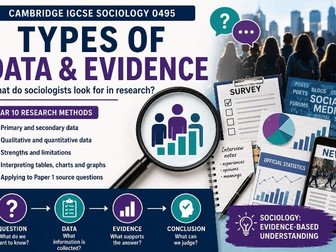
This comprehensive Cambridge International IGCSE Sociology 0495 Research Methods PowerPoint introduces Year 10 students to the different types of data and evidence used by sociologists. It is closely structured around Topic 1 Research Methods, with particular emphasis on 1.2 Types of Data and Evidence and Paper 1 source-based skills. Students learn the important distinction between data and evidence, before exploring primary and secondary data and qualitative and quantitative data. The lesson shows how these categories can overlap, for example primary qualitative evidence from interviews or secondary quantitative evidence from official statistics. The resource also examines key forms of secondary evidence, including official statistics, historical and personal documents, digital sources and media content. Students are encouraged to consider who produced the evidence, why it was produced and whether it may contain gaps or bias. The lesson develops students’ understanding of the strengths and limitations of different forms of evidence, with clear coverage of validity, reliability, representativeness, generalisability, bias and ethics. It also links evidence to different research methods, including questionnaires, structured and unstructured interviews, observations and documents/media. A theory section reinforces the relationship between positivism and quantitative evidence and interpretivism and qualitative evidence, while also introducing mixed methods and triangulation. The resource includes: Cambridge IGCSE Sociology learning objectives Engaging starter activity on what counts as evidence Data vs evidence explained clearly Primary vs secondary data Qualitative vs quantitative data Classification activities Official statistics, documents, digital sources and media evidence Strengths and limitations of different evidence types Open, closed, multiple-choice and scaled questions Research methods and the types of data they produce Validity, reliability, representativeness and bias Positivism and interpretivism links Cambridge Paper 1 source-analysis guidance GCSE-style independent research-design task Exit-ticket plenary and homework activity Ideal for Year 10 Cambridge IGCSE Sociology, this resource can be used as a complete classroom lesson, revision resource, independent learning activity or preparation for Paper 1 Research Methods source questions
Cambridge IGCSE Sociology: Quantitative and Qualitative Analysis – Research MethodsQuick View
djstuition

Cambridge IGCSE Sociology: Quantitative and Qualitative Analysis – Research Methods

(0)
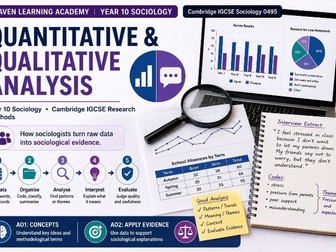
This comprehensive Cambridge IGCSE Sociology 0495 Research Methods PowerPoint introduces Year 10 students to quantitative and qualitative analysis and shows how sociologists turn raw data into meaningful sociological evidence. The lesson is structured around AO1 knowledge, AO2 application and AO3 evaluation, making it suitable for both classroom teaching and exam preparation. Students begin by exploring the process of moving from raw data to evidence through organising, analysing, interpreting and evaluating information. They then compare the two main approaches to data analysis: quantitative analysis, which focuses on numerical patterns, trends and correlations, and qualitative analysis, which focuses on meanings, motivations, experiences and context. The lesson provides clear step-by-step workflows for both approaches. Quantitative analysis covers operationalisation, coding, percentages, averages, comparisons, patterns, trends, correlation and causation, while qualitative analysis introduces students to transcription, coding, thematic analysis, interpretation and the use of supporting quotations. Students also develop their ability to interpret tables, charts and graphs sociologically, moving beyond simple description to comparison, explanation and evaluation. Key concepts include validity, reliability, representativeness, generalisability, objectivity and credibility. The resource further explores researcher bias, reflexivity and trustworthiness, helping students understand how qualitative researchers can make their interpretations more transparent. It also introduces mixed methods and triangulation, including the concepts of convergence and divergence when comparing different forms of evidence. The resource includes: Quantitative vs qualitative analysis From raw data to sociological evidence Quantitative analysis workflow Reading and interpreting charts and graphs Patterns, trends, correlation and causation Qualitative analysis workflow Coding and thematic analysis Using quotations as qualitative evidence Comparing strengths and limitations Validity and reliability Representativeness and generalisability Objectivity and credibility Researcher bias and reflexivity Mixed methods and triangulation Cambridge-style data response exam practice AO1, AO2 and AO3 answer structure Plenary and application task Ideal for Year 10 Cambridge IGCSE Sociology students studying Research Methods, this resource can be used as a full classroom lesson, revision lesson, independent study resource or preparation for Cambridge source-based and data-response questions.
Cambridge IGCSE Sociology: Secondary Data and Evidence – Research MethodsQuick View
djstuition

Cambridge IGCSE Sociology: Secondary Data and Evidence – Research Methods

(0)
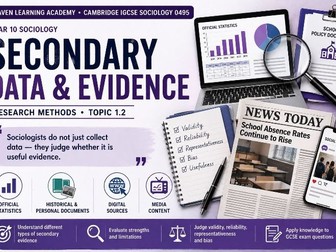
This detailed Cambridge International IGCSE Sociology 0495 Research Methods PowerPoint focuses on secondary data and evidence, aligned with Topic 1.2: Secondary Evidence. It is designed for Year 10 Sociology students and helps learners understand how sociologists use existing information as evidence and how to evaluate its usefulness. Students begin by distinguishing between data and evidence and then compare primary and secondary data, with a clear emphasis on the fact that secondary data has already been collected by someone else, often for a different purpose. The lesson covers the four main types of secondary evidence students need to recognise: Official statistics Historical and personal documents Digital sources Media content Each type is explored through examples, strengths and limitations. Students also examine the difference between qualitative and quantitative secondary data, helping them avoid the common misconception that secondary evidence is always numerical. The resource develops evaluation skills using key concepts such as validity, reliability, representativeness, bias, origin, purpose, coverage and usefulness. Students are encouraged to ask who produced a source, why it was created and whether it is suitable for a particular sociological research question. The lesson also includes a worked example on researching school absence, where students compare official attendance statistics, school policy documents and news reports. This supports application, evaluation and the use of triangulation by combining primary and secondary evidence. The resource includes: Clear lesson objectives Starter activity: data or evidence? Primary vs secondary data Official statistics Historical and personal documents Digital and social media sources Media content and content analysis Quantitative vs qualitative secondary data Evaluation checklist for secondary evidence Validity, reliability and bias Worked sociological research example Strengths and limitations Cambridge-style exam practice Source detective plenary Exit ticket Ideal for Cambridge IGCSE Sociology 0495, this resource can be used as a complete classroom lesson, revision resource, independent learning activity or preparation for Paper 1 Research Methods questions.
Cambridge IGCSE Psychology 0266Quick View
djstuition

Cambridge IGCSE Psychology 0266

(0)
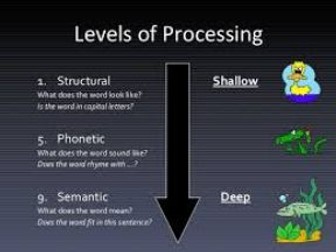
Cambridge IGCSE Psychology 0266 Memory & Forgetting Craik & Lockhart – Levels of Processing Complete Lesson | Activities | Worksheet | Exam Practice