Great cover lesson actvities
A selection of activities based on Chapter 1 and 2.
Character focus/ New characters.
Summarising
A01 - key points from these chapters.
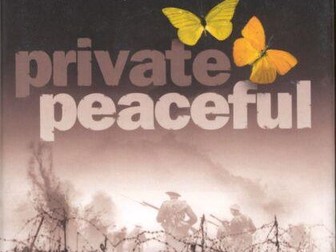
Two presentations which cover the first chapter. The first establishes and ensures understanding of the flash back/ narrative structure and the second explores the relationship between the brothers.
I used this for a very low ability Year 7 group. It could easily be used for Year 6 or below. Other doc is an extract of the first paragraph.
Focus on how to create a specific effect on the reader through word choice and language devices.
This is for my set 2 year 10 who couldn't quite grasp the idea of pitching a text to a specific audience. This looks at aiming to create specific effects through persuasive language e.g. guilt, shock, fear, encouragement etc.
Aims/ Key Ideas of the lesson:
How are you going to make your leaflet successfully persuasive?
What effects are you going to have on the reader?
How are you going to do this?
Presentations/ activities - getting to know the minor characters introduced in the first chapter - Mr Selby, Jim and Mr Higgs.
Quiz about events of chapter 1
A lesson which analyses the nuts and bolts of an anecdote and explores the key impact of language and structural devices. Lesson includes tasks - annotation/ discussion/ writing anecdote and peer assessment.
A booklet that accompanies a Power Point. The Power Point includes 7-8 activties (enough for one per week over a half term). Each week, a word is introduced e.g sustainable, genetics, tone, perimeter, marginalise and others. The Power Point explains the meaning of the word, using images and definitions and exploration into prefix and suffix. There are also activties which are visible in both the PP and the booklet which will consolidate the meaning of the word. Activities include, putting the word into sentences, reading text where the word is used, discussion and recall questions.
The resource is for Key Stage 3 but could be used for younger students or older student with low literacy levels.
This is a resource I made to put into our Year 11 Revision packs. Basically - it is a breakdown of times/ marks/ skills for each question. It would be handy for any student at any point in their GCSE and it would also be helpful for a parent with an anxious child.
A closer look at these characters and how they are being manipulated by Iago. Lots of quotations which are ripe for discussion. Short activities which enable the students to dig deeper in looking at Shakespeare's presentation of the characters.
Exploring specific effects of language - ensuring students don't resort to the comments, 'makes the reader want to read on.' I used this lesson in a job interview and I got the job!
Two lessons which work on studying quotations about Sally Lockhart - (from chapter 1 of the novel). The second lesson models how to write a language analysis paragraph - in line with Paper 1 Question 3 - English Language AQA paper.
This was used with a Year 7 group of mine who are very bright. It would suit and fit with a range of Key Stage 3 groups. The worksheet is a selection of quotations about Caliban from throughout the text - the students will need to have some understanding of the key characters and the plot for successful results. My students had studied the plot and characters and produced some detailed analytical paragraphs after this lesson.
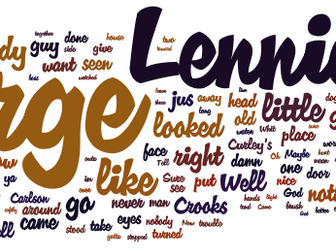
A detailed presentation about context, 1930s America, Great Depression, Dustbowl, Migrant workers, the American Dream. A work sheet is included for students to fill in.
A lesson exploring other characters which are introduced at the beginning of the novel e.g Grandma Wolf, the Colonel, Big Joe and Molly.
Worksheets included in the presentation. For Year 7 with SEN.
This is a step by step guide for the students to create their own revision booklet. It is a proactive approach as it means they have to work at ensuring what they know for the exams - instead of being handed another revision booklet - they make their own.
I used it successfully as a class activity for one lesson and then as a home work.
A double lesson Power Point presentation with one worksheet. Notes to accompany slides on Power Point. The main focus is on form, audience and purpose and assumes some prior knowledge regarding - language choices e.g modal verbs, formal/informal etc. There are tasks and activities included in the Power Point.
Studying the descriptions of Mr Hyde and how he is presented to the reader. Looking at inferences and annotating extract. I have used this with a low ability set and have studied the more basic linguistic features. Structured paragraphing grid for students to complete and a final exercise which pushes them to explore their ideas in more detail.