Jurassic World Dominion Writing Year 6Quick View
alexmcmanus

Jurassic World Dominion Writing Year 6

(0)
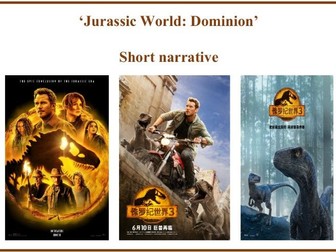
Jurassic World Dominion Writing Unit Year 6 This powerpoint contains a 2 week writing unit based on a clip from Jurassic World Dominion. I have used this piece of Writing numerous times to showcase expected writing from year 6 teacher assessment framework. All clips are included within the powerpoint. This unit includes a model text, success criteria and is linked to Year 6 TAF. Aimed specifically at Key Stage 2 Year 5 and 6. Students gain an understanding into how to successfully create atmosphere through careful vocabulary choices and sentence structure. The lessons follows a clear and logical learning journey in which students: -Explore how dialogue is punctuated and incorporate it into their own writing; -Use of personification and similes -Use semi-colons effectively in writing use expanded noun phrases to add more description -Write their own narrative based on Jurassic World Dominion -Analyse and evaluate WAGOLLS and create/use success criteria to support their writing.
Macbeth Year 6 Writing UnitQuick View
alexmcmanus

Macbeth Year 6 Writing Unit

(0)
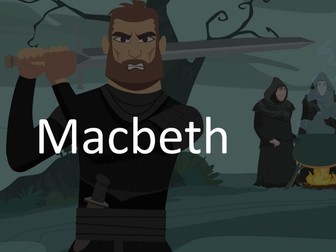
This powerpoint contains a 3 week writing unit based on the BBC teach animation (links in powerpoint) of Macbeth. I have used this piece of Writing numerous times to showcase expected writing from year 6 teacher assessment framework. This unit includes a model text, success criteria and is linked to Year 6 TAF. Aimed specifically at Key Stage 2 Year 5 and 6. Students gain an understanding into how to successfully create atmosphere through careful vocabulary choices and sentence structure. They also engage with Shakespeare’s play by exploring visual literacy and drama. The lessons follows a clear and logical learning journey in which students: -Explore how dialogue is punctuated and incorporate it into their own writing; Use the passive voice in writing Use semi-colons effectively in writing -Write their own narrative based on Macbeth Animation -Analyse and evaluate WAGOLLS and create/use success criteria to support their writing. -Edit, proof-read and up-level their own writing.
Year 2 Write Stuff Unit - George and the DragonQuick View
alexmcmanus

Year 2 Write Stuff Unit - George and the Dragon

(0)
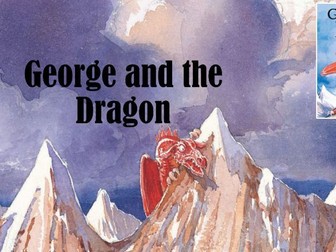
This powerpoint contains the full Write Stuff unit for George and the Dragon with pictures and all sentence stacking ideas. Unit is based on the story George and the Dragon by Chris Wormell. Independent write ideas and teacher model included.
Year 6 History WW2 UnitQuick View
alexmcmanus

Year 6 History WW2 Unit

(0)
Unit of work for Year 6 History about WW2. Unit is designed to look at some local impacts for North West but can be easily adapted to suit your region. Lesson 1 - Causes of WW2 Lesson 2 - The Blitz Lesson 3 - Propaganda Lesson 4 - Events of WW2 Lesson 5 - The Holocaust Lesson 6 - Impact of WW2 on Britain Here are expectations for children for this unit: I can make connections and draw contrast when describing features of historical events and people from the past. I can use in context and understand the terms relating to different types of history (e.g. cultural, economic, political, religious and social). I can explain the impact and purpose of propaganda in the past on local towns and compare to propaganda in cities now I can provide reasons for, and outcomes of, the main events and changes in historical periods, showing factual knowledge of aspects of Britain and the wider world. I can describe the negative or positive impact of a period of history on contemporary society. I can suggest relationships between causes in history. I can independently investigate a complex research question and construct an informed response. I can represent my findings in different ways and justify my opinions of the past I can compare accounts of events from different sources, discuss why they may be different, their accuracy and relevance. I can identify what primary and secondary resources are and explain when they may be relevant. I can debate Historical issues using relevant sources as evidence.