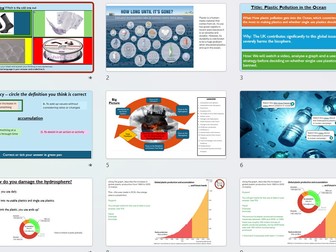
Plastic Pollution in the OceanQuick View
trumper2k2

Plastic Pollution in the Ocean

(0)
The lesson includes: A Preparation for learning - thinking task New literacy connected to the learning An overview to the rest of the unit and big picture A review of learning with an element of metacognition An underpinning value of getting students to think hard The lesson looks at causes of plastic pollution in the ocean, the time it takes for plastics to degrade the aapplys this to damge to the worlds oceans N.B. The whole unit is available together and is called ‘How are you responsible for the destruction of Earth’s Systems’
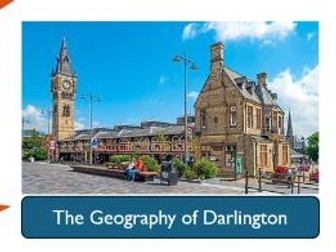
Geography KS3 Introduction Scheme of WorkQuick View
trumper2k2

Geography KS3 Introduction Scheme of Work

(0)
SOW including Continents of the world, Countries of Europe, Countries in the UK, 4 and 6 figure grid reference, relief on a map and a fieldwork investigation centered on Darlington which can be adapted. Included is a mapping document of my full KS3 over Year 7 (which include this first unit). Planning is based around the Rosenshine Principles, and includes learning checks before and after each lesson, metacognition in reviews, a monthly review, key literacy and takes into consideration challenge and inclusivity for all abilities. Feedback is modelled throughout, including the assessment. If you like it, please leave a review :)
Earth's Systems IntroductionQuick View
trumper2k2

Earth's Systems Introduction

(0)
An Introduction to the Earth’s 4 main sphere’s, the Atmosphere, Hydrosphere, Lithosphere and Biosphere. Each of the sphere’s is defined before students categorise geographical phenomena into each sphere using a Venn diagram. The lesson then required students to develop a point and has modelled feedback. The lesson includes: A Preparation for learning - thinking task New literacy connected to the learning An overview to the rest of the unit and big picture A review of learning with an element of metacognition An underpinning value of getting students to think hard N.B. The entire unit is available with an assessment Each of the sphere’s is defined before students categorise geographical phenomena into each sphere using a Venn diagram. The lesson then required students to develop a point and has modelled feedback.
Introduction to the LithosphereQuick View
trumper2k2

Introduction to the Lithosphere

(0)
The lesson includes: Definitions of the three main rock types, a categorisation task including the three main rock types before a creative task dual coding the new learning. Included are A Preparation for learning - thinking task New literacy connected to the learning An overview to the rest of the unit and big picture A review of learning with an element of metacognition An underpinning value of getting students to think hard N.B. The whole unit is available together and is called ‘How are you responsible for the destruction of Earth’s Systems’
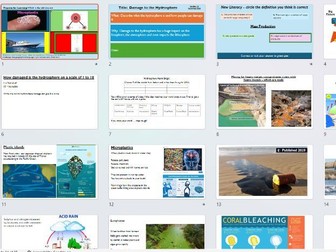
Damage to the HydrosphereQuick View
trumper2k2

Damage to the Hydrosphere

(0)
The lesson includes: A Preparation for learning - thinking task New literacy connected to the learning An overview to the rest of the unit and big picture A review of learning with an element of metacognition An underpinning value of getting students to think hard N.B. The whole unit is available together and is called ‘How are you responsible for the destruction of Earth’s Systems’
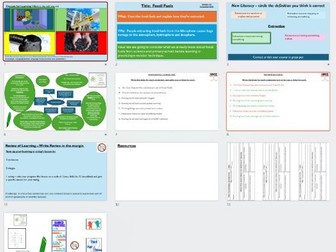
The impact of oil on ecosystemsQuick View
trumper2k2

The impact of oil on ecosystems

(0)
The lesson includes: A Preparation for learning - thinking task New literacy connected to the learning An overview to the rest of the unit and big picture A review of learning with an element of metacognition An underpinning value of getting students to think hard The lesson involves students categorising the impacts of the Deepwater horizon oil spill before evaluating the impact on the Earth’s different sphere’s. The look at and discuss images of the impacts before using a scaffold to complete extended writing on the impacts N.B. The whole unit is available together and is called ‘How are you responsible for the destruction of Earth’s Systems’
Fossil FuelsQuick View
trumper2k2

Fossil Fuels

(0)
The lesson includes: A Preparation for learning - thinking task New literacy connected to the learning An overview to the rest of the unit and big picture A review of learning with an element of metacognition An underpinning value of getting students to think hard The lesson encourages individual or groups of students to consider what they already know about fossil fuels before misconceptions are addresses through self assessment. There is a revision task embedded within the lesson to encourage students to develop these strategies and challenge is clearly evident N.B. The whole unit is available together and is called ‘How are you responsible for the destruction of Earth’s Systems’
The Formation of OilQuick View
trumper2k2

The Formation of Oil

(0)
**The lesson includes: A Preparation for learning - thinking task New literacy connected to the learning An overview to the rest of the unit and big picture A review of learning with an element of metacognition An underpinning value of getting students to think hard The lesson starts with video input on the formation of oil, the students complete a quiz. Following this, students complete a storyboard illustrating the formation of oil before comsidering its uses. There is extended writing towards the end of the lesson with a challenge task and some scaffolding. N.B. The whole unit is available together and is called ‘How are you responsible for the destruction of Earth’s Systems’ **
How are You Responsible for the destruction of Earth's systemsQuick View
trumper2k2

How are You Responsible for the destruction of Earth's systems

(0)
Unit on how humans damage the hydrosphere, lithosphere, atmosphere and Biosphere, including microplastic, fossil fuel use, water pollution and a case study on the Amazon Rainforest. There are 16 lessons within the unit and an assessment. Included is also the curriculm mapping document. It is in line with the national curriculum, though includes a GIS lesson based around the use of Digimap, I’ve included their free resources though to allow students access your school would need a subscription. Each lesson includes: A Preparation for learning - thinking task New literacy connected to the learning An overview to the rest of the unit and big picture A review of learning with an element of metacognition An underpinning value of getting students to think hard The Scheme is planned with the Rosenshine Principles in mind and includes monthly reviews and regular AFL in the form of hinge question. It is the second unit in my curriculum for Year 7
Did Geography cause the war in Ukraine?Quick View
trumper2k2

Did Geography cause the war in Ukraine?

(1)
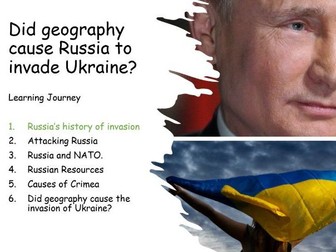
This scheme of work is inspired by the themes in the book Prisoners of Geography by Tim Marshall and hinges on the question: Did geography cause the war in Ukraine? There are 6 lessons: Russia’s History or Invasion Russia’s physical Geography Russia and NATO Russian Resources Causes of Crimea Invasion of Ukraine Each lesson has a recall/retrieval activity and a review. It’s fully resourced and interactive. Low stakes testing is used throughout and it culminated in an assessment with GCSE style questions. Marking guidance is included as well as an assessment review task for students allowing reflection. Within the lessons, there are three opportunities to develop writing for GCSE questions, one of which includes the structure I use to tackle 9 mark questions on the GCSE AQA syllabus, geared around students accessing all of the marks for each A.O. for these question types. The SOW encourages students to access a wide range of data presentation techniques and use inference and deduction skills throughout. The lessons offer an objective view on why Putin would declare war and explains the historical, political and geographical causes with little bias. I wrote the scheme to engage Year 9 with Geography primarily to increase option numbers at GCSE and to demonstrate to students the value geography has when explaining phenomena in the modern world.