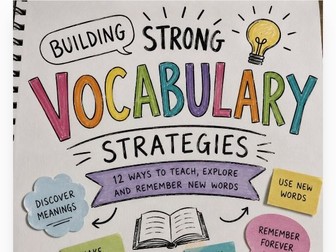
Transform vocabulary lessons with this ready-to-use pack of engaging vocabulary-building strategies designed to help children learn, understand, remember and confidently use new words.
Perfect for whole-class teaching, small groups, interventions, guided reading and writing lessons, these activities encourage pupils to explore words in meaningful ways rather than simply memorising definitions.
Includes ready-made resources.
A ready-to-use PSHE lesson focused on worries, trusted adults and speaking up when something is wrong.
The lesson uses Ruby Finds a Worry as a book hook to explore what worries are, how they can grow when we keep them to ourselves and why talking to someone we trust can help.
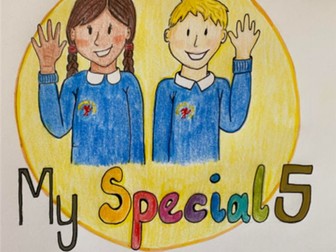
Children are then introduced to ‘My Special 5’, where they identify five trusted people they could speak to if they have a worry. They complete their own hand, writing one trusted person on each finger. These can then be displayed in the classroom as a visual reminder of who children can turn to for support.
Resource includes:
Fully editable PSHE PowerPoint slides
Discussion questions and prompts
My Special 5 activity
Printable hand outline
Ideal for a first-week/back-to-school PSHE lesson
Suitable for primary-aged children
A simple but meaningful activity to help establish a classroom culture where children know that they never need to keep a worry to themselves.
A ready-to-use worksheet pack designed to teach children how to organise their writing into clear, well-structured paragraphs. Perfect for KS2 English lessons, this resource follows a gradual scaffolding approach, helping pupils move from recognising paragraphs to planning and writing their own.
This resource includes:
What is a paragraph? activity
TIPTOP paragraphing worksheet
Build a paragraph task
Sort the sentences activity
Paragraph planning grid
Greater depth paragraph challenge
Story paragraph planner
Ideal for Years 4–6, writing lessons, intervention groups and whole-class teaching. Perfect alongside explicit instruction and modelling of paragraph structure.
Ready-to-use images explaining the three tiers of vocabulary, why they matter and practical strategies for teaching ambitious vocabulary explicitly. Perfect for KS1, KS2, CPD or staff training. Includes examples, teaching tips and classroom-ready guidance.
A fully scaffolded vocabulary lesson built around the ambitious Tier 2 word bleak. Includes a step-by-step teaching sequence, modelling, guided practice, independent activities and retrieval tasks, plus accompanying printable resources to support vocabulary development and independent word use. Perfect for KS2 English and reading lessons.
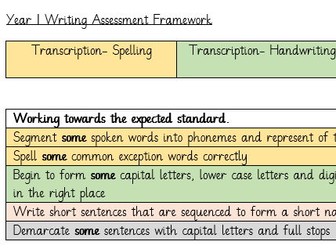
A comprehensive writing assessment framework covering EYFS to Year 6. The EYFS framework shows clear progression from Autumn to Summer, while the Year 1–6 frameworks are colour-coded and organised into Working Towards, Expected Standard and Greater Depth. Each Year 1–6 assessment is broken down into Transcription (Spelling), Transcription (Handwriting), Composition, and Vocabulary, Grammar & Punctuation, making assessment, moderation and progress tracking clear, consistent and easy to use.
Support pupils across every KS2 reading content domain with these ready-to-use scaffolds and visual examples. From retrieval grids and vocabulary charts to inference frames and comparison organisers, this resource shows how to provide effective support while building confident, independent readers. Perfect for whole-class teaching, intervention groups and adaptive teaching strategies.
Support all learners to succeed with retrieval practice using these practical scaffolded strategies. This resource breaks down how to move from heavily supported recall activities to independent retrieval, helping pupils build confidence, strengthen memory and retain learning over time. Perfect for primary classrooms, intervention groups and adaptive teaching.
Support confident writers in making the leap from strong expected standard to greater depth with these practical, classroom-ready strategies. This resource explores precision, idea development, sentence variety, show-don’t-tell techniques, raising the stakes, developing authorial voice, refining writing and providing meaningful challenge. Includes examples that demonstrate how to deepen thinking and improve writing quality across KS2.
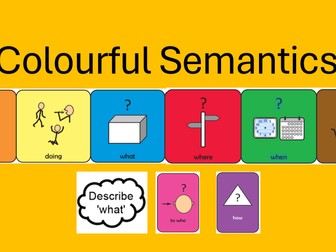
This comprehensive pack contains everything you need to successfully introduce Colourful Semantics into your classroom or school. Tried and tested in both KS1 and KS2, these resources have been used as part of whole-school training and embedded into daily writing practice
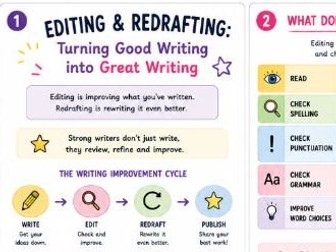
A set of images designed to support KS2 pupils with editing and redrafting. Includes examples of practical editing prompts, and strategies to help children improve vocabulary, sentence structure, punctuation and overall impact in their writing.
A clear and practical visual guide to effective scaffolding strategies that support independence, reduce cognitive overload and help all learners access the same ambitious curriculum. Perfect for staff training, SEND support, adaptive teaching discussions and classroom displays.
A colourful and practical visual resource exploring 10 effective strategies to support working memory in the classroom. Perfect for SEND provision, adaptive teaching, staff training and inclusive classroom practice.
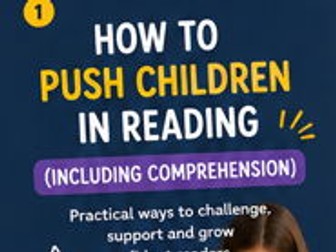
A bright, engaging and easy-to-follow visual resource packed with practical strategies to help children develop stronger reading and comprehension skills. Covers vocabulary, questioning, retrieval, discussion, background knowledge, comprehension scaffolds and growth mindset approaches. Perfect for classrooms, interventions, literacy displays, CPD and parent support. Ideal for KS1, KS2 and SEND learners.
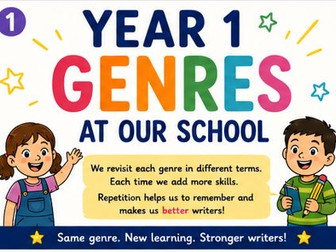
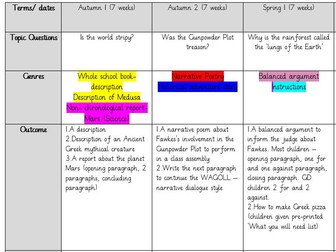
A visually engaging set of Year 1–3 writing genre progression maps showing how pupils revisit genres across Autumn, Spring and Summer terms while building writing skills progressively over time.
Includes progression in:
sentence structure
punctuation
conjunctions
handwriting
editing and redrafting
expanded noun phrases
descriptive language
genre-specific features
Genres include descriptions, instructions, recounts, traditional tales, adventure stories, reports, poetry, diary entries, persuasive writing and more.
Perfect for curriculum planning, OFSTED deep dives, moderation, staff CPD and demonstrating clear progression in writing across KS1 and Lower KS2.
This English curriculum provides a clear progression in writing from Nursery to Year 6, developing children from early mark makers into confident, purposeful writers. In EYFS, children begin with meaningful mark making, oral storytelling and early sentence writing through play-based, purposeful opportunities.
Across Key Stage 1 and Key Stage 2, pupils explore a wide range of genres including narratives, poetry, recounts, reports, instructions, persuasive writing and speeches. Each year group builds on prior learning with increasing expectations for vocabulary, grammar, stamina and audience awareness. High-quality texts such as Beegu, The Twits and Coraline are used to inspire writing and deepen reading comprehension.
The curriculum is enriched through engaging hooks including trips, drama, immersive experiences and real-life scenarios which motivate children to write for meaningful purposes. Pupils write for authentic audiences such as parents, younger children, councils, libraries and community groups, helping them understand the impact and purpose of their writing.
By Year 6, pupils can write independently and effectively across a range of genres, adapting tone, structure and language for different audiences and purposes, preparing them successfully for secondary education and beyond.
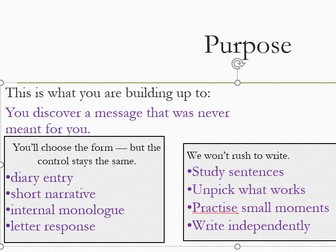
This 5-lesson Greater Depth writing unit is designed for Years 4–6 and focuses on developing sentence-level control, reader awareness, and deliberate writing choices, rather than volume or technique checklists.
Using the high-engagement stimulus “The Last Message”, pupils are guided through a carefully sequenced writing journey that prioritises:
recognising powerful sentences
understanding how small sentence choices affect impact
controlling pace and emphasis
building a single, powerful moment
applying these skills independently in a final write
The unit deliberately slows the writing process, allowing pupils to read like writers, unpick examples, and practise control before producing a longer independent piece.
This three-lesson Greater Depth writing sequence is designed for Upper KS2 pupils (Years 4–6) and focuses on developing authorial intent, sentence control, and independent application.
Pupils explore what makes writing effective, learn how to manipulate sentence structure for impact, and then apply these skills independently through a haunted house writing context of their choice (description, diary entry, poem, or short story).
Each lesson includes:
Clear teacher guidance
Model texts (basic vs greater depth)
Structured pupil tasks
Worksheets to support thinking, not over-scaffold writing
Ideal for writing clubs, stretch groups, or whole-class Greater Depth teaching.
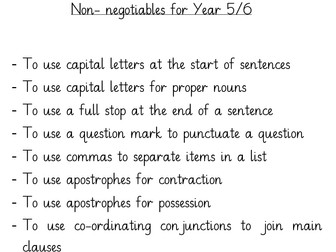
Give children ownership of their writing progress with these Non-Negotiables Posters, designed for Years 1–6. Each year group includes key writing expectations from previous years to ensure important skills are secure. Pupils must check these before work is marked — encouraging independence, accountability, and consistent standards.
Perfect for:
Classroom displays
Writing walls
Editing checklists
English/writing books
Assessment & interventions
Bring reading to life with this comprehensive set of KS2 worksheets designed to help children apply their reading skills across all KS2 Reading Content Domains. Each activity encourages creative thinking, deeper understanding, and independent application — perfect for whole-class use, guided reading, interventions, homework or evidence for assessment.
his engaging lesson is designed to help children who may be struggling with motivation and self-belief. Through discussion and creativity, pupils learn about the power of positive affirmations—short, encouraging statements that can boost confidence and mindset.
The resource includes blank bookmark templates for children to personalise. After exploring what positive affirmations are and how they can help, each pupil creates their own unique Positive Affirmation Bookmark featuring a message that inspires them when they feel unmotivated or unsure.


 Quick View