 Quick View
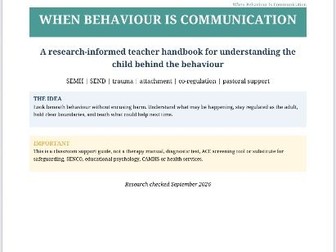
When Behaviour Is Communication – Research-Informed Teacher Handbook
A practical, compassionate guide designed to help teachers, teaching assistants, SENCOs and pastoral staff understand what may be happening underneath a child’s behaviour.
Rather than focusing only on how to stop behaviour, this handbook encourages staff to consider the child’s perspective, possible psychological factors and the support that may help them feel safer, calmer and more able to learn.
The resource combines accessible psychology with realistic classroom strategies and warm, child-friendly language that teachers can actually use in the moment.
Includes:
ACEs explained sensitively, including protective factors and why ACE scores should not be used to label individual children
attachment-informed classroom practice without diagnosing or categorising pupils
trauma-informed and relational approaches
co-regulation and adult self-regulation strategies
low-arousal communication techniques
guidance for creating a calmer, more predictable classroom
evidence-aware growth mindset strategies
anxiety and worry
anger and explosive behaviour
shutdown, freeze and withdrawal
bullying, rejection and friendship difficulties
bereavement and grief
low mood and loss of motivation
perfectionism and fear of mistakes
sensory overload
school avoidance and attendance anxiety
responses following frightening or traumatic experiences
impulsivity and difficulties stopping before acting
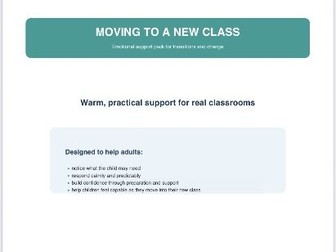
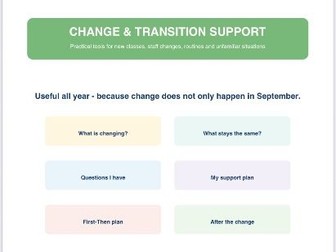
change, transitions and loss of control
demand avoidance and understanding “won’t” versus “can’t right now”
separation anxiety and clinginess
reassurance-seeking and adult dependence
lying, taking things and connection-seeking behaviour
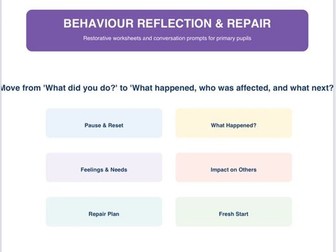
practical restorative conversations after incidents
ready-to-use phrases for difficult classroom situations
boundaries without shame
a quick-response behaviour flowchart
“same behaviour, different possible needs” guidance
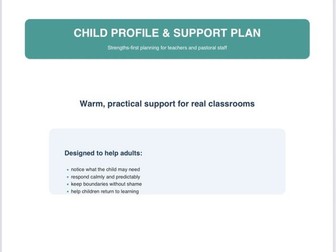
individual child support and co-regulation planning sheets
safeguarding and referral guidance
research and professional sources
The central message throughout the resource is simple:
Behaviour gives us information, but it does not automatically tell us why a child is struggling.
This handbook aims to help adults respond with curiosity before judgement, maintain clear and safe boundaries, and give children the support and language they need to cope differently next time.
Suitable for KS1, KS2 and wider primary settings, particularly SEMH, SEND, pastoral provision, behaviour support, inclusion teams and staff CPD.
Please note: This is a classroom support resource and is not intended to replace therapy, diagnosis, safeguarding procedures or professional mental-health support.