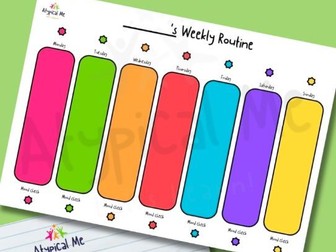
A simple, visual weekly planner designed to support children with autism and additional needs. Helps reduce anxiety, build independence, and create predictable routines at home or school.
Printable weather cards to match, say & spell — visual and verbal support for weather vocabulary, early learning, science and SEND.
These Weather Match, Say & Spell Cards are a versatile, visually clear resource designed to help children learn and practise weather vocabulary through matching, speaking and spelling. This three‑in‑one activity supports vocabulary development, literacy and science learning in a structured, inclusive way.
What’s Included
A PDF set of weather cards with realistic / stylised visuals
Matching picture + word cards for matching games
“Say” cards for speaking: children say the weather word aloud when they see the picture
“Spell” : children practise spelling the weather words (trace, write or copy)
Clean, simple design to reduce cognitive load and support focus
Who This Resource Is For
Early Years (EYFS) and KS1 learners
Children with ASD, ADHD, or other SEND who benefit from visual supports
Teachers, teaching assistants, SEN / Inclusion staff
Speech & Language Therapists working on vocabulary and articulation
Science / topic lessons on weather, seasons or the environment
Home educators, parents, and carers
How to Use It
Matching game: Lay out the picture cards and word cards — have children match each weather picture to its word.
Say the word: Use the “say” cards to encourage children to say the weather vocabulary aloud for pronunciation practice.
Spelling activity: Use the cards for writing practice — children can trace or write the weather words to reinforce spelling.
Science integration: Use in weather or seasons topic work to teach not just vocabulary, but also types of weather and their characteristics.
Intervention / group work: Use for 1:1 or small groups to support vocabulary, literacy and comprehension skills.
Why It’s Helpful
Reinforces weather vocabulary in a multi‑sensory way (visual, verbal, written)
Builds language and literacy skills via speaking and spelling
Supports science understanding: children learn to identify different weather types
Inclusive design: visual + word supports help neurodivergent learners
reusable: print, laminate, and reuse in different activities
Practical Tips & Extensions
Laminate the cards to make them durable and reusable — great for classroom centres.
Use velcro / magnetic board so children can match and move cards around easily.
Combine with a weather chart: children match cards to their daily weather chart.
Extend with a writing prompt: ask children to write a sentence using one of the weather words (“Today it is …”).
Use in science lessons: discuss weather conditions, seasons or the water cycle after matching and spelling.
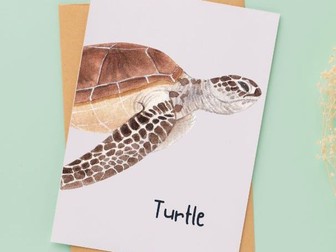
Printable realistic sea creature cards — ideal for vocabulary building, science topics, SEND learners and early years.
These Realistic Sea Creature Cards are a versatile, high-quality printable resource designed to help children learn about marine life through visual, verbal and spelling tasks. With realistic images of sea creatures, these cards support vocabulary development, classification, spelling practice, and science learning.
Designed with inclusivity in mind, this resource is especially effective for neurodivergent learners (including those with ASD), SEND settings, early years and KS1 classrooms.
What’s Included
A PDF set of sea creature cards with realistic illustrations.
Matching cards for picture + word
Clean, uncluttered design to support focus and recognition.
Sized to print on A4 or smaller; works well laminated.
Who This Resource Is For
Early Years (EYFS) and KS1 students
Learners with ASD, ADHD or SEND who benefit from visual supports.
Teachers, teaching assistants, speech & language therapists.
Science / Biology topic lessons on ocean or marine life.
Home educators, parents, and carers.
How to Use It
Say & Learn: Show the picture, encourage children to say the name of the creature out loud. Reinforces vocabulary and speaking.
Spelling Practice: Use the cards for children to write the names of the creatures, or use them as a spelling quiz / test.
Topic Integration: Use in science lessons about oceans, marine habitats, or biodiversity.
. Intervention & Support: Use in SEND classrooms or therapy to build literacy, vocabulary and science knowledge in a structured, scaffolded way.
Why It’s Useful
Builds marine vocabulary using realistic visuals — helps children connect the appearance of each creature with its name. Similar to other high-quality resources on TES.
Supports speech & language development: saying and spelling reinforce word recall.
Encourages literacy and spelling skills in a science context.
Promotes visual learning — realistic images help attention and recognition.
Adaptable: great for group work, 1:1 teaching, classroom science corners or home learning.
Practical Tips & Extensions
Laminate the cards so they last longer and can be used again and again.
Use velcro / magnetic boards to display and sort the cards.
Combine with a writing activity: after matching, ask children to write 1–2 facts about each sea creature (or draw them).
Include in a sea life unit: pair with worksheets about habitats, food chains, or conservation.
Use as memory / recall game: after using the cards, remove the words and ask children to remember and spell names from the pictures alone.
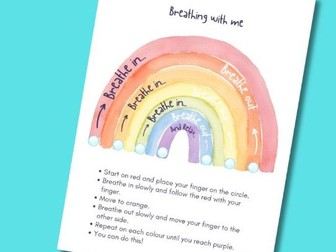
ASD‑friendly rainbow breathing printable — a calming, visual breathing exercise to support self‑regulation and emotional control in SEND or early years.
This Rainbow Breathing Activity worksheet is a beautifully designed, printable visual tool that helps children practice mindful breathing in a fun and accessible way. Using the colours of the rainbow, this breathing exercise guides children to breathe in and out slowly while tracing or imagining the arcs — making self‑regulation engaging, calming and structured.
What’s Included
A high‑resolution PDF breathing worksheet / poster
Rainbow arcs in each colour to guide inhaling and exhaling
Simple instructions and prompts for guided breathing
Design suitable for A4 printing, laminating or displaying in a calm-down corner
Who This Resource Is For
Children with ASD / SEND / neurodivergent learning needs
Early Years (EYFS) and KS1 learners
Teachers, teaching assistants, SEN staff, and therapists
Parents, carers, and school support staff for self-regulation and wellbeing activities
Anyone wanting a visual tool for mindfulness and emotion regulation
How to Use It
Guided breathing: Ask children to trace the colours of the rainbow with their finger (or imagine doing so) — breathing in on one arc, out on the next.
Mindful movement: Combine with arm movement: lift arms to form a rainbow as you breathe in, then lower them as you breathe out, mimicking the rainbow shape.
Calm-down corner: Display on a wall or laminate on a board where children can reach and use during moments of high emotion.
Routine integration: Use before transitions (e.g. before going outside or after play) to help children reset their energy.
Reflection: After doing the breathing, ask children (if age-appropriate) how they feel — more relaxed, calmer, less tense etc.
Why It’s Helpful
Encourages deep, mindful breathing — a proven strategy for emotional regulation.
Provides a clear, visual guide that helps make breathing exercises concrete and accessible.
Engages sensory and visual learners through the use of colour and structure.
Supports self-regulation skills: children learn a calming strategy they can use independently.
Easy to use in a variety of settings: classroom, calm corner, therapy, or at home.
Practical Tips & Extensions
Laminate the sheet for repeated use — works well as a dry‑wipe board.
Demonstrate arm breathing: Have children move their arms in a rainbow arc as they breathe in and out, matching the visual.
Use with sensory supports: Pair with soft music, a calm-down mat or a visual timer.
Make it part of a breathing toolkit: Include this with other breathing techniques like 5-finger breathing or star breathing.
Introduce gradually: Teach the breathing exercise in short sessions, then build to using it independently.
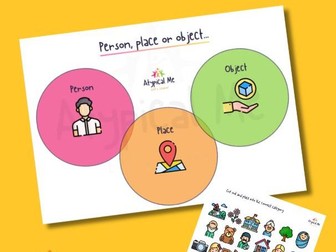
ASD-friendly “Person, Place or Object” sorting worksheet — visual activity to support categorisation, vocabulary, early learning, and SEND classrooms.
This Person, Place or Object Sorting Worksheet is a printable resource designed to help children develop categorisation, vocabulary, and comprehension skills. Ideal for neurodivergent learners, SEND pupils, and early years students, this worksheet uses clear visuals and text labels to make learning engaging and structured.
What’s Included
Printable PDF worksheet with multiple images to sort into Person, Place, or Object categories.
Clear illustrations with labels for easy recognition.
Simple, uncluttered design to reduce visual overload.
Ready to print for classroom, 1:1 support, or home learning.
Who This Resource Is For
EYFS and KS1 learners
SEND / ASD learners needing visual supports for classification and comprehension
Teachers, teaching assistants, speech & language therapists
Parents and carers supporting early vocabulary and categorisation
How to Use It
Sorting activity: Children cut out or point to items and place them in the correct category (Person, Place, or Object)
Discussion prompts: Encourage children to explain why each item belongs in its category
Extension activities: Children can draw additional examples in each category
1:1 or small-group work: Ideal for interventions targeting vocabulary and comprehension
Home learning: Send worksheet home to reinforce classroom learning
Why It’s Helpful
Builds categorisation, vocabulary, and comprehension skills.
Supports visual learning for SEND and ASD learners.
Encourages hands-on engagement through cutting, sorting, or pointing
Laminatable for repeated use or group activities.
Flexible for classroom, therapy, or home settings
Practical Tips & Extensions
Laminate the worksheet for durability and repeated practice.
Pair with writing or drawing activities (“Draw another person, place or object”)
Use in thematic lessons such as community, daily life, or literacy.
Combine with other visual sorting or classification resources
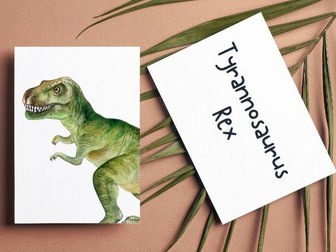
ASD-friendly dinosaur flashcards printable — colourful visuals to support early learning, vocabulary, recognition, and SEND/EYFS classrooms.
These Dinosaur Flashcards are a fun, visually engaging printable resource designed to help children recognise, name, and learn about different dinosaurs. Created with neurodivergent learners in mind, these flashcards are ideal for autistic children, SEND learners, and early years pupils.
What’s Included
Printable high-quality dinosaur flashcards (A4 size)
Clear visuals with the dinosaur name
Colourful, minimalistic design for easy recognition
Perfect for laminating, digital use, or classroom display.
Suitable for 1:1, small-group, or whole-class activities
Who This Resource Is For
Early Years (EYFS) and KS1 learners
Children with Autism, ADHD, or other neurodivergent learning profiles.
Teachers, teaching assistants, speech and language therapists, and parents.
SEND and mainstream classrooms.
How to Use It
Vocabulary building: Introduce dinosaur names and key facts.
Matching games: Match pictures to names, sounds, or categories.
Memory games: Play “pairs” or “snap” to reinforce recognition.
Science & history integration: Use during dinosaur-themed lessons or projects.
Speech support: Encourage children to verbalise names and facts about the dinosaurs.
Why It’s Helpful
Builds early vocabulary and literacy skills
Supports communication and language development
Engages learners through visual and hands-on learning
Flexible for home, classroom, or therapy use
Durable when laminated — suitable for repeated use.
Practical Tips & Extensions
Laminate for durability.
Use velcro or magnetic boards for interactive learning.
Pair with dinosaur-themed counting, writing, or sorting activities.
Include in themed units on prehistoric life or science lessons.
These Dinosaur Flashcards are a fun, visually engaging printable resource designed to help children recognise, name, and learn about different dinosaurs. Created with neurodivergent learners in mind, these flashcards are ideal for autistic children, SEND learners, and early years pupils.
ASD-friendly farm animal flashcards printable — visual resource for early learning, vocabulary, recognition, and SEND/EYFS classrooms.
These Farm Animal Flashcards are a colourful, visually clear printable resource designed to help children recognise, name, and learn about common farm animals. Created with neurodivergent learners in mind, these flashcards are ideal for autistic children, SEND learners, and early years pupils.
What’s Included
Printable high-quality flashcards featuring a variety of farm animals
Each card includes a clear illustration and the animal name
Minimalist, bright design to support visual recognition
Perfect for laminating, digital use, or classroom display
Suitable for 1:1, small-group, or whole-class activities
Who This Resource Is For
Early Years (EYFS) and KS1 learners
Children with ASD, ADHD, or other neurodivergent learning profiles
SEND classrooms, teachers, teaching assistants, and parents
Speech and Language Therapy sessions
Farm or animal-themed lessons
How to Use It
Vocabulary building: Introduce animal names and sounds
Matching games: Match pictures to words or real-life objects
Memory games: Play “pairs” or “snap” to reinforce recognition
Thematic lessons: Integrate into farm, animals, or environment topics
Speech support: Encourage children to verbalise animal names and facts
Why It’s Helpful
Builds early vocabulary and literacy skills
Supports communication and language development
Engages learners with visual and hands-on learning
Flexible for home, classroom, or therapy use
Durable when laminated — suitable for repeated use
Practical Tips & Extensions
Laminate for durability
Use velcro or magnetic boards for interactive learning
Pair with farm-themed counting, sorting, or writing activities
Combine with sensory play, farm visits, or storybooks for thematic learning
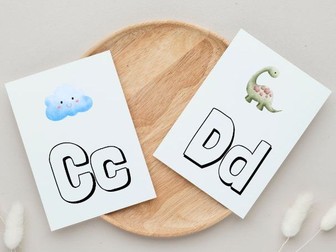
ASD‑friendly alphabet flashcards printable — colourful A–Z visuals designed to support early literacy, phonics, and communication for SEND learners.
These Alphabet Flashcards are a visually engaging, printable A–Z resource built to support early learners, especially those with additional needs such as ASD or SEND. Each card features a clear, simple illustration of an object or concept that begins with the target letter, paired with the letter itself — helping children to make meaningful connections between letters and sounds.
What’s Included
A high-quality PDF containing 26 flashcards (A–Z)
One large letter per card + a matching visual/object.
Bold, accessible font that’s easy to read
Colourful yet simple design to minimise visual overload.
Perfect size for printing, laminating, or projecting on a screen.
Who This Resource Is For
Early Years (EYFS) and KS1 learners
Children with Autism, ADHD or other neurodivergent learning profiles.
Speech & Language Therapy sessions
SEN / SEND classrooms and support groups.
Parents, carers, and early years practitioners.
How to Use It in the Classroom or at Home
Phonics introduction: Use the cards to introduce each sound in a fun and visual way.
Matching games: Ask children to match flashcards to objects, pictures or initial sounds.
Alphabet wall: Display the cards on a word wall to reinforce letter recognition daily.
Memory & pairs games: Play “snap” or “memory” games with the cards.
Speech support: Encourage children to name the objects and practice saying the beginning sounds.
Why It’s Helpful
Builds letter–sound correspondence in a visual and concrete way
Supports vocabulary development by linking letters with everyday objects
Designed with inclusivity in mind: clean visuals reduce distraction, helping neurodivergent learners focus.
Flexible for different settings: group work, 1:1, home, school, therapy.
Durable when laminated — suitable for repeated use.
Practical Tips & Extensions
Laminate the cards for longevity
Use velcro or magnets so children can stick them on boards.
Pair with writing activities (e.g. ask children to write the letter + draw something that starts with it)
Integrate into circle time: each child can pick a card and talk about the object
Combine with calm-down or routine visuals for children who benefit from structured learning.
These Alphabet Flashcards are a visually engaging, printable A–Z resource built to support early learners, especially those with additional needs such as ASD or SEND. Each card features a clear, simple illustration of an object or concept that begins with the target letter, paired with the letter itself — helping children to make meaningful connections between letters and sounds.
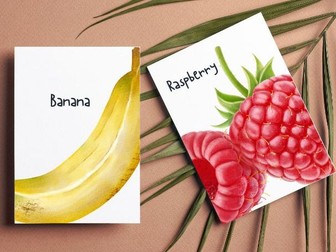
ASD-friendly fruit flashcards printable to support early learning, vocabulary, communication, and recognition in EYFS, KS1 or SEND settings.
This Fruit Flashcards Printable is a visual, engaging resource designed to help children recognise, name, and learn about different fruits. Created with neurodivergent learners in mind, these flashcards are ideal for autistic children, SEND learners, and early years pupils.
What’s included:
Printable high-quality fruit flashcards (A4 size)
Clear visuals with the fruit name
Minimalist, colourful design for easy recognition
Perfect for laminating or digital use
Works for 1:1, small-group, or whole-class activities
Who this resource is for:
Early Years (EYFS) and KS1 learners
SEND and ASD learners needing visual support
Teachers, teaching assistants, speech and language therapists, and parents
How to use it:
Vocabulary building: Introduce fruit names and sounds.
Sorting & matching games: Match pictures to words, colours, or categories.
Memory games: Use as a “pairs” game to reinforce recognition.
Speech and language support: Encourage children to verbalise words.
Snack or nutrition discussions: Integrate into lessons about healthy eating.
Why it’s helpful:
Builds early vocabulary and literacy skills
Supports communication and language development
Engages learners with visual and hands-on learning
Flexible for home, classroom, and therapy use
Extra tips:
Laminate for durability
Use with velcro or magnetic boards for interactive play
Pair with fruit-themed activities (sorting, counting, or tasting sessions)
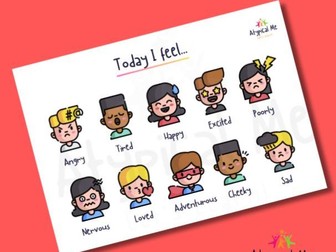
ASD-friendly emotions chart printable to help children identify, name and communicate feelings — ideal for SEN, speech & language and self-regulation work.
This Emotions Chart Printable is a neurodivergent-friendly visual tool designed to help children recognise, name and express their emotions in a clear, engaging way.
Created especially for autistic learners, children with ADHD, and those needing extra support with self-regulation, this resource uses simple, iconic visuals alongside emotion labels to scaffold emotional literacy.
What’s included:
A high-resolution PDF with emotion faces + matching words.
Designed for printing on A4 or Letter size — great for laminating or using in digital formats.
Emotion set includes common and more complex feelings (e.g. happy, sad, nervous, excited, loved).
Who this resource is for:
Children with ASD / neurodivergent learners
Young learners (approx. ages 3–10), but adaptable across age ranges
Speech and Language Therapy settings
SEN teachers, classroom assistants, and home educators
Therapists, SEND practitioners, and support staff.
How to use it effectively:
Morning check-ins: Use as a ‘How do you feel today?’ board to start conversations.
Emotion regulation: Laminate and use on a dry-wipe board for a reusable visual check-in.
Therapy sessions: Use in one-on-one or small-group speech & language work to discuss feelings.
Reflective time: Use with children to encourage self-awareness, emotional discussion, or journaling.
Behaviour support: Help children communicate emotions when they struggle to verbalise how they feel.
Why choose this Emotions Chart Printable:
Inclusive by design: Created by a neurodivergent parent — designed with empathy, clarity, and understanding.
Minimal and accessible visuals: High contrast, simple icons make it easy for visual learners to connect feelings and words.
Flexible to use: Works in print or digitally, in classrooms, therapy rooms or at home.
Durable: Laminated charts or repeated printing mean you can use this as an ongoing resource.
Learning benefits:
Builds emotional literacy: supports children in identifying and naming their emotions
Supports communication: visual + word versions scaffold verbal and non-verbal expression
Encourages self-regulation & reflection: children learn to monitor and discuss their feelings
Promotes routine & structure: daily check-ins help build predictable emotional routines.
Additional ideas / bonus tips:
Pair with social stories or a “feelings journal” for deeper emotional exploration.
Use alongside calm-down tools (e.g., breathing exercises) to help children regulate after identifying their emotions.
Give to parents or carers so they can reinforce emotional vocabulary at home.


 Quick View