


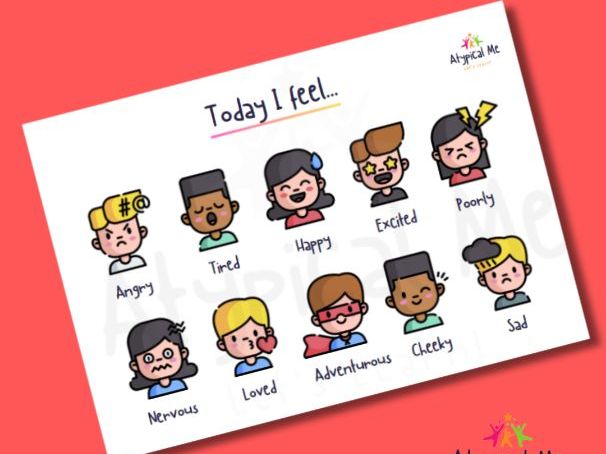
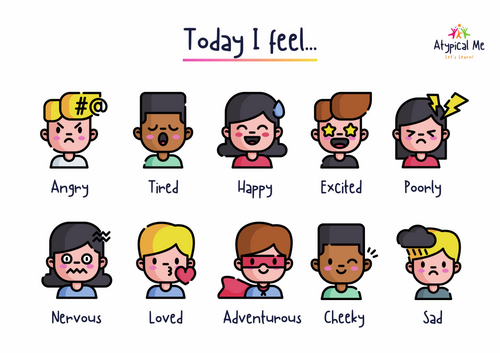
ASD-friendly emotions chart printable to help children identify, name and communicate feelings — ideal for SEN, speech & language and self-regulation work.
This Emotions Chart Printable is a neurodivergent-friendly visual tool designed to help children recognise, name and express their emotions in a clear, engaging way.
Created especially for autistic learners, children with ADHD, and those needing extra support with self-regulation, this resource uses simple, iconic visuals alongside emotion labels to scaffold emotional literacy.
What’s included:
A high-resolution PDF with emotion faces + matching words.
Designed for printing on A4 or Letter size — great for laminating or using in digital formats.
Emotion set includes common and more complex feelings (e.g. happy, sad, nervous, excited, loved).
Who this resource is for:
Children with ASD / neurodivergent learners
Young learners (approx. ages 3–10), but adaptable across age ranges
Speech and Language Therapy settings
SEN teachers, classroom assistants, and home educators
Therapists, SEND practitioners, and support staff.
How to use it effectively:
- Morning check-ins: Use as a ‘How do you feel today?’ board to start conversations.
- Emotion regulation: Laminate and use on a dry-wipe board for a reusable visual check-in.
- Therapy sessions: Use in one-on-one or small-group speech & language work to discuss feelings.
- Reflective time: Use with children to encourage self-awareness, emotional discussion, or journaling.
- Behaviour support: Help children communicate emotions when they struggle to verbalise how they feel.
Why choose this Emotions Chart Printable:
Inclusive by design: Created by a neurodivergent parent — designed with empathy, clarity, and understanding.
Minimal and accessible visuals: High contrast, simple icons make it easy for visual learners to connect feelings and words.
Flexible to use: Works in print or digitally, in classrooms, therapy rooms or at home.
Durable: Laminated charts or repeated printing mean you can use this as an ongoing resource.
Learning benefits:
Builds emotional literacy: supports children in identifying and naming their emotions
Supports communication: visual + word versions scaffold verbal and non-verbal expression
Encourages self-regulation & reflection: children learn to monitor and discuss their feelings
Promotes routine & structure: daily check-ins help build predictable emotional routines.
Additional ideas / bonus tips:
Pair with social stories or a “feelings journal” for deeper emotional exploration.
Use alongside calm-down tools (e.g., breathing exercises) to help children regulate after identifying their emotions.
Give to parents or carers so they can reinforce emotional vocabulary at home.
Something went wrong, please try again later.
This resource hasn't been reviewed yet
To ensure quality for our reviews, only customers who have purchased this resource can review it
Report this resourceto let us know if it violates our terms and conditions.
Our customer service team will review your report and will be in touch.
£2.50