Art Movements (The work of others)Quick View
Neilwebley

Art Movements (The work of others)

(0)
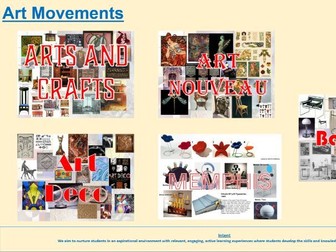
This lesson is designed to introduce students to a variety of art movements. To do this the pupils are tasked with gathering information on a specific art movement which they then share with their table group. Each student on a table is task to research a specific movement. Once they have all shared their information they then generate a range of question to check understanding. The structure of the lesson is based ion the ‘Crack the Concept’ format.
Data AnalysisQuick View
Neilwebley

Data Analysis

(0)
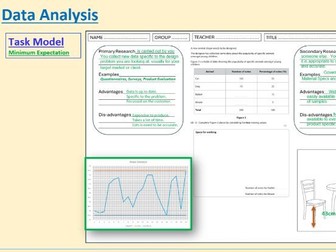
An exercise in data analysis for GCSE Design and Technology students. Within the lesson there will be an examination examples and a practical activity in data generation. By the end of the lesson the pupils will have completed an examination question (HOW TO USE DATA), collected data from a practical activity, understand the difference between Primary and Secondary research and have a list of strategies for each.
Product Evaluation of a Games ControllerQuick View
Neilwebley

Product Evaluation of a Games Controller

(0)
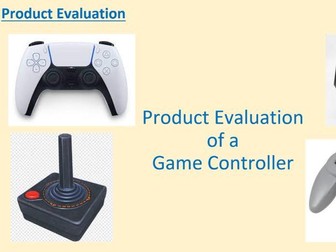
This lesson is primarily design to build on learning from K.S.3 on how to evaluate a product using a structured approach. This would be used as the first lesson of this type in GCSE. The students will be used to the structure allowing you to focus them on improving their responses. Also it will allow a more towards the specification specific terminology, where ACCESS FM is no longer sufficient. For best practice it is alway best to have arrange of physical object for the students to interact with. The lesson is easily differentiated with the use of the sentence starters, ACCESS FM question of the three leveled outcome sheets.
Edexcel PPE Walk Through LessonsQuick View
Neilwebley

Edexcel PPE Walk Through Lessons

(0)
These lessons will allow the pupils to become familiar with the structure of the examination paper. It gives them the opportunity to be guided through the paper a question at a time and gives them strategies for answering each question. They can them compare their answers to a marking scheme allowing them to identify their own strengths and weaknesses. I have used this lesson to kick start the revision process. It helps to reduce the fear of the unknown before the exam and helps students to generate a revision guide based on what they don’t know.
2D Design Isometric DrawingQuick View
Neilwebley

2D Design Isometric Drawing

(1)
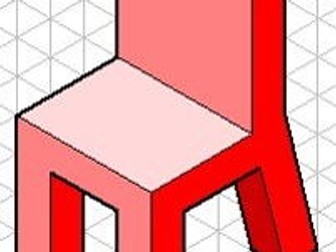
This tutorial will introduce the use of the Isometric Grid to create effect 3D drawings. It will also explore the basics of Fill and Line thickness to achieve better looking drawings. The resource as been developed to be accessible by all students including those with SEN.
Renewable & Non-Renewable Energy Lesson 1&2Quick View
Neilwebley

Renewable & Non-Renewable Energy Lesson 1&2

(0)
A two lesson introduction to ‘Energy’ for GCSE Design and Technology. Each lesson is structured in-line with OFSTED guidance to include Memory retrieval, active pupils tasks, and adaptation for SEND and assessment tasks. Energies covered include Fossil Fuels, Renewable and Bio-Fuels. There are in-bedded links to relevant videos and timers to encourage lesson flow.
GCSE Design and Technology Coursework TemplateQuick View
Neilwebley

GCSE Design and Technology Coursework Template

(0)
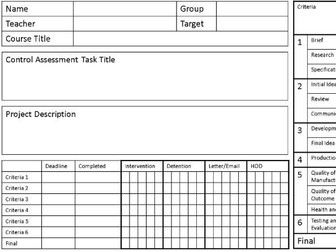
This template as been developed to best match the new requirements of the GCSE Design and Technology specification, starting in 2017. It includes a coursework tracking sheet to help maintain good progress during the process of completing a good quality outcome. Each page it designed to guide the pupils to produce a concise portfolio which cover the marking criteria.
Introductory Exercise on how to use SolidWorksQuick View
Neilwebley

Introductory Exercise on how to use SolidWorks

(0)
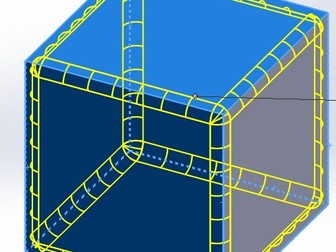
I have designed this instructional power point to be very visual in how it leads the pupil through the beginning stages of Solidworks. This exercises will allow the pupil to develop the basic skills needed to create a 3D object.
2 D Design Tutorial 'Logo'Quick View
Neilwebley

2 D Design Tutorial 'Logo'

(0)
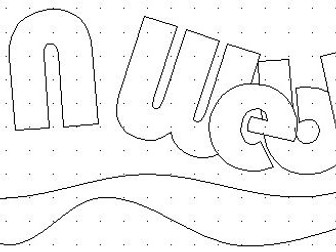
This tutorial will allow pupils to customise text and create a simple logo. This tutorial could form the CAD element of a ‘Corporate Identity’ D&M. The resource as been developed to be accessible by all students including those with SEN
2D Design Tutorial 'Clock Face'Quick View
Neilwebley

2D Design Tutorial 'Clock Face'

(0)
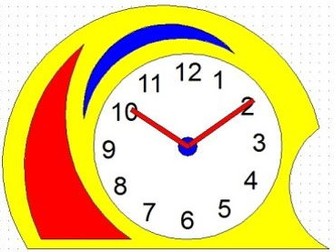
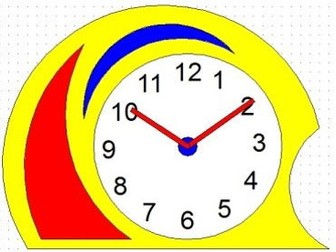
This a beginners tutorial to help you become familiar with some of the features within 2D Design. This will also work well as a CAD element to any Key Stage 3 ‘Clock Project’. Using this tutorial as an introductory exercise will allow pupils to easily customise their clock faces. The resource as been developed to be accessible by all students including those with SEN.
2D Design V2 PackageQuick View
Neilwebley

2D Design V2 Package

(0)
I have put together all three exercise into one easy to teach package. These exercises will give the pupils the skills they need to start designing with 2D Design. I am currently using this to introduce year 9 pupils to 2D Design and then to move on to designing a Phone Holder for laser cutting in Acrylic. The resource as been developed to be accessible by all students including those with SEN
Solidworks RenderingQuick View
Neilwebley

Solidworks Rendering

(0)
An introductory exercise to give the pupils a start on how to render their designs in Solidworks. This does have the wow factor especially when they compare their final rendering to other software packages.
Mobile Phone Case exerciseQuick View
Neilwebley

Mobile Phone Case exercise

(0)
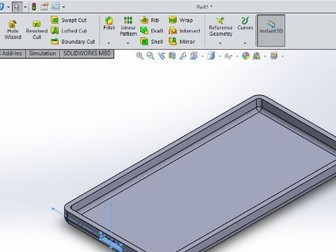
The exercise will show the pupils how to design a Mobile Phone case. The sizes can easily be tailored to match most modern phone and then allows for an easy link to 3D Printing.
Key Stage 3 Rocket Car ProjectQuick View
Neilwebley

Key Stage 3 Rocket Car Project

(0)
This project is an evolution of the Co2 powered car project. Using a compress air cylinder, (available from a well know technology supply company), a vacuum former (moulds are available for the same supplier) and if you have one a injection moulding machine that makes the wheels. I have developed a safe in the classroom project. It takes the year 7 pupils through Health and Safety, Team Work, Designing and Plastic forming in a way they find very engaging. I did develop my own body shell mould for this project in an approximation of an F1 car,
An exercise in creating object on surfaces.Quick View
Neilwebley

An exercise in creating object on surfaces.

(0)
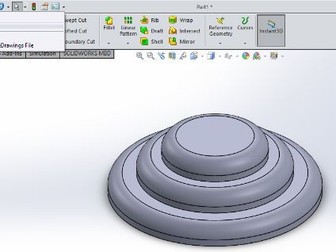
This exercise was develope to allow the pupils to experience how to add detail to the surfaces of simple objects. This is a very useful exercise for the pupils to base the addition of buttons, etc. to their designs.
Anthropometrics and Ergonomics LessonQuick View
Neilwebley

Anthropometrics and Ergonomics Lesson

(0)
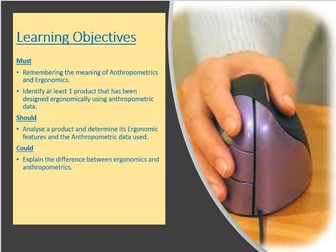
This lesson as been designed to be used as either an introduction to Anthropometrics and Ergonomics or a revision lesson. The lesson includes the following activities a knowledge organiser to help retain key information such as definitions, a data gathering exercise and a product evaluation with a focus on Ergonomics and Anthropometrics. The lesson the requires a selection of products that have been designed using Anthropometrics and ergonomics. I find game controllers work well here. Also included in the resources are some differentiated assist sheets and guides.
Final Product EvaluationQuick View
Neilwebley

Final Product Evaluation

(0)
These tasks I have used to encourage my GCSE pupils to produce a better end of project response to the Testing and Evaluation criteria as part of the Design and Make activity. It has been my experience that once the pupils a have completed the making of their final article their enthusiasm for further written work, specifically the concluding section is some-what diminished. This is when a more structured approach is needed. I have used this approach successfully for the last two years.