Capital letters & Full stops - ULTIMATE BUNDLE - KS1 and KS2Quick View
faranahw

Capital letters & Full stops - ULTIMATE BUNDLE - KS1 and KS2

14 Resources
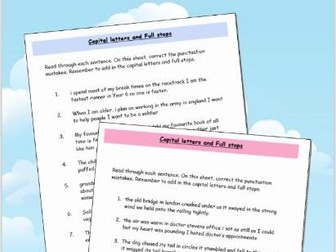
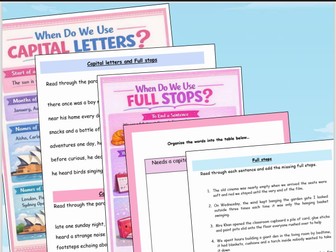
Capital Letters and Full Stops Mega Bundle This huge bundle includes a wide range of resources designed to help children develop confidence and accuracy when using capital letters and full stops in their writing. It provides a clear progression from early sentence work through to longer sentences, paragraph editing and more detailed punctuation practice. This bundle includes 14 resources in total, with 122 sheets/pages altogether. Included in this bundle: 2 help sheets When to use capital letters When to use full stops 1 EYFS/KS1 starter document with 10 worksheets on capital letters and full stops 1 document with 10 worksheets featuring a table and word bank, where children sort words that do and do not need capital letters 3 capital letters documents: 10 worksheets with two simple sentences 10 worksheets with two extended sentences 10 worksheets with three sentences 3 full stops documents: 10 worksheets with two simple sentences 10 worksheets with two extended sentences 10 worksheets with three sentences 3 capital letters and full stops documents: 10 worksheets with two simple sentences 10 worksheets with two extended sentences 10 worksheets with three sentences 1 capital letters and full stops paragraph document with 10 worksheets 4 worksheets with two short paragraphs 6 worksheets with a full-page paragraph This bundle is ideal for building progression. Children can begin with simple sentence-level practice, move on to longer and more detailed sentences, and then apply their skills in paragraph editing tasks. The inclusion of help sheets and sorting activities also makes this pack useful for teaching, revising, reinforcing and assessing understanding. Perfect for EYFS, KS1 and lower KS2, as well as intervention groups, revision, morning work, homework, independent practice and SPaG lessons.
Capital letters bundle - Understanding when to use capital lettersQuick View
faranahw

Capital letters bundle - Understanding when to use capital letters

5 Resources
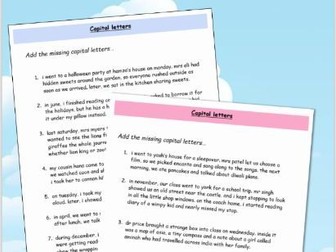
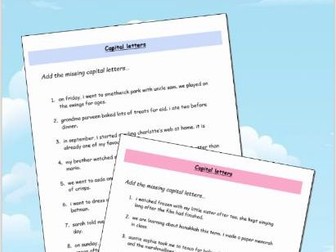
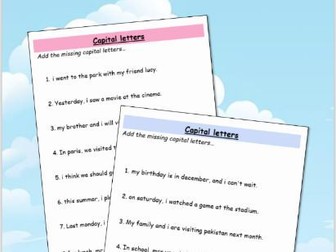
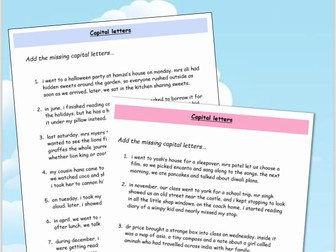
This bundle includes a range of resources designed to help children practise and apply their understanding of capital letters in different sentence types and levels of difficulty. Included in this bundle: 10 worksheets with two simple sentences in each question 10 worksheets with two longer sentences using more ambitious vocabulary and sometimes other punctuation 10 worksheets with three sentences in each question for added challenge 1 help sheet explaining when capital letters should be used Across the worksheets, children must find and add the missing capital letters. The resources give pupils the opportunity to build confidence in recognising when capital letters are needed and applying this skill in a range of contexts. The bundle includes practice with: capital letters at the start of a sentence the pronoun I names of people places and countries days of the week and months titles, festivals and special names The progression in this bundle allows children to begin with shorter, simpler sentence work before moving on to longer sentences, higher-level vocabulary, and questions with more sentences to edit. This bundle is ideal for KS1, LKS2, UKS2, intervention groups, morning work, homework, revision or independent practice. It is especially useful for reinforcing early punctuation and helping children become more accurate and confident in their writing.
Adding Capital Letters - Three SentencesQuick View
faranahw

Adding Capital Letters - Three Sentences

(0)
This resource includes 10 worksheets designed to help children practise using capital letters correctly in longer sentences. Each question contains three sentences. Children must find and add the missing capital letters. The sentences are slightly longer and more detailed, giving pupils the opportunity to apply their understanding of capital letters in a wider range of contexts. Some sentences may also include punctuation such as commas and other marks, allowing children to focus specifically on identifying where capital letters are needed within more varied sentence structures. The worksheets include practice with: capital letters at the start of a sentence the pronoun I names of people days, months and special events places and countries titles and special names This resource is ideal for LKS2 and UKS2, intervention, revision, morning work, homework or independent practice. It is especially useful for children who are ready to move beyond simple sentence work and apply capital letter skills in slightly longer pieces of writing.
Adding Capital Letters - Two SentencesQuick View
faranahw

Adding Capital Letters - Two Sentences

(0)
This resource includes 10 worksheets designed to help children practise using capital letters correctly in longer sentences. Each question contains two sentences. Children must find and add the missing capital letters. The sentences are slightly longer and more detailed, helping pupils apply their knowledge of capital letters in a wider range of contexts. Some sentences may also include punctuation such as commas and other marks, allowing children to focus specifically on identifying where capital letters are needed within more varied sentence structures. The worksheets include practice with: capital letters at the start of a sentence the pronoun I names of people days, months and special events places and countries titles and special names This resource is ideal for KS1, LKS2, intervention, revision, morning work, homework or independent practice. It is especially useful for children who are secure with simple sentence work and are ready to apply capital letter skills in slightly longer pieces of writing.
3 Digit Multiplication BundleQuick View
faranahw

3 Digit Multiplication Bundle

6 Resources
3-Digit Multiplication Bundle (24 Worksheets) A structured set of worksheets designed to develop fluency and confidence in formal column multiplication. This bundle includes 6 documents (each with 4 worksheets): • 3-digit × 1-digit (no regrouping) • 3-digit × 1-digit (with regrouping) • 3-digit × 2-digit (no regrouping) • 3-digit × 2-digit (with regrouping) • 3-digit × 3-digit (no regrouping) • 3-digit × 3-digit (with regrouping) Clear progression from straightforward calculations to full written multiplication with multiple exchanges. Ideal for KS2, mastery practice, interventions and SATs preparation. Ready to print. No prep required.
2 Digit Multiplication BundleQuick View
faranahw

2 Digit Multiplication Bundle

4 Resources
2-Digit Multiplication Bundle (16 Worksheets) A structured set of worksheets designed to build fluency and confidence in column multiplication. This bundle includes 4 documents (each with 4 worksheets): • 2-digit × 1-digit (no regrouping) • 2-digit × 1-digit (with regrouping) • 2-digit × 2-digit (no regrouping) • 2-digit × 2-digit (with regrouping) Clear progression from basic method practice to full formal written multiplication with exchanging. Perfect for KS2, intervention groups, homework or SATs preparation. Ready to print. No prep required.
Using Colons – Add the Colons to SentencesQuick View
faranahw

Using Colons – Add the Colons to Sentences

(0)
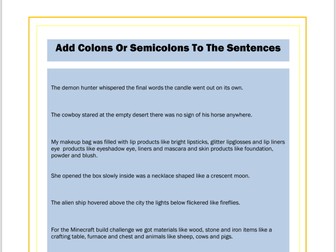
This resource helps children understand and apply colons correctly by identifying where a colon should be used within a sentence. The worksheets focus on the main reasons colons are used in writing, giving pupils clear, structured practice in context. What’s included: 4 worksheets 8 sentences per worksheet Children read each sentence and add a colon in the correct place Sentences are written to clearly reflect different colon uses Colon uses covered: To introduce a list To add emphasis or dramatic detail To introduce an explanation or reason
Colons Vs Semi Colons – Choose the Correct PunctuationQuick View
faranahw

Colons Vs Semi Colons – Choose the Correct Punctuation

(0)
This resource is designed to help children decide whether a sentence requires a colon or a semi-colon, rather than simply inserting punctuation automatically. By comparing both punctuation marks side-by-side, pupils develop a deeper understanding of when and why each one is used. What’s included: 4 worksheets 10 sentences per worksheet Children read each sentence and decide whether to use a colon or a semi-colon Answer sheet included for self-checking or marking Punctuation knowledge covered: Colons to: Introduce a list Add emphasis or dramatic detail Introduce an explanation or reason Semi-colons to: Join closely related independent clauses Show balance or contrast Separate items in a complex list
Using Semi-Colons – Add the Semi-Colons to SentencesQuick View
faranahw

Using Semi-Colons – Add the Semi-Colons to Sentences

(0)
This resource supports children in understanding and applying semi-colons correctly within sentences, focusing on the most common and curriculum-relevant uses of semi-colons. The worksheets are structured to gradually increase in challenge, moving from focused practice to mixed application. What’s included: 8 worksheets 10 sentences per worksheet Children read each sentence and add a semi-colon in the correct place Semi-colon uses covered: Pages 1–4 focus on: Joining two closely related independent clauses Linking clauses to show balance or contrast Pages 5–8 focus on: Joining closely related independent clauses Linking clauses for balance or contrast Separating longer or more detailed items in a complex list
Using Semi-Colons in Lists – Sentence PracticeQuick View
faranahw

Using Semi-Colons in Lists – Sentence Practice

(0)
This resource is designed to help children use semi-colons correctly when writing lists, particularly when list items are longer or more detailed. The worksheets are carefully scaffolded to build confidence before moving on to independent application. What’s included: 6 worksheets 8 sentences per worksheet Children read each sentence and add semi-colons in the correct place Progression & scaffolding: Pages 1–3: The first two sentences are scaffolded to guide pupils Remaining sentences are completed independently Pages 4–6: No scaffolding Children apply their understanding independently
Colons & Semi Colons BundleQuick View
faranahw

Colons & Semi Colons Bundle

7 Resources
This HUGE bundle provides a complete, structured approach to teaching colons and semi-colons, helping children understand when to use each punctuation mark and why. The resources progress from explicit teaching and scaffolded practice to independent application and reasoning, making this bundle ideal for lessons, interventions, and SATs preparation. What’s included in this bundle: Using Colons – Add the Colons to Sentences Focuses on: Introducing a list Adding emphasis or dramatic detail Introducing an explanation or reason Sentence-level practice to build confidence Using Semi-Colons – Add the Semi-Colons to Sentences Covers: Joining closely related independent clauses Showing balance or contrast Separating items in a complex list Gradual increase in challenge Using Semi-Colons in Lists Specifically targets semi-colons in complex lists Includes scaffolded practice followed by independent application Colons vs Semi-Colons – Choose the Correct Punctuation Children decide whether a colon or semi-colon is needed Encourages reasoning and deeper understanding Includes an answer sheet Help Sheets Included Clear explanations of: When to use colons When to use semi-colons Key examples for each punctuation mark Ideal for display, revision, or pupil reference
Capital Letters & Full Stops – Paragraph Editing PracticeQuick View
faranahw

Capital Letters & Full Stops – Paragraph Editing Practice

(0)
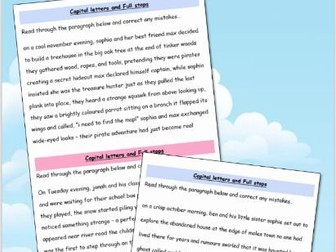
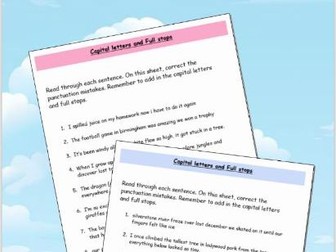
This resource is designed to help children apply capital letters and full stops accurately by editing full paragraphs and longer pieces of text, rather than isolated sentences. The worksheets gradually increase in length and challenge, making them ideal for building confidence and stamina in punctuation editing. What’s included: 16 worksheets in total Pages 1–5: Each page contains two large paragraphs Children add missing capital letters and full stops Pages 6–16: One full-page piece of text per worksheet Children edit the text to add capital letters and full stops throughout Skills covered: Using capital letters: At the start of sentences For names For names of places For days of the week and months For special holidays and events Placing full stops correctly Editing and proofreading longer pieces of writing Developing attention to detail and writing accuracy
Adding Capital Letters and Full Stops – Three SentencesQuick View
faranahw

Adding Capital Letters and Full Stops – Three Sentences

(0)
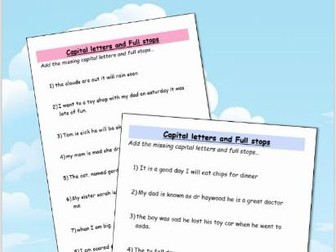
A focused punctuation resource designed to help children practise using capital letters and full stops accurately across multiple sentences. This pack is ideal for children who are ready to apply punctuation skills within longer pieces of writing. Each question contains three connected sentences, encouraging pupils to read carefully, identify sentence boundaries, and edit with accuracy. What’s included: 10 worksheets 8 questions per worksheet each question contains three connected sentences children add missing capital letters and full stops throughout structured layout that encourages careful proofreading Skills covered: using capital letters at the start of every sentence placing full stops accurately across extended writing identifying sentence boundaries in multi-sentence passages developing stamina and attention to detail when editing This resource is ideal for KS1, LKS2 ans KS2, intervention, revision, homework, morning work, or independent practice.
Understanding When Capitals Are Needed - Capital Letters TableQuick View
faranahw

Understanding When Capitals Are Needed - Capital Letters Table

(0)
This resource is designed to help children understand when capital letters are required, rather than simply adding them into sentences. By sorting words, pupils learn to recognise which types of words need capitals and which do not. Each worksheet focuses on a clear rule, helping children build confidence and accuracy with capital letter use. What’s included: 10 worksheets Each page includes: A two-column table: Needs a capital letter / Doesn’t need a capital letter A word bank at the bottom of the page Children sort the words into the correct column Capital letter rules covered include: Days of the week Months of the year Names of people Names of places Special holidays and events Common nouns that do not require capital letters
Adding Capital Letters - Two Simple SentencesQuick View
faranahw

Adding Capital Letters - Two Simple Sentences

(0)
This resource includes 10 worksheets designed to help children practise using capital letters correctly in simple sentences. Each question contains two simple sentences. Children must find and add the missing capital letters in these sentences. The worksheets help pupils build confidence with recognising when capital letters are needed. The sentences include practice with: capital letters at the start of a sentence the pronoun I names of people days of the week and months places and countries special names and titles festivals and events This resource is ideal for KS1, intervention groups, morning work, homework, independent practice or revision. It is especially useful for children who need extra support with early punctuation and sentence accuracy.
Adding Capital Letters and Full Stops – Two sentencesQuick View
faranahw

Adding Capital Letters and Full Stops – Two sentences

(0)
A focused punctuation resource designed to help children practise using capital letters and full stops accurately in longer sentences. This pack is ideal for children who are ready to move on from simple sentence practice and begin applying punctuation rules within more detailed writing. The longer sentence structure encourages pupils to read carefully, identify sentence boundaries, and apply punctuation with greater accuracy. What’s included: 10 worksheets 10 sentences per worksheet longer, more detailed sentences than the simple sentence version children read each sentence and add the missing capital letters and full stops clear layout to support independent or supported work Skills covered: using capital letters at the start of sentences placing full stops correctly identifying sentence boundaries in longer sentences developing editing and proofreading skills This resource is suitable for KS1 / lower KS2, intervention, homework, revision, morning work, or independent practice.
Adding Capital Letters and Full Stops - Two Simple SentencesQuick View
faranahw

Adding Capital Letters and Full Stops - Two Simple Sentences

(0)
A clear and focused punctuation resource designed to help children practise using capital letters and full stops correctly in simple sentences. This pack is ideal for supporting early writers as they learn to recognise where a sentence begins and ends. The short, manageable sentences allow children to focus on the core punctuation skills without feeling overwhelmed. What’s included: 10 worksheets 8 sentences per worksheet children read each sentence and add the missing capital letters and full stops simple, accessible layout suitable for independent or supported work Skills covered: using a capital letter at the start of a sentence placing full stops correctly recognising where a sentence begins and ends developing early editing and proofreading skills This resource is ideal for KS1, intervention, homework, revision, morning work, or independent practice.
Using Brackets – Add the Brackets to SentencesQuick View
faranahw

Using Brackets – Add the Brackets to Sentences

(0)
This resource helps children learn how to use brackets correctly by identifying extra information within a sentence and placing brackets accurately. The pack includes 6 worksheets, each with 10 sentences, giving children plenty of opportunity to practise this key punctuation skill. What’s included: 6 worksheets 10 sentences per worksheet Children read each sentence and add brackets in the correct place Clear, accessible layout to support independent learning
Apostrophes for Contractions – In Sentences (Context-Based Practice)Quick View
faranahw

Apostrophes for Contractions – In Sentences (Context-Based Practice)

(0)
This resource includes 6 pages and is designed to support children who struggle to understand contractions, by embedding them directly into sentences so pupils can see how they are used in context. The pack contains two separate documents, allowing children to practise contractions in both directions — a key step in building real understanding rather than rote learning. What’s included: Document 1: Contract the Words Children read a sentence The uncontracted word(s) are highlighted Pupils rewrite them as correct contractions 3 pages, 10 questions per page Document 2: Expand the Contractions Children read a sentence The contracted word is highlighted Pupils rewrite it in its uncontracted form 3 pages, 10 questions per page Why this resource works: Puts contractions into meaningful sentences Helps children understand what letters are removed Reinforces correct apostrophe placement Excellent for children who find contractions abstract or confusing Builds confidence before applying contractions in independent writing
Using Dashes – Add the Missing DashesQuick View
faranahw

Using Dashes – Add the Missing Dashes

(0)
This resource helps children practise using dashes correctly by identifying where a dash should be added within a sentence. The worksheets focus on helping pupils understand how dashes can be used to add extra information, create emphasis, or indicate an interruption in writing. What’s included: 4 worksheets 10 sentences per worksheet Children read each sentence and add the missing dash(es) in the correct place Clear, accessible layout for focused punctuation practice
Adding Both Question Marks & Exclamation Marks – Multiple Punctuation in SentencesQuick View
faranahw

Adding Both Question Marks & Exclamation Marks – Multiple Punctuation in Sentences

(0)
This resource challenges children to use both question marks and exclamation marks within the same sentence, helping them recognise changes in tone, purpose, and meaning. Each sentence contains more than one clause, requiring pupils to decide where punctuation changes, rather than placing a single punctuation mark at the end. What’s included: 4 worksheets 8 sentences per worksheet Each sentence includes multiple punctuation opportunities Children add: Question marks for questions Exclamation marks for commands, reactions, or strong emotion Skills covered: Identifying questions within longer sentences Recognising shifts in emotion and intent Applying punctuation accurately in complex sentences Developing careful editing and proofreading skills