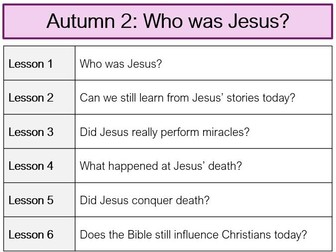
This is six lesson unit for KS3 on the authority of Jesus. I have taught this to Y7 and Y8. The download includes a full written plan, PPTs to accompny resources, a title page and necessary lesson resources.
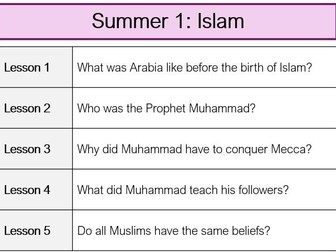
This is a full unit of work - 10 lessons - that can be used with KS3. I have tuaght this unit to both Year 7 and Year 8. The download includes full written plans, lesson PPTs and all necessary resources. The unit covers the origins of Islam and looks at how it grew into the global religion that it is today.
What was Arabia like before the birth of Islam?
Who was the Prophet Muhammad?
Why did Muhammad have to conquer Mecca?
What did Muhammad teach his followers?
Do all Muslims have the same beliefs?
How did Islam grow into a huge empire?
What are the Five Pillars of Islam?
Why is Hajj so important to Muslims?
What is meant by ‘jihad’?
What is the state of Islam today?
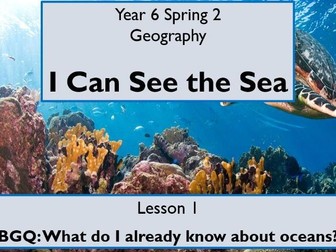
This is a half term unit of work on seas and oceans. I have taught it to Year 6 this year. It is based on a unit provided by the Royal Geographical Society. The download includes a written plan, all PPTs, lesson resources and a title page to show curriculum coverage.
This is a full half term’s unit of work on the topic of Australia. The download includes written plans, lesson PPTs, a title page with curriculum coverage and all lesson resources needed. It is suitable for UKS2 and this year, I have taught it to Year 5.
This is a full unit of lessons for a half term’s worth of geography work centered on the continent and country of Australia. The download includes a full written plan, clear and detailed PPT slides to accompany each lesson, a title page and all necessary resources. I have taught this to Year 5 this year and it is based on a unit from the Royal Geographical Society.
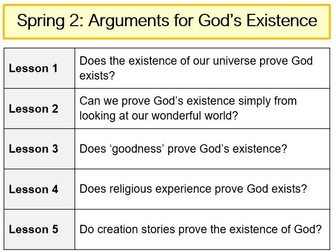
This is a full scheme of work for KS3 Religious Studies focusing on the arguments for the existence of God. The unit is a five-week unit and the download includes full written lesson planning, clear and informative PPTs, a unit title page and all necessary resources.
The material covered includes?
Cosmological Argument
Design Argument
Moral Argument
Religious experience Argument
Creation stories Argument
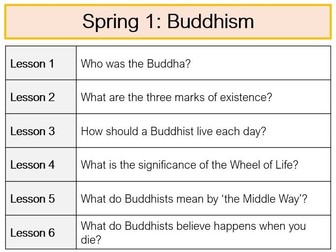
This is a full scheme of work covering six hour long lessons on the topic of Buddhism. It is suitable for KS3 classes. The download includes:
Full written lesson planning
Lesson PPT slides to go with each lesson
A unit title page
All necessary resources
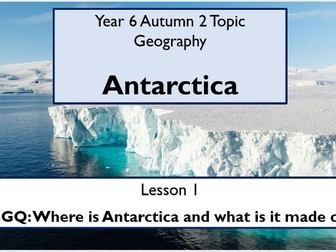
This is a full unit of work for UKS2. I have used it with Year 6 this year. The download includes a full written plan, clear and well presented PPT slides for each lesson, all necessary resources and a title page, The unit consists of six hour long lessons and the scheme of work is taken from the RGS’s unit on approaching the geography of Antarctica through the viewpoint of Shackleton’s Endurance Expedition.
Overview of subject coverage: In this unit, pupils will build on their prior knowledge of the seven continents (Asia, Africa, Europe, North America, South America, Australia and Antarctica) and their associate locational knowledge. Pupils will think about Antarctica and continents in terms of the dynamics of the Earth’s time and different types of landscape. Pupils will understand the locality of Antarctica as one of the world’s continents. The aim of the unit is to develop an enquiry on the Polar region of Antarctica focusing on Shackleton’s 1914-17 Endurance Expedition. Pupils will develop knowledge within context and progress with their atlas skills, interpreting a range of sources of geographical information. They will develop their geographical vocabulary and use the language learned in a context-specific way. Pupils will also be given the opportunity to apply geographical knowledge to writing at length.
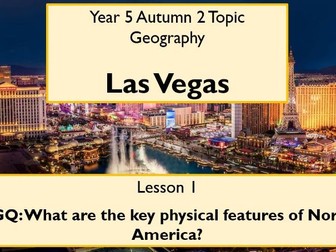
This is a full unit of work for UKS2 which focuses on the city of Las Vegas within North America. The download includes a full written plan for 12 lessons, a unit title page, an end of unit assessment, clear and detailed PPT slides to accompany each lesson and all necessary resources.
Overview of subject coverage: In this unit, pupils will explore the unique city of Las Vegas, located in the Mojave Desert in the United Sates of America. They will investigate how physical geography, including climate and landscape, influences human activity and settlement patterns. Pupils will learn about the desert biome, focusing on temperature, rainfall and native plants and animals, considering how Las Vegas has adapted to thrive in such an environment. The unit will also examine Las Vegas as a contrasting locality to the UK, encouraging pupils to critically compare and contrast aspects such as population, land use, tourism and sustainability. Through map work, pupils will develop their locational knowledge by identifying Las Vegas on maps of North America and exploring its geographical features using digital mapping tools. Pupils will consider the environmental impact of urban development in desert regions and explore how Las Vegas manages water resources and energy consumption. The unit will promote geographical enquiry, critical thinking, and the use of geographical vocabulary, while fostering an understanding of how human and physical processes interact to shape places. By the end of the unit, pupils will have a deeper appreciation of global diversity and the challenges and opportunities of living in extreme environments.
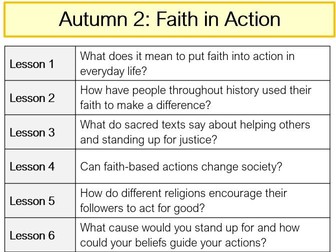
This is a full KS3 scheme of work for the religious studies topic of ‘Faith in Action’. I have taught it to Y8 this year but would be suitable for Y7-9. Included is a six lesson unit with full written plan, title page, PPT slides and resources.
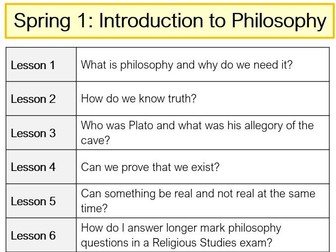
This is a full 6-week unit for KS3 on the topic of Philosophy - Truth. I have taught it to Y8 this year. It consists of full written planning, PPT slides, title page and all necessary resources.
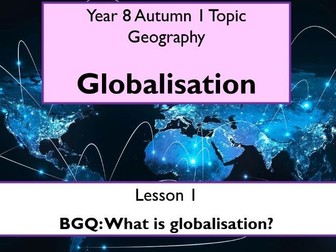
This is a full scheme of work suitable for LKS3. I created it alongside the Royal Geographical Society’s unit of study. I have used it with Year 8 as an Autumn term unit but it could be used with other year groups at other points during the year. It meets the National Curriculum requirements for study and includes lots of practical and interactive activities to engage the children and reignite their love for the subject. The unit consists of 12 hour-long lessons.
Overview of subject coverage: This unit introduces pupils to the concept of globalisation and explores how our world is increasingly interconnected through trade, communication, migration and culture. Pupils will investigate the causes and consequences of globalisation, its impact on people and places, and the role of the UK in a globalised world. The unit will begin with pupils exploring the different employment sectors in the UK and consider whether globalisation and development are linked. Pupils will learn what a transnational corporation is, how they operate worldwide and conduct a case study into sweatshops and where our clothes come from. Pupils will then learn about the global impact of tourism, including ecotourism. Pupils will examine how the COVID pandemic influenced globalisation and the potential impacts of globalisation in the future.
The download includes:
Detailed planning document
Grid giving an overview of how the unit meets National Curriculum requirements
Well presented and informative PPT slides for each lesson
All the resources needed to deliver each lesson
A topic title page with coverage overview
An optional lesson for an end of unit Dragon’s Den style assessment opportunity
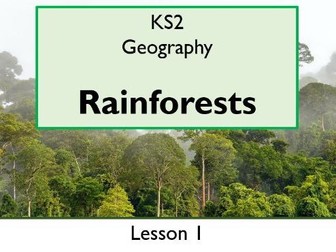
This is a full scheme of work for KS2 Geography. It is written and created in line with the KS2 National Curriculum. It consists of the planning and resources for six hour long lessons, suitable to be taught at KS2 (I have taught this with Year 4 and Year 5). The unit takes an enquiry based approach to Geography learning and all learning objectives are posed as ‘big geographical questions’.
Overview of subject coverage: In this unit, pupils will explore the fascinating world of rainforests, focusing on their unique ecosystems, global locations and vital importance to the planet. Pupils will develop their geographical knowledge of the rainforest biomes in South America, consolidate key map skills and deepen their ability to critically discuss topical environmental issues including deforestation. They will consider the impact of human activity on rainforests and explore ways to protect these vital habitats.
The download includes:
A grid demonstrating how geography outcomes from the National Curriculum are met
Full lesson planning including suggested support and challenge tasks, key questioning prompts and links to supporting online websites/videos
Clear and well-presented PPT slides to accompany each lesson
End of unit assessment (questions only as answers are very self-explanatory)
Topic title page which includes subject coverage
All lesson resources needed to accompany planned lessons
This is a full scheme of work for a KS3 Religious Studies unit on the topic of creation stories. It consists of 6 one-hour lessons. It is written to take an enquiry based approach to learning, encouraging critical thinking, empathy and respect for diversity.
Unit Overview: Pupils will build on their prior knowledge of major world religions by exploring a range of creation stories including the Judeo-Christian account, Islamic perspectives and Hindu views. Through these stories, pupils will examine how different groups of religious people understand the origins of the world and humanity’s place in it. Pupils will compare creation stories, considering how these stories reflect beliefs about the nature of God or gods, the purpose of life, and the relationship between humans and the natural world. A key focus will be on the concepts of dominion and stewardship—two contrasting interpretations of humanity’s role in creation. Pupils will explore how these ideas influence religious attitudes toward the environment and ethical decision-making. The unit will also introduce the science versus religion debate, particularly in relation to the Theory of Evolution. Pupils will consider whether science and religion are in conflict or can be seen as complementary ways of understanding the world. Finally, pupils will reflect on their own views about the environment and our responsibility to protect the Earth. They will evaluate how religious and non-religious worldviews can inspire action on environmental issues.
The download includes:
Detailed planning for the entire unit which includes how the two strands of learning from religion and learning about religion are met
Well presented PPT slides for each lesson
All the resources needed to deliver the lessons
Unit title page which includes unit coverage
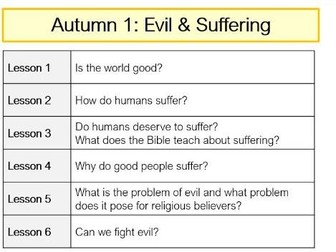
This is a fulll scheme / unit of work for KS3 Religious Studies on the topic of Evil and Suffering. It consists of six 1-hour lessons designed to be taught over a half term. It is an enquiry based approach to Religious Studies and is centred around the question, ‘can Godl love us in an evil world?’ The planning is detailed and contains all links needed. It clearly outlines how each lesson meets the ‘learning about’ and ‘learning from’ strands of religious education teaching.
Unit Overview: Pupils will build on their prior knowledge of major world religions by exploring different religious approaches to evil and suffering. Pupils will explore one of the biggest questions in religion and philosophy: Why is there evil and suffering in the world? They will focus on how Christians understand and respond to this problem, using key stories and teachings from the Bible. Pupils will critically examine the problem of evil; if God is all-powerful and loving, why does he allow suffering? They will read the Genesis story of The Fall and decide whether human disobedience warrants their suffering. Pupils will also read the Old Testament story of Job, a man who suffers greatly despite being faithful to God and what his story teaches Christians about trust, patience and divine wisdom. Finally, pupils will explore how Christians make sense of suffering – through prayer, helping others and believing in a greater purpose to life. This will conclude with a case study of Desmond Tutu, examining how his faith allowed him to stand up against injustice in the world.
The download includes:
Full detailed planning for a six-lesson unit
Clear and well presented PPT slides to accompany each lesson
Unit title page with an overview of how the unit coverage meets National Curriculum guidance for the subject
All resources needed to go along with the lessons
This is a full scheme of work suitable for UKS2 or KS3. I created it alongside the Royal Geographical Society’s unit of study. I have used it with Year 7 as an introduction to geography unit to start the year but it could be used with other year groups at other points during the year. It meets the National Curriculum requirements for study and includes lots of practical and interactive activities to engage the children and reignite their love for the subject. The unit consists of 6 hour-long lessons.
Overview of subject coverage: This unit will stimulate an interest in and a sense of wonder about places. Pupils will develop ‘geographical imaginations’ of places at a variety of scales and understand the physical and human characteristics of them. Most of the places studied in this unit are in extreme environments, places where human impact has been limited so far. Pupils will start in the Arctic and learn about glacial features. They will move from one of the coldest parts of the world to the hottest – Death Valley – and solve the mystery of the sliding rocks of the Racetrack Playa, a unique and bizarre phenomenon, thought to be caused by Aeolian processes. Pupils will learn about Stonehenge and its environmental impact as a tourist attraction and contrast it to a tourist location in Tasmania, exploring the formation of sea stacks. The unit ends with a gratuitous ‘awe and wonder’ lesson to show that places can be fantastic when viewed at other scales, particularly from space, helping pupils to create new interpretations of place, space and process.
The download includes:
Detailed planning document
Grid giving an overview of how the unit meets National Curriculum requirements
Well presented and informative PPT slides for each lesson
All the resources needed to deliver each lesson
A topic title page with coverage overview
This is a full scheme of work for the KS2 Geography topic of Extreme Earth and covers mountains, volcanoes and earthquakes. The unit consists of all the planning and resources necessary to teach 12 one-hour lessons (the twelth lesson being an end of unit assessment). The scheme of work has been written to meet the outcomes of the National Curriculum and could be used to teach any class in KS2. I have taught this unit to both Year 4 and Year 6. The scheme of work was written with reference to the Royal Geographical Society’s planning which is an excellent resource.
Overview of subject coverage: In this unit, pupils will begin by discovering the physical geography of Mount Everest, the highest mountain in the world. Through an account of the first successful ascent of Mount Everest, pupils will appreciate the global significance of the location and man’s endeavour. Pupils will then establish the geographical location of the main continental mountain ranges. Moving to the UK, the highest peaks of each constituent nation will be identified before conducting a case study into Snowdon. Using an Ordnance Survey map of Snowdon, pupils will develop their map skills. Key questions will be asked about how mountains are formed including the role of plate tectonics. Pupils will go on to look at volcanoes; why and how an eruption happens and different types of volcanoes. Pupils will examine how people, interact with mountain environments and understand the inherent dangers of living in the foothills of a volcano. Finally, pupils will focus on earthquakes; where they are located, why they happen, how they happen and the aftermath on landscapes and people. The 2011 Japan earthquake and tsunami will be highlighted as a case study.
The download includes:
Detailed and in depth planning
Grid outlining the coverage against the National Curriculum
Well presented and detailed PPT slides to accompany every lesson
All resources needed to teach and deliver the lessons
End of unit assessment (questions only as answers are self-explanatory)
Unit title page with coverage overview


 Quick View