My Plan: Personal De-escalation & Support StrategyQuick View
pastoraltoolkit

My Plan: Personal De-escalation & Support Strategy

(0)
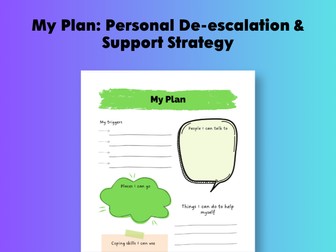
My Plan is a printable worksheet template designed to empower students to recognise and manage their own behavioural and emotional triggers. By mapping their personal triggers, safe people, safe spaces, and coping strategies in one place, students create an individualised action plan they can reference when things become difficult—whether due to anxiety, sensory overwhelm, neurodevelopmental differences, or behavioural flashpoints. Intended use: Support conversations between students and pastoral staff, SEND teams, or key adults Part of individualised behaviour or emotional regulation plans One-page reference tool for students to carry with them or display in their classroom Foundation for crisis planning or collaborative problem-solving approaches Sections included: My triggers: Helps students identify specific situations, sensations, or stressors that escalate their behaviour or emotional state People I can talk to: Names trusted adults they can approach for support or de-escalation Places I can go: Physical spaces (classroom corner, library, office) they can access to regulate or step away Coping skills I can use: Strategies they already know work (breathing, movement, sensory tools, etc.) Things I can do to help myself: Proactive actions they can take to manage their wellbeing Why it works: This resource combines trauma-informed practice with executive function support, giving students agency and a concrete plan rather than relying solely on adult intervention. It’s particularly valuable for SEND students, those with anxiety or dysregulation profiles, and anyone benefiting from external structure and choice architecture.
5...4...3...2...1: Sensory Grounding TechniqueQuick View
pastoraltoolkit

5...4...3...2...1: Sensory Grounding Technique

(0)
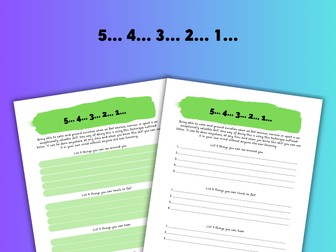
5…4…3…2…1 is an evidence-based sensory grounding worksheet that teaches students a portable, discreet anxiety and de-escalation strategy. By systematically engaging all five senses, students activate their parasympathetic nervous system and anchor themselves in the present moment—pulling attention away from anxious thoughts and back to physical reality. Intended use: Standalone handout or laminated reference card for students to use independently Part of anxiety management or coping skills training during pastoral support Teach-and-practise activity during PSHE, wellbeing, or form time sessions Accessible tool for students in exam anxiety, social anxiety, or sensory overload situations Support for students with trauma responses or panic symptoms How it works: Students work through each sensory category in descending order (5–1), listing concrete observations: 5 things you can see: Visual grounding—notice specific objects, colours, textures in the environment 4 things you can touch or feel: Tactile awareness—textures, temperature, physical sensations 3 things you can hear: Auditory attention—specific sounds, distinguishing background noise 2 things you can smell: Olfactory focus—pleasant or neutral scents 1 thing you can taste: Gustatory awareness—a particular flavour or sensation Why it works: This technique interrupts the anxiety feedback loop by shifting focus from internal catastrophising to external sensory data. It’s rooted in polyvagal theory and trauma-informed practice, making it particularly effective for dysregulated students, those with SEND, and anyone experiencing acute stress. Because it’s internal and behavioural-neutral, students can use it discreetly during lessons, exams, or social situations without drawing attention. Teacher note: Practise this during calm moments first so students develop automaticity before needing it in crisis.
Different Perspectives: Cognitive Reframing & Problem-SolvingQuick View
pastoraltoolkit

Different Perspectives: Cognitive Reframing & Problem-Solving

(0)
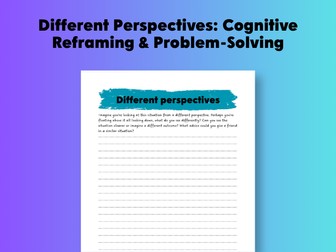
Different Perspectives is a metacognitive worksheet that teaches students to step outside their immediate emotional or situational experience and view problems through a more objective lens. By deliberately shifting perspective—imagining themselves floating above a situation looking down—students activate cognitive flexibility and access alternative solutions they couldn’t see from inside the problem. Intended use: Restorative conversations following conflict or behaviour incidents Part of collaborative problem-solving with students (building on Ross Greene’s approach) Reflection activity during pastoral support or counselling sessions Teachable moment after a social conflict or friendship breakdown Support for students in fixed thinking or catastrophising patterns PSHE lesson on resilience, empathy, or conflict resolution How it works: Students are prompted to: Shift perspective: Imagine viewing the situation from above, removing themselves emotionally Notice differences: What do they see differently from this elevated viewpoint? What becomes clearer? Explore alternative outcomes: Can they imagine a different resolution or way forward? Build empathy & problem-solve: By considering what advice they’d give a friend, students apply wisdom they couldn’t access when emotionally enmeshed Why it works: This technique leverages psychological distance—a cognitive principle showing that when we step back mentally, our prefrontal cortex (reasoning, planning) engages while our amygdala (emotion) quietens. It’s particularly powerful for: Students with rigidity or all-or-nothing thinking patterns Those stuck in blame cycles or victim narratives Building empathy and perspective-taking skills Developing agency and ownership of solutions Linked theory: Cognitive behavioural therapy, Ross Greene’s Collaborative Problem Solving, window of tolerance (Siegel).
What I Can & Can’t Control | Pastoral & Inclusion Reflection Sheet (FREE)Quick View
pastoraltoolkit

What I Can & Can’t Control | Pastoral & Inclusion Reflection Sheet (FREE)

(0)
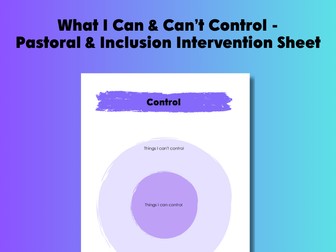
This Zones of Control–inspired reflection sheet helps students identify what is within their control and what is outside of their control, supporting emotional regulation, behaviour reflection and positive decision-making. The simple visual layout makes this resource easy to use in 1:1 pastoral conversations, small-group interventions or calm-down spaces, without requiring specialist training or preparation. Students are encouraged to focus on their choices, reactions and next steps, rather than becoming overwhelmed by situations they cannot change. This can help reduce frustration, anxiety and reactive behaviour while promoting a sense of personal responsibility and control. This resource is particularly effective when used as a guided conversation tool, rather than a written task to be completed in silence. When Could This Be Used? After a behaviour incident During a restorative or reflective conversation In pastoral check-ins or mentoring sessions As part of a self-regulation or emotional literacy intervention In inclusion rooms, withdrawal spaces or alternative provision With students who feel overwhelmed, stuck or frustrated Suitable for KS2–KS4, depending on need and context. Who Is This Resource For? Designed for use by: Teaching Assistants Pastoral support staff Behaviour mentors Heads of Year / House teams Inclusion staff Teachers No specialist SEN knowledge required. What’s Included? 1 × A4 printable reflection sheet Clear, student-friendly layout Neutral design suitable for repeated use