



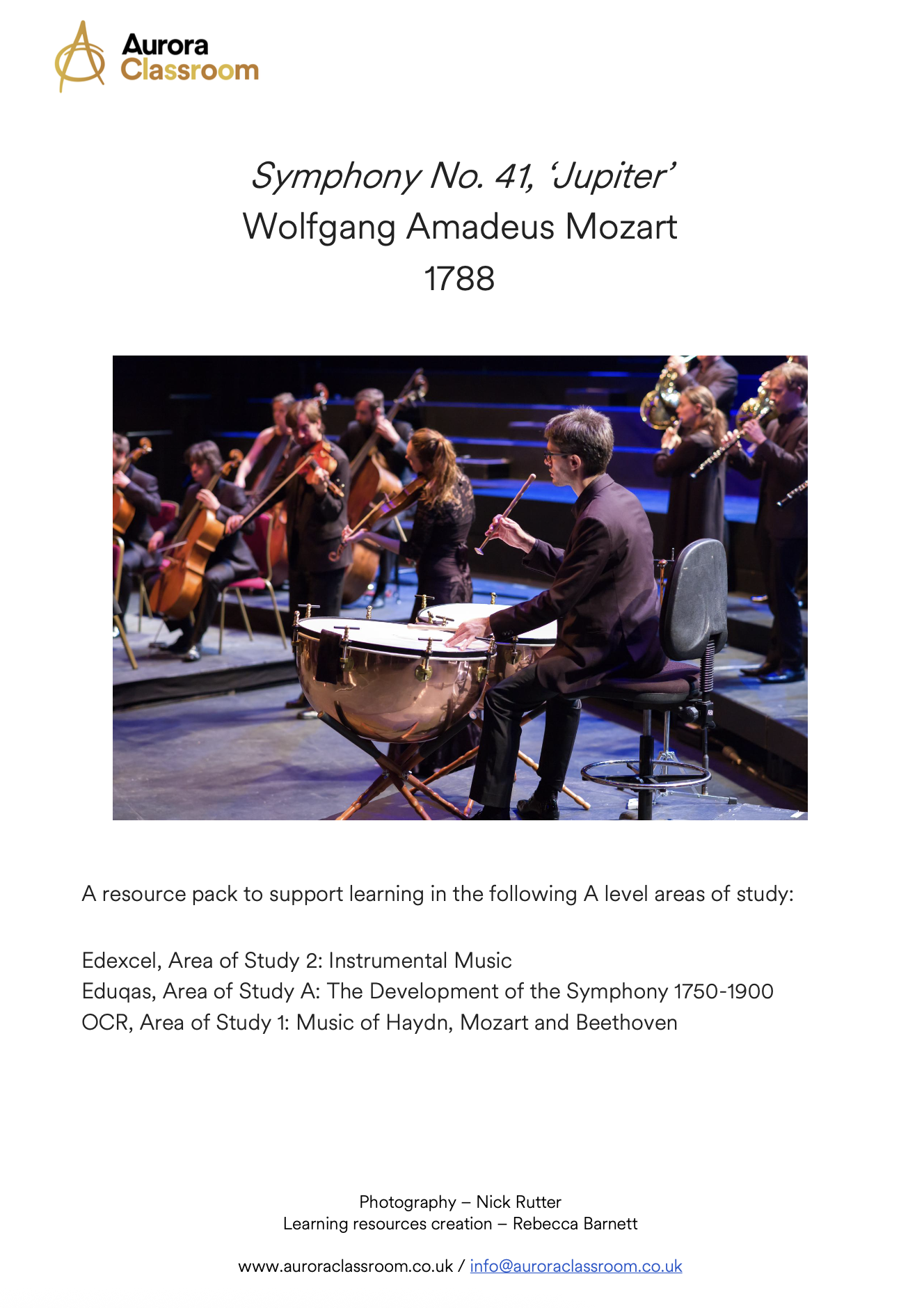
The summer of 1788, just three years before his death, was a time of symphonic productivity for Mozart, composing his final three symphonies within just three months. The ‘Jupiter’ Symphony – so called after his death – is the last of Mozart’s 41 symphonies and in many ways demonstrates the features of a symphony typical of this time at the peak of the Classical period.
Content includes:
- Context of composition
- Dictation and ‘spot the errors’ exercises
- General aural perception exam-style questions
- Extended response questions
- Further learning and a reading list
- A summary of musical elements
- Answers to all questions
Relevant to three A level specifications:
Edexcel, Area of Study 2: Instrumental Music
Eduqas, Area of Study A: The Development of the Symphony 1750-1900
OCR, Area of Study 1: Music of Haydn, Mozart and Beethoven
Aurora Classroom is Aurora Orchestra’s creative learning platform encompassing free digital resources for primary, secondary and SEND schools, training for teachers, and a world-class programme of live activity for children and young people. Visit our full site, https://auroraclassroom.co.uk/ to explore our free teaching support materials for each Key Stage – from an introduction to the orchestra for KS3, to detailed set work resource packs for GCSE and A level music specifications.
Something went wrong, please try again later.
This resource hasn't been reviewed yet
To ensure quality for our reviews, only customers who have downloaded this resource can review it
Report this resourceto let us know if it violates our terms and conditions.
Our customer service team will review your report and will be in touch.
£0.00