


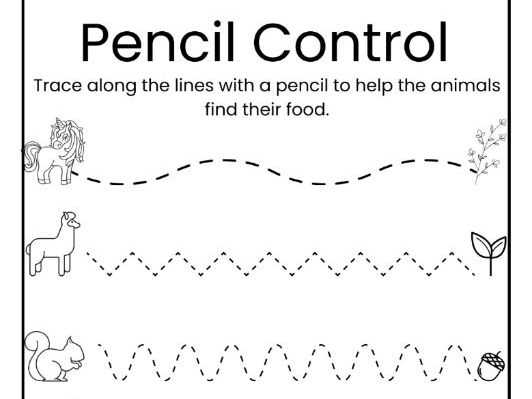
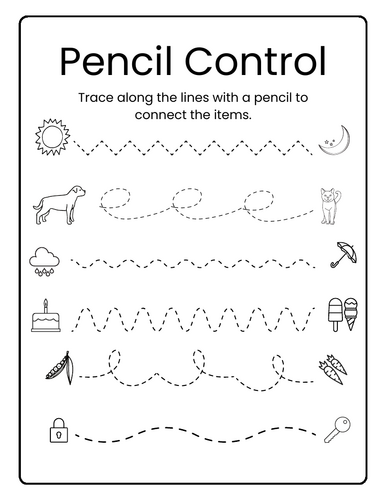
These Pencil Control Worksheets are simple, practical tools designed to build fine motor strength, pencil grip control and early writing confidence - especially for children who benefit from clear structure and low-demand tasks.
I use resources like these during short pockets of time in the school day - when some children have finished and others haven’t, during transitions, after play, or as a calm settling activity. For many learners, particularly those with SEN, that “in-between” time can be the trickiest part of the day. Having ready-made, purposeful activities to hand helps maintain focus, reduce dysregulation and keep learning on track.
Rather than unstructured waiting time, pupils can engage in meaningful practice that supports long-term writing development.
Perfect for SEN, SEND, early years, intervention groups or whole-class inclusive teaching, these worksheets provide repetition, predictability and achievable success.
What’s Inside:
Two clear, easy-to-follow pencil control worksheets featuring:
Structured line-tracing patterns
Gradual changes in direction to build control
Clear visual layout with minimal distraction
Repetition to strengthen motor memory
Opportunities to practise consistent pressure and direction
They can be used:
As a morning fine motor starter
During transition times
For early finishers
As part of handwriting intervention
To support children developing a pincer grip
Alongside OT or fine motor programmes
As a calm, regulating table task
The predictable layout helps children understand exactly what they are expected to do, reducing overwhelm and increasing independence.
Why Teachers Love Them:
Ready to print and use instantly
Perfect for those “in-between” moments
Supports fine motor development without needing lots of explanation
Helps maintain routine and structure
Encourages focus and sustained attention
Provides purposeful practice instead of passive waiting time
Particularly supportive for pupils who struggle with unstructured time
For many children with additional needs, uncertainty can lead to dysregulation. Having consistent, structured tasks available creates security and helps them stay engaged.
Backed by Research:
“Fine motor skills are foundational to later academic achievement.”
- Cameron et al.
“When children experience success in manageable tasks, motivation increases.”
- Albert Bandura
Structured pencil control practice builds both skill and confidence. Repetition strengthens neural pathways, and predictable tasks reduce cognitive overload, allowing pupils to focus on the physical skill itself.
Perfect For:
SEN / SEND classrooms
Fine motor intervention
Early Years and KS1
Occupational therapy follow-up
Morning settling activities
Early finishers
Nurture and ELSA sessions
Children developing pencil grip and control
Small, structured resources can make a big difference - especially in the moments between the big lessons.
Something went wrong, please try again later.
This resource hasn't been reviewed yet
To ensure quality for our reviews, only customers who have downloaded this resource can review it
Report this resourceto let us know if it violates our terms and conditions.
Our customer service team will review your report and will be in touch.
£0.00