


Here are three simple ways to illustrate aspects of buoyancy.
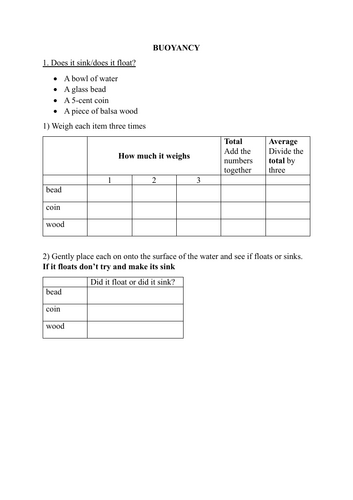
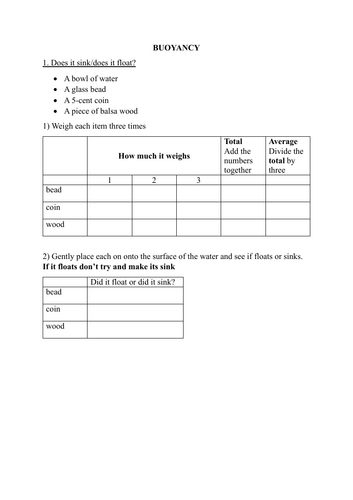
- That the density of an object effects its buoyancy. The comparison is between three objects which should be roughly the same mass. In this case it was a piece of balsa wood (trimmed to be the right mass), a glass bead of similar weight and a 5 cent coin. All were between 3 and 4 g. The coin was added because it was flat like the wood but should still sink. This exercise also gets the students to calculate averages.
- Buoyancy considered as a result of water pressure. Illustrated by changing the surface of area of something while the mass stays the same. A small sheet of foil will float on the water but as you fold it: changing the surface area but not the mass, you will get to the point that it will sink. The students don’t need to measure the area each time just guess that it is halving with each fold.
- Archimedes principle regarding the relationship of the density of an object and the amount of water it displaces. I used big tumblers with ridges to make them like a measuring cup. The tumblers would ideally be cylindrical. But if not, you can make a rough guess of the area of the surface of the water at least for the starting volume using the circumference at the height of the tumbler. This exercise also introduces how volumes can be measured.
Something went wrong, please try again later.
This resource hasn't been reviewed yet
To ensure quality for our reviews, only customers who have downloaded this resource can review it
Report this resourceto let us know if it violates our terms and conditions.
Our customer service team will review your report and will be in touch.
£0.00