EDUQAS GCSE English Language Component 2 – Extraordinary Journeys Practice PaperQuick View
jflounders1985

EDUQAS GCSE English Language Component 2 – Extraordinary Journeys Practice Paper

(0)
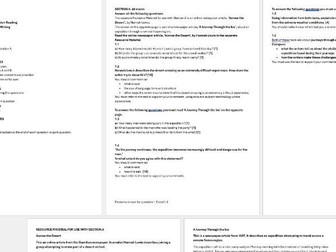
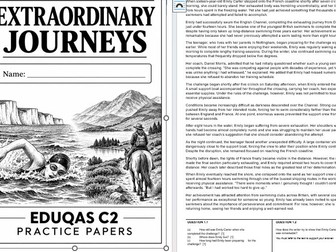
A ready-to-use EDUQAS Component 2 reading practice paper, designed to help GCSE students improve their exam technique, quotation selection and confidence with timed reading questions. The paper includes two original, contrasting non-fiction texts: Teenage Swimmer Conquers the English Channel – a modern newspaper article about a sixteen-year-old swimmer who completes an extraordinary physical challenge. A Journey Through the Scottish Highlands – a nineteenth-century-style travel journal describing a woman’s challenging but rewarding journey on horseback. What’s included: Questions 1.1–1.6, covering retrieval, selection, evaluation and comparison. Authentic EDUQAS-style questions worth 40 marks in total. Carefully constructed texts with multiple opportunities to select full, relevant quotations. A range of question focuses, including remarkable achievements, enjoyment despite difficulties and the challenges of demanding journeys. Clear, printer-friendly formatting, with Questions 1.1–1.4 positioned alongside their respective texts. Ideal for Year 10 and Year 11, including mock preparation, independent revision, intervention and timed classroom practice. Particularly useful for developing students’ ability to select relevant evidence, explain ideas clearly, evaluate a writer’s viewpoint and compare texts effectively, while improving their speed and confidence under timed conditions.
EDUQAS GCSE English Language Component 2 – Extraordinary Animals Practice PaperQuick View
jflounders1985

EDUQAS GCSE English Language Component 2 – Extraordinary Animals Practice Paper

(0)
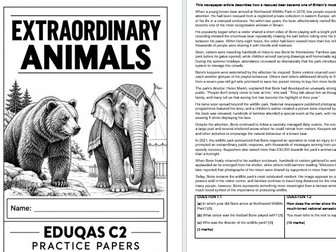
EDUQAS GCSE English Language Component 2 – Extraordinary Animals Practice Paper A ready-to-use EDUQAS Component 2 reading practice paper, designed to help GCSE students improve their exam technique, quotation selection and confidence with timed reading questions. The paper includes two original, contrasting non-fiction texts: The Bear Who Captured a Nation – a modern newspaper article about a rescued bear who becomes a national sensation. The Elephant Who Entertained London – a nineteenth-century-style account exploring the popularity and treatment of a performing elephant. What’s included: Questions 1.1–1.6, covering retrieval, selection, evaluation and comparison. Authentic EDUQAS-style questions worth 40 marks in total. Carefully constructed texts with multiple opportunities to select full, relevant quotations. A range of question focuses, including popularity, animal welfare and contrasting attitudes. Teacher indicative content to support marking and feedback. Clear, printer-friendly formatting. Ideal for Year 10 and Year 11, including mock preparation, independent revision, intervention and timed classroom practice. Particularly useful for developing students’ ability to select relevant evidence, explain ideas clearly and track texts chronologically, without wasting valuable exam time.
EDUQAS C2 English Language- scaffolded approachQuick View
jflounders1985

EDUQAS C2 English Language- scaffolded approach

(0)
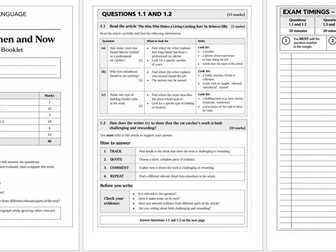
EDUQAS GCSE English Language Component 2 – Reading Practice Booklet A fully scaffolded reading practice booklet designed to help students prepare for EDUQAS English Language Component 2. The resource includes two contrasting non-fiction texts about rat catching: a modern article and an authentic nineteenth-century account by Henry C. Barkley. Students practise all six reading questions (1.1–1.6), with clear, step-by-step guidance for retrieval, explanation, evaluation and comparison of information and presentation. The booklet includes: Exam-style questions with mark allocations. Clear scaffolds, including Track → Quote → Comment. Guidance on selecting relevant evidence from across the texts. Timing reminders and printable answer sheets. Teacher indicative content to support marking. Designed particularly for students working towards Grades 4–5, the booklet prioritises clarity, confidence and effective exam technique. All pages are black and white and printer-friendly.
EDUQAS GCSE English Language C2 – Reading Practice Paper: Endurance and DeterminationQuick View
jflounders1985

EDUQAS GCSE English Language C2 – Reading Practice Paper: Endurance and Determination

(0)
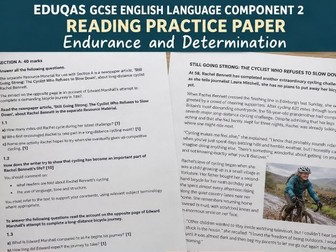
EDUQAS GCSE English Language Component 2 – Reading Practice Paper: Endurance and Determination A complete 40-mark Section A reading practice paper, closely modelled on the June 2024 EDUQAS GCSE English Language Component 2 examination. The resource includes two original, authentic-style non-fiction texts: a contemporary newspaper article about a long-distance cyclist and a 19th-century-style account of a challenging cycling journey. Includes all six exam-style questions and a detailed mark scheme with indicative content, supporting evidence and guidance on writers’ methods. Ideal for Year 10 and Year 11 exam preparation, mock practice, revision and targeted intervention. Particular emphasis is placed on the 10-mark analysis, evaluation and comparison questions.
EDUQAS C2 practice paperQuick View
jflounders1985

EDUQAS C2 practice paper

(0)
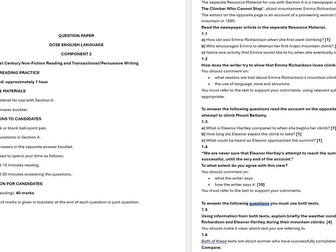
EDUQAS GCSE English Language Component 2 – Reading Practice Paper (Summer 2024 Style) A complete 40-mark reading practice paper designed to closely mirror the structure, question wording and assessment demands of the Summer 2024 EDUQAS GCSE English Language Component 2 examination. The resource includes two original non-fiction texts, one contemporary and one written in a 19th-century style, exploring determination and achievement through mountaineering. The resource includes: Two substantial reading extracts. A complete set of six exam-style questions (40 marks). An accompanying mark scheme with detailed indicative content. Evidence presented in text order, with full supporting quotations. Guidance on writers’ methods, evaluation and comparison. Teaching focus Particular emphasis is placed on the three 10-mark questions (1.2, 1.4 and 1.6), helping students select relevant evidence, track ideas across texts, evaluate statements and make clear comparisons. Suitable for Year 10 and Year 11 exam preparation, independent practice, intervention or mock assessment.
Complete AQA power and conflict scheme of work_ lessons, booklets, modelsQuick View
jflounders1985

Complete AQA power and conflict scheme of work_ lessons, booklets, models

(0)
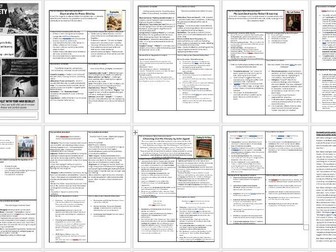
This comprehensive Year 11 scheme of work is designed to help students develop a secure understanding of all 15 poems in the AQA Power and Conflict anthology and, crucially, improve their ability to write clear, developed comparative essays. Rather than teaching each poem in isolation, the scheme is organised into three connected clusters: Power of War, Power of Nature and Power of Society and Man. This approach helps students recognise shared ideas, make meaningful connections between poems and apply their knowledge flexibly to different examination questions. What is included? The scheme covers all 15 anthology poems through carefully sequenced lessons, comparison activities and opportunities for independent examination practice. Teaching approach Lessons are designed to build students’ confidence with both the knowledge of the poems and the skills required for the AQA comparison question. Key features include: Explicit teaching of core knowledge: central ideas, relevant context, key vocabulary, writers’ methods and carefully selected evidence. Visual approaches to poetry: images, storyboards and accessible activities help students understand the poems before moving into analysis. Regular retrieval practice: short knowledge checks reinforce essential ideas, terminology and textual evidence. Meaningful comparisons: students revisit shared themes and develop comparative arguments rather than simply writing about two poems separately. Structured analytical writing: the WHAT, WHERE, HOW and WHY approach supports students in developing clear explanations. Progressive essay development: comparative theses, topic sentences and connections between poems are explicitly modelled and practised. Independent examination practice: students apply their knowledge to AQA-style questions, with opportunities to reflect on and improve their responses. Assessment and progression The scheme places particular emphasis on improving the quality of students’ comparative writing. Students are supported in moving from identifying straightforward similarities to explaining how and why poets present ideas differently. Regular self-assessment and purple-pen improvement tasks encourage students to revisit targets from previous essays and mock examinations, identify evidence of progress and improve specific aspects of their writing. The overall aim is simple: students should leave the scheme knowing the poems, understanding how they connect and feeling confident enough to respond to an unfamiliar comparison question independently.
EDUQAS C2 Practice paper_ extreme environmentsQuick View
jflounders1985

EDUQAS C2 Practice paper_ extreme environments

(0)
Teacher Guidance This practice paper has been designed to closely mirror the EDUQAS GCSE English Language Component 2 reading section, using the Summer 2025 paper as the main model for question structure and wording. The main aim is to improve students’ performance on the 10-mark questions (1.2, 1.4 and 1.6) by developing three core habits: Read the question carefully and identify its precise focus. Track the text and select the most relevant, complete quotations rather than simply choosing any evidence connected to the topic. Comment clearly on how each quotation answers the specific question. The texts deliberately contain more possible evidence than students need, so students have to make decisions about which quotations are strongest and most relevant. For 1.6, teach the question as two distinct jobs: WHAT – select three relevant points from each text; HOW – select two relevant examples from each text showing how the writers communicate the focus. The shorter 1.1, 1.3 and 1.5 questions have also been included so that students experience the structure, sequencing and demands of a complete Component 2 reading section. The overall emphasis should remain: TRACK → QUOTE → COMMENT → CLEAR LINK TO THE QUESTION FOCUS
AQA English Literature Macbeth and A Christmas Carol essay scaffoldsQuick View
jflounders1985

AQA English Literature Macbeth and A Christmas Carol essay scaffolds

(0)
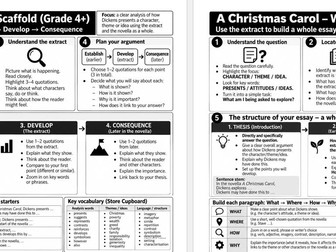
Literature Essay Scaffolds – Teacher Overview These scaffolds are designed to help students build a clear, coherent whole-text Literature essay, with different levels of support for students working towards 4+, 5+ and 7+. The approach is THESIS, ESTABLISH, DEVELOP, CONSEQUENCE. This encourages students to think about how a character, theme or idea develops across the text, rather than analysing quotations as separate moments. Within paragraphs, students can continue to use the familiar WHAT, WHERE, HOW, WHY** approach. 4+ Provides the most support. Students are guided to write a clear thesis, select relevant evidence and explain what it shows. The main focus is on clarity, relevance and developing an argument across the text. *5+ Some of the support is removed. Students are expected to develop their explanations, analyse quotations in more detail and make clearer links between different points in the text. There is a greater focus on developing the WHY, including the writer’s intentions and relevant context. 7+ Provides much less support and gives students more freedom to develop their own argument. Students are encouraged to explore more complex ideas, consider different interpretations and analyse the writer’s choices more precisely. All three scaffolds use the same basic essay structure. The difference is the amount of support provided and the depth of thinking expected. This means students can move between the scaffolds without having to learn a different way of writing an essay. The models show students what this looks like in practice at each level. For example, the Macbeth models move from a clear explanation of Macbeth’s ambition and its consequences to more developed consideration of his morality, internal conflict and changing character. The aim is for students to use the scaffold that gives them the support they need and gradually become less reliant on it as their confidence and independence develop.
AQA Power and Conflict scaffolds for grade 4+, 5+, 7+Quick View
jflounders1985

AQA Power and Conflict scaffolds for grade 4+, 5+, 7+

(0)
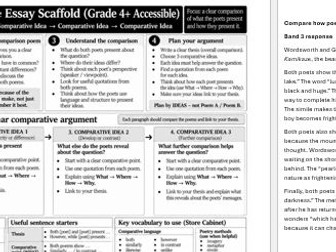
These scaffolds are designed to support students with writing a complete Power and Conflict comparison essay, with different levels of support depending on where they are currently working. The 4+, 5+ and 7+ scaffolds build on each other. The aim isn’t for students to follow a formula forever, but to give them a clear structure for organising their thinking and writing before gradually removing the support as they become more confident. The approach has been developed by looking closely at AQA marked responses, exemplar material, mark schemes and examiner feedback, particularly what separates some explanation, clear understanding and thoughtful consideration. The focus is therefore on helping students to do the things that actually improve Literature responses: develop a clear argument, use quotations purposefully, explain methods, develop ideas and make meaningful comparisons. Students are encouraged to think about the essay as: THESIS → ESTABLISH → DEVELOP → CONSEQUENCE Within paragraphs, this works alongside our usual WHAT → WHERE → HOW → WHY approach, so it should feel familiar rather than being another new writing structure. The scaffolds are accompanied by model responses at the different levels of development. These can be used to show students what the scaffold looks like when it is actually turned into an essay, rather than expecting them to work this out from sentence stems alone. The models also help make the differences between some explanation, clear and thoughtful writing more concrete. The overall aim is scaffold → practise → reduce support → independence. Students should move away from the scaffold when they are ready rather than seeing it as a fixed essay formula.
Approaching GCSE unseen poetryQuick View
jflounders1985

Approaching GCSE unseen poetry

(0)
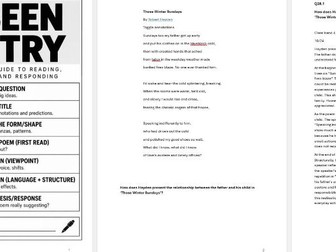
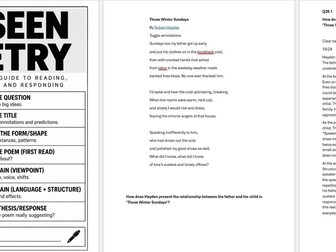
Unseen Poetry: Teaching Approach This 8-lesson sequence is designed to give students a simple, consistent and repeatable approach to unseen poetry, building the confidence and independence they need for the AQA exam. Rather than teaching students to simply ‘spot techniques’, the sequence explicitly teaches them how to think their way through an unfamiliar poem: starting with the question, predicting the big ideas, exploring form and structure, securing understanding, considering perspective and shifts, and then analysing how the poet’s choices create meaning. Across the sequence, students encounter a deliberately varied collection of poems exploring relationships, grief, love, nature and the value of life. The booklet includes ‘Those Winter Sundays’ by Robert Hayden, ‘Follower’ by Seamus Heaney, ‘Mid-Term Break’ by Seamus Heaney, ‘The Summer Day’ by Mary Oliver, ‘Leisure’ by W. H. Davies, ‘Valentine’ by Carol Ann Duffy and ‘First Love’ by John Clare. The paired poems also allow students to practise the shorter 28.2 comparison, including Those Winter Sundays with Follower and Valentine with First Love. Crucially, the poems change but the process remains deliberately consistent. Students repeatedly practise moving from meaning, to evidence, to methods, to explanation, with modelling and scaffolding initially supporting them towards a clear 16/24 response before showing them how clear analysis can be developed into something more thoughtful. The approach prioritises clarity rather than unnecessary complexity. Students are taught to understand the poem, stay focused on the question, select useful evidence and clearly explain how the writer’s choices develop the central idea. As the sequence progresses, scaffolding is gradually reduced so that students take increasing responsibility for interpreting the poem, selecting evidence and constructing their response. By the end of the 8 lessons, students should therefore have more than experience of a collection of individual poems. They should have developed a transferable routine for approaching both 28.1 and 28.2 that they can confidently apply to poems they have never seen before in the exam.
AQA unseen poetry- securing clear: a systematic approach to 28.1Quick View
jflounders1985

AQA unseen poetry- securing clear: a systematic approach to 28.1

(0)
This sequence of lessons, supported by a student booklet, is designed to build students’ confidence in approaching AQA Unseen Poetry Question 28.1 (24 marks). The lessons cover ‘Those Winter Sundays’ by Robert Hayden, ‘Mid-Term Break’ by Seamus Heaney, ‘The Summer Day’ by Mary Oliver and ‘Valentine’ by Carol Ann Duffy, gradually developing students’ independence in reading and analysing an unseen poem. The teaching has been shaped by AQA examiner reports, with model responses based on the qualities demonstrated in AQA responses awarded 16/24. The focus is on securing a clear Level 4 response: clear understanding of the poem, well-selected evidence and clear explanation of the poet’s methods and ideas. Each poem includes an opportunity for students to write, supported by a writing mat that provides a consistent approach to planning and constructing their response.
AQA English Literature Unseen poetry 6 week intervention bookletQuick View
jflounders1985

AQA English Literature Unseen poetry 6 week intervention booklet

(0)
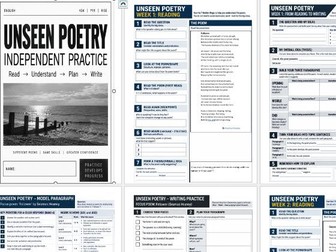
Unseen Poetry Intervention This intervention is designed to help students become more confident and independent when tackling unseen poetry. Weekly sessions are designed to last 1 hour and guide students through a consistent approach to understanding a poem, selecting useful quotations, exploring the writer’s methods and developing a clear response. Scaffolding is gradually reduced so that students can apply these skills independently to unfamiliar poems. Poems covered: Follower – Seamus Heaney Carpet-Weavers, Morocco – Carol Rumens Where I Come From – Elizabeth Brewster Hunting Snake – Judith Wright Lament – Gillian Clarke; Born Yesterday – Philip Larkin First Frost – Andrei Voznesensky.
Macbeth 6 week/ lesson intervention bookletQuick View
jflounders1985

Macbeth 6 week/ lesson intervention booklet

(0)
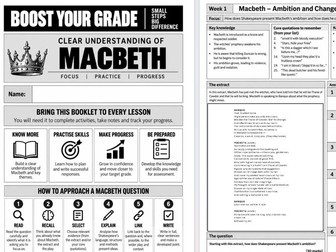
Boost Your Grade: Clear Understanding of Macbeth is a focused six-week intervention designed to help students turn secure knowledge into clearer, more successful exam responses. Each week guides students through a key character or theme, carefully selected core quotations, relevant context and an exam-style extract before modelling what an achievable Band 4 response looks like. Students repeatedly practise the same approach to select evidence, explain ideas using ‘because’, connect the extract to the wider play, plan and write, building confidence and independence week by week.
EDUQAS English language C2 writing- securing band 4 lessons and bookletQuick View
jflounders1985

EDUQAS English language C2 writing- securing band 4 lessons and booklet

(0)
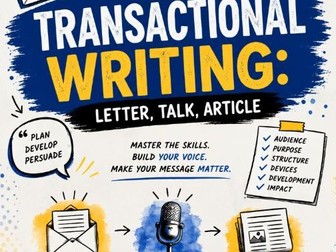
This scheme develops students’ confidence in transactional writing, taking them step-by-step from understanding genre, audience and purpose through to producing a complete, effective response. Students learn how to plan efficiently, select and develop convincing ideas, use ethos, pathos and logos, and create an engaging voice through purposeful transactional devices. The sequence is deliberately cumulative: students move from supported planning and modelling to developing ideas in detail, sustaining an argument across a whole text and adapting their writing for different audiences and forms. By the end, students bring these skills together in increasingly independent responses, with explicit comparison of Band 3, 4 and 5 writing, before completing a summative transactional writing task.
C2 READING EDUQAS 6 week intervention- selective relevant quotationsQuick View
jflounders1985

C2 READING EDUQAS 6 week intervention- selective relevant quotations

(0)
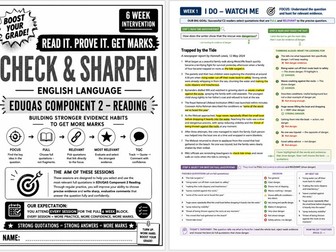
The key to success for EDUQAS C2 reading is for students to be able to read, understand and then select the most relevant quotations. If they can do this 10 times with quick comments, they can get 10/10. This 6 week intervention is designed using I do, we do, you do and guides students though reading and selecting the most relevant quotations. The aim is that students feel more confident and so can do this faster.
English cover lessons for KS3- descriptive writingQuick View
jflounders1985

English cover lessons for KS3- descriptive writing

(0)
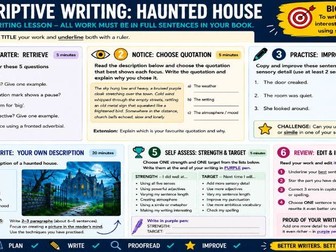
This bank contains 12 ready-to-use KS3 English cover lessons focused on developing students’ descriptive writing. The lessons are designed to provide a consistent, purposeful approach to cover while continuing to build the core writing skills students need throughout KS3 and into GCSE. Each lesson follows the same clear six-part structure, making the tasks easy for students to follow and straightforward for non-specialist cover teachers to deliver. Across the 12 lessons, students encounter a range of engaging settings and scenarios while repeatedly practising key descriptive writing techniques. Every lesson includes a model extract to demonstrate effective writing and support students before they write independently. The six-part sequence moves students through retrieval, model exploration, quotation selection, sentence-level practice, extended descriptive writing and self-assessment/editing. The lessons are designed to be displayed on the board with no additional printing required. Students complete all work in their exercise books and use purple pen to review and improve their writing, ensuring that cover lessons result in meaningful practice and visible progress.
EDUQAS C2 Writing 6 week intervention bookletQuick View
jflounders1985

EDUQAS C2 Writing 6 week intervention booklet

(0)
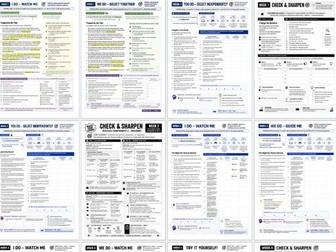
Boost GCSE Reading Scores with Explicit, Skills-Based Retrieval Transform how students tackle the EDUQAS English Language Component 2 reading paper with this fully planned 6-week intervention programme. Rather than relying on generic exam practice, this resource explicitly teaches students how to select full, relevant and high-value quotations before writing clear Track → Quote → Comment responses—the skill that underpins success across the entire reading paper. Built around an I Do → We Do → You Do model, each week introduces one carefully sequenced skill before providing guided practice, independent application, retrieval activities and review. The booklet also includes teacher guidance, self-assessment and final exam consolidation, making it ideal for intervention groups, revision sessions or classroom teaching. Perfect for teachers who want: A ready-to-teach, low-preparation intervention Explicit modelling that builds genuine exam confidence A clear progression from supported practice to independence Resources based on what EDUQAS examiners reward most Students who choose better evidence and write stronger answers—not just more answers.
GCSE EDUQAS C1 Narrative writing interventionQuick View
jflounders1985

GCSE EDUQAS C1 Narrative writing intervention

(0)
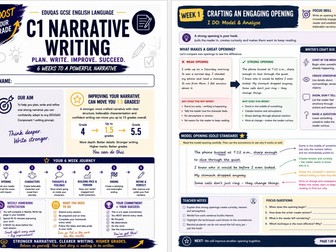
Give students a clear, structured route to success in EDUQAS GCSE English Language Component 1 with this fully resourced 6-week narrative writing intervention. Instead of asking students to invent a new story every lesson, this programme develops one carefully planned narrative, teaching them how to improve it week by week until it becomes a polished, adaptable exam response. Using a highly scaffolded I Do → We Do → You Do approach, students explicitly learn the craft of narrative writing: engaging openings, believable characters, thoughts and feelings, pace and tension, meaningful endings, and effective editing. Every session combines expert modelling, guided practice, independent writing and reflection, while weekly write-up pages ensure students continually revisit, extend and refine their story. Designed to reduce cognitive overload and maximise confidence, the intervention also includes a pre-session planning booklet, allowing students to arrive with their story already mapped out so lesson time focuses on improving writing rather than generating ideas. Perfect for teachers who want: A fully planned, ready-to-teach 6-week intervention Explicit instruction in narrative writing rather than vague creative tasks A proven step-by-step sequence from planning to polished exam writing High levels of student confidence through repeated drafting and refinement Better-crafted, more engaging narratives that are easily adapted to any EDUQAS C1 writing prompt.
KS4 EDUQAS C1 Language reading- 6 week interventionQuick View
jflounders1985

KS4 EDUQAS C1 Language reading- 6 week intervention

(0)
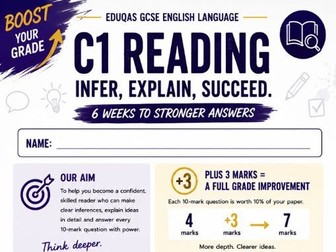
EDUQAS GCSE English Language Component 1 Reading Intervention (6 Weeks) Designed specifically for students who are consistently achieving around 3–4 marks out of 10 on the EDUQAS Component 1 reading questions, this intervention provides a structured, evidence-informed approach to improving analytical writing. Rather than relying on repeated exam practice, the programme explicitly teaches students how to think like successful readers. Drawing on recurring themes from EDUQAS examiner feedback, the six-week course focuses on the skills that weaker candidates often struggle with: selecting the best evidence, making clear inferences, developing explanations and maintaining a clear focus on the question. Each week follows a consistent I Do – We Do – You Do model, gradually reducing scaffolding as students build confidence and independence. Carefully sequenced lessons ensure that only one new analytical skill is introduced each week, allowing students to master the core processes needed for success before moving on. The intervention has been designed to help students move from simple, descriptive comments to clear, developed explanations that meet the expectations of the higher mark bands. Because the same reading routine is revisited every lesson, students develop habits that transfer directly into the exam. What’s included: Six fully planned intervention lessons Three-page student workbook for each week (I Do, We Do, You Do) Progressive extracts and EDUQAS-style 10-mark questions Explicit modelling and scaffolded practice Focus on inference, evidence selection and explanation—not terminology spotting Gradual reduction of support to build independence For many students, an improvement of just three marks on each 10-mark reading question can equate to around one GCSE grade overall. This intervention is designed to target those crucial marks by teaching students exactly what EDUQAS examiners are looking for in successful responses. Ideal for: GCSE intervention programmes Boost Your Grade sessions Small group tuition Pupil Premium interventions Borderline Grade 3–5 students Catch-up after mock examinations This resource has been created to be practical, highly scaffolded and easy to deliver, while remaining firmly rooted in the demands of the EDUQAS specification and examiner expectations. It is particularly effective for students who understand the text but struggle to communicate clear, developed analytical comments in their written responses.