Worksheets included! (Watermark will be removed once purchased)
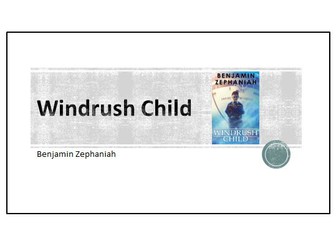
This fully-sequenced 15-lesson unit based on Windrush Child by Benjamin Zephaniah has been carefully adapted in line with the parent message on slide 3, with teaching following the novel up to Chapter 18 to ensure objectives are met while handling sensitive themes appropriately. Designed for Upper Key Stage 2, the PowerPoint blends historical context with rich reading and writing opportunities, covering inference, character analysis, informal letters, diary writing, speeches, grammar in context (modal verbs, relative clauses, subjunctive form, cohesion) and culminating in a persuasive pitch to design a monument honouring the Windrush generation. A purposeful, cross-curricular unit that develops empathy, historical understanding and high-quality extended writing.
worksheets included! (watermark removed when purchased)
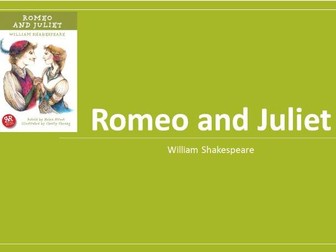
This fully resourced 13-lesson English unit is built around Romeo and Juliet by William Shakespeare, adapted for Upper Key Stage 2. Designed for 1-hour lessons, this PowerPoint blends drama, grammar mastery, creative writing, and literary analysis into a structured, engaging sequence.
Perfect for teachers wanting to introduce Shakespeare in an accessible, active, and purposeful way.
Why Teachers Love This Resource:
Engaging crime-scene hook lesson to launch the unit
Clear progression from reading to performance to polished writing
Explicit SPaG teaching woven naturally into meaningful tasks
Strong focus on characterisation, theme and authorial intent
A balance of creative, analytical and formal writing outcomes
What’s Included:
13 fully planned lessons with clear learning objectives
Dramatic opening lesson using a staged “murder scene” to inspire prediction and questioning
Character mapping and relationship analysis
Dialogue writing to develop characterisation
Poetry writing inspired by the Queen Mab speech
Diary writing in role using present perfect tense
Scene description using prepositional phrases and varied sentence openings
Action scene writing using varied parenthesis
Subjunctive mood taught explicitly through persuasive letter writing
Thematic analysis using conjunctions to justify opinion
Full play script writing sequence with:
Stage directions
Adverbials
Relative clauses
Parenthesis for tone and characterisation
Opportunities to modernise scenes while retaining Shakespearean themes
Grammar Coverage (Taught in Context):
Modal verbs
Expanded noun phrases
Direct speech
Metaphors and figurative language
Present perfect tense
Prepositional phrases
Parenthesis (dashes, brackets, stage directions)
Abstract nouns
Subjunctive mood
Conjunctions for justification
Relative clauses and pronouns
Final Outcomes:
By the end of the unit, pupils will:
Demonstrate secure understanding of key themes: love, hatred, conflict, power and fate
Write confidently in role using a formal tone where required
Create a structured and character-driven play script
Justify opinions using textual evidence
Apply grammar accurately and purposefully
Perfect For:
Year 5 & Year 6 Shakespeare study
Transition projects
Drama-linked English units
Building writing stamina and Greater Depth sentence control
This resource is ready-to-teach, carefully sequenced, and designed to make Shakespeare accessible, active and academically rigorous.
Worksheets included! (Watermark removed when purchased)
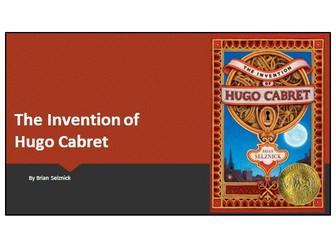
This fully resourced 20-lesson English unit is built around The Invention of Hugo Cabret by Brian Selznick. Carefully structured for Upper Key Stage 2, this unit blends visual literacy, rich narrative writing, persuasive speech, balanced argument, biography, and film review writing into one cohesive and highly engaging sequence.
Perfect for teachers wanting a high-quality, literature-led unit with strong grammar coverage and meaningful cross-curricular links to film and history.
Why Teachers Love This Resource:
Strong emphasis on visual literacy and inference
Explicit SPaG teaching woven into purposeful writing
Clear progression from narrative to persuasion to formal non-fiction
Cross-curricular links to early cinema and film history
Multiple polished writing outcomes suitable for assessment
What’s Included:
20 fully planned lessons with clear learning objectives
Question tag and apostrophe revision through engaging starter tasks
Image-led inference lessons using the novel’s cinematic illustrations
Diary writing in role using emotive language and adverbs of possibility
Character description using colons to link closely related clauses
Flashback narrative writing with dialogue and reporting clause variation
Persuasive letter writing with a formal tone
Balanced argument writing using adverbials and cohesive devices
Silent film review writing (including structure, tone and critique)
Fact vs opinion analysis tasks
Biography writing sequence focused on cohesion and past tense control
Editing lessons focused on redrafting and improving cohesion
Grammar & Writing Skills Covered (In Context):
Question tags and modal verbs
Apostrophes (contraction and possession)
Relative clauses
Colons and semi-colons
Dialogue and reporting clause positioning
Emotive language and repetition
Persuasive devices
Hyphens to avoid ambiguity
Adverbials of time
Balanced argument structure
Past tense control in biography writing
Cohesion through alternative noun phrases
Final Outcomes:
By the end of the unit, pupils will:
Write a flashback narrative with developed characterisation
Deliver a persuasive letter in a formal register
Construct a balanced written response to an open-ended question
Write a structured and evaluative film review
Produce a cohesive biography using varied past tense forms
Cross-Curricular Links:
Early cinema and silent film history
Introduction to filmmakers including Georges Méliès
Film critique linked to Hugo (2011), directed by Martin Scorsese
Perfect For:
Year 5 & Year 6 English
Writing moderation evidence
Teachers seeking extended, high-quality writing outcomes
Schools wanting a visually rich, immersive literature unit
This resource is ready-to-teach, carefully sequenced, and designed to build confident, cohesive and ambitious writers through a powerful blend of image, story and cinema.
Worksheets included! (Watermark removed once purchased)
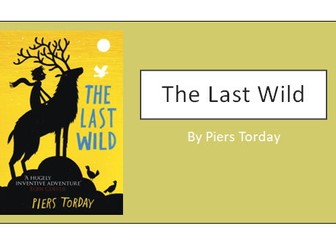
This fully resourced 19-lesson English unit is built around The Last Wild by Piers Torday. Designed for Upper Key Stage 2, this engaging sequence blends dystopian fiction, grammar mastery, formal report writing, character analysis and narrative craft into a cohesive and highly motivating unit.
Perfect for teachers looking to teach dystopia through a structured, skills-rich approach with strong cross-curricular links to environmental themes.
Why Teachers Love This Resource:
Engaging dystopian hook exploring utopian vs dystopian futures
Clear progression from reading analysis to independent story writing
Explicit SPaG teaching embedded within meaningful tasks
Strong focus on characterisation and atmosphere
Purposeful final outcome: pupils write Part One of their own dystopian story
What’s Included:
19 fully planned lessons with clear learning objectives
Prediction and questioning using modal verbs
Inference and setting analysis
Warning poster design using ambitious noun phrases
Character exploration using abstract nouns
Action retelling with relative clauses and dramatic dashes
Formal report writing using the passive voice
Diary writing using question tags to show uncertainty
Subjunctive mood in formal medical advisory letters
“Show not tell” emotional writing
Dialogue with embedded relative clauses
Step-by-step planning for a dystopian escape narrative
Structured narrative writing with paragraph control
Grammar & Writing Skills Covered (In Context):
Modal verbs
Question tags
Abstract nouns (-ness, -ment, -dom, -tion)
Relative clauses (including omission of pronouns)
Dashes for dramatic interruption
Passive voice for formal tone
Subjunctive mood
Colon to introduce lists
Cohesive paragraphing
Expanded noun phrases
Figurative language (similes, metaphors, personification, alliteration)
Strong verb choices and sentence variation
Final Outcomes:
By the end of the unit, pupils will:
Analyse and evaluate dystopian themes
Write a formal incident report using the passive voice
Craft emotive diary entries and advisory letters
Develop convincing characters through dialogue and description
Plan and write Part One of an original dystopian story, using advanced sentence structures and cohesive paragraphs
Themes Explored:
Environmental collapse
Human vs nature
Power and control
Freedom and survival
Trust and betrayal
Perfect For:
Year 5 & Year 6 English
Cross-curricular links with Geography and environmental studies
Greater Depth writing evidence
Teachers wanting a high-engagement, grammar-rich fiction unit
This resource is ready-to-teach, carefully sequenced, and designed to build confident, atmospheric and technically secure writers through the powerful lens of dystopian fiction.
Worksheets included! (Watermark removed once purchased)
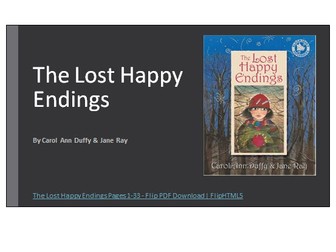
This fully-sequenced 15-lesson unit based on The Lost Happy Endings by Carol Ann Duffy and Jane Ray guides Upper Key Stage 2 pupils from rich literary analysis to an extended prequel narrative. Across the unit, children explore figurative language, mood and atmosphere, character perspective and theme, while developing key grammar skills in context including noun phrases, reported speech, modal verbs, subjunctive form and cohesion. Writing outcomes include a formal newspaper report and a carefully structured narrative that reimagines the witch as a good-turned-bad character, culminating in a polished, empathetic extended piece. A vocabulary-rich, creative and technically rigorous English unit ready to teach.
All worksheets included.
This engaging 6-lesson unit, Materials Consultants, provides a fully resourced and practical sequence for teaching Properties of Materials in Upper Key Stage 2. Designed around real-life problem-solving scenarios, pupils take on the role of “materials consultants” as they investigate, test and recommend materials for a range of purposes - from designing café tables and shopping bags to identifying the best thermal insulator and creating soundproof ear plugs.
Across the unit, children develop secure understanding of key concepts including hardness, strength, absorbency, transparency, conductivity (thermal and electrical), insulation and sound absorption. Each lesson follows a clear scientific enquiry structure with enquiry questions, variables, predictions, fair testing, results tables, and conclusions. Pupils record findings using tables, bar charts and line graphs, strengthening working scientifically skills alongside subject knowledge. Practical investigations include testing paper strength, measuring temperature change over time, building electrical circuits to identify conductors and insulators, and using sound meters to compare materials for soundproofing.
A hands-on, enquiry-led science unit that builds independence, scientific vocabulary and evidence-based reasoning — ready to teach and ideal for Year 5/6 classrooms.
This fully-sequenced 15-lesson unit based on The Tempest by William Shakespeare introduces Upper Key Stage 2 pupils to the plot, characters and themes of the play while developing strong grammar and writing skills in context. Across the unit, children explore characterisation, inference and theme before writing their own missing scene and eventually crafting a complete original play script inspired by Shakespeare’s style. Grammar objectives are woven throughout, including noun phrases with abstract nouns, relative clauses (including implied relatives), present perfect tense, adverbials for manner and cohesion, and dialogue conventions. The unit culminates in a polished, edited play script with stage directions and clear character voice - a creative yet technically rigorous approach to teaching Shakespeare.
Curiosity: The Story of a Mars Rover – Complete 15-Lesson English Unit (Y5/6)
WORKSHEETS INCLUDED! (watermark removed when purchased)
This fully resourced 15-lesson English unit is built around Curiosity: The Story of a Mars Rover by Markus Motum and is perfect for Upper Key Stage 2 (Year 5/6). Carefully structured for 1-hour lessons, the PowerPoint guides pupils from curiosity and questioning to polished, formal writing outcomes with a real-world purpose.
Why Teachers Love This Resource:
This unit seamlessly blends high-quality literature, non-fiction reading, grammar mastery, and purposeful writing, all within an engaging space-exploration theme that captivates pupils.
What’s Included:
15 fully planned lessons with clear learning objectives and progressive skill development
Explicit grammar teaching in context, including:
Modal verbs and adverbs
Subordinate and relative clauses
Passive voice
Expanded noun phrases
Cohesive devices and adverbials
Dashes for parenthesis
Visual literacy & comprehension using diagrams, labelled illustrations, and layout analysis
Structured talk and debate to develop reasoning, speculation, and vocabulary
Explanation and report writing, including:
A formal NASA log written in the passive voice
A news report on Curiosity’s landing
A detailed explanation text
Creative design task where pupils design, name, and label their own Mars Rover
Editing and publishing lessons focused on cohesion, clarity, and presentation
Final Outcomes:
By the end of the unit, pupils will:
Write confident formal explanation and report texts
Apply grammatical knowledge accurately and purposefully
Use ambitious vocabulary linked to science and exploration
Produce a polished final piece written for an authentic audience (NASA scientists)
Perfect For:
Year 5 and Year 6 English
Cross-curricular links with Science and STEM
Teachers wanting a ready-to-teach, high-impact unit that builds writing stamina and depth
This PowerPoint is classroom-ready, clearly sequenced, and designed to support high-quality outcomes for all learners.
**This extensive PowerPoint covers 15 lessons, meticulously planned around the classic tale of “Beowulf.”
Overview:**
Ignite your Year 5 and 6 students’ imaginations with this heroic English unit, expertly crafted to align with the ‘Literacy Tree’ scheme of work. This comprehensive 15-lesson PowerPoint is perfectly adapted for 1-hour English lessons, including dedicated ‘reading lessons’ to ensure deep comprehension and engagement with this challenging but rewarding text. Students will delve into the world of Anglo-Saxon legends, exploring themes of bravery, good vs. evil, and heroism through a variety of engaging activities.
What’s Included:
This PowerPoint is designed to be a complete teaching package, featuring a wide range of activities and clear learning objectives to support your students’ progress:
Setting the Scene & Predictions: Early lessons focus on inferring information about the setting and characters, making predictions, and understanding the significance of historical context.
Character and Plot Analysis: Students will discuss the hero’s journey, explore character emotions, and analyze pivotal plot points, such as Beowulf’s arrival and the fight with Grendel.
Figurative Language Exploration: Dedicated lessons on identifying and understanding kennings, alliteration, and metaphors within the text.
Descriptive Writing & Storytelling: Opportunities for students to practice descriptive writing, using powerful verbs and adverbs, and to retell parts of the story from different perspectives.
Grammar & Punctuation Focus: Targeted lessons on applying fronted adverbials, expanded noun phrases, and the correct use of colons and semi-colons to enhance writing.
Discussion & Debate: Prompts for class discussions and debates surrounding key themes and character motivations.
Vocabulary Development: Introduction of new vocabulary relevant to the Anglo-Saxon period and the epic tale.
Structured Planning & Writing: Guided planning stages for creating detailed narratives and other written outcomes.
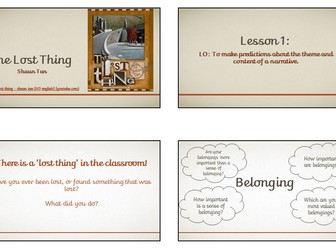
This captivating PowerPoint covers 15 lessons, expertly planned around Shaun Tan’s thought-provoking picture book, “The Lost Thing.”
Overview:
Engage your Year 5 and 6 students with this unique and visually rich English unit, meticulously crafted to align with the ‘Literacy Tree’ scheme of work. This comprehensive 15-lesson PowerPoint is perfectly adapted for 1-hour English sessions, including dedicated ‘reading/viewing lessons’ to ensure deep comprehension and foster critical thinking. Students will delve into themes of belonging, conformity, imagination, and the value of the unique, exploring the narrative through a blend of visual and textual analysis.
What’s Included:
This PowerPoint provides a complete teaching package, featuring a wide range of engaging activities and clear learning objectives to guide your students through this enriching unit:
Prediction and Theme Exploration: Initial lessons focus on making predictions about the narrative’s theme and content, using sensory details from sound clips and film excerpts.
Vocabulary Development: Dedicated activities on identifying and discussing adjectives and powerful verbs, enabling students to enrich their descriptive writing.
Visual Literacy Skills: Utilizes the animated film and illustrations to teach inference, character analysis, and understanding narrative through visual cues.
Exploring Belonging: Prompts for discussion around the concepts of being lost, finding something lost, and the importance of a sense of belonging.
Narrative Writing: Guided planning and drafting of stories, focusing on narrative structure, character development, and using precise language.
Grammar and Punctuation Application: Opportunities to apply various grammatical concepts, including the effective use of powerful verbs and adverbs to express ideas.
Editing and Redrafting: Structured lessons dedicated to editing for cohesion and refining written work, using teacher modelling and success criteria.
Perspective and Empathy: Encourages students to consider the perspective of the ‘Lost Thing’ and the narrator, fostering empathy.
**This comprehensive PowerPoint covers 15 lessons, meticulously planned around the inspiring story of “Hidden Figures.”
Overview:**
Launch your Year 5 and 6 students into a powerful and engaging English unit with this meticulously crafted resource, fully aligned with the ‘Literacy Tree’ scheme of work. This extensive 15-lesson PowerPoint is expertly adapted for 1-hour English sessions, incorporating dedicated ‘reading lessons’ to ensure deep comprehension and foster a love for this vital non-fiction narrative. Students will explore themes of perseverance, equality, innovation, and overcoming adversity as they learn about the incredible women who powered NASA.
What’s Included:
This PowerPoint provides a complete teaching package, featuring a wide range of activities and clear learning objectives to guide your students through this enriching unit:
Understanding Setting and Context: Initial lessons focus on exploring the historical setting, geographical context, and the societal challenges faced by the characters.
Character Study and Inference: Students will delve into the motivations and traits of key figures, using textual evidence to infer information about their resilience and intelligence.
Vocabulary Expansion: Lessons introduce and embed rich vocabulary relevant to space, science, and the era, encouraging students to apply new words in their writing.
Narrative Writing & Retelling: Opportunities for students to retell events from different perspectives, focusing on descriptive language and maintaining viewpoint.
Non-Fiction Writing: Guidance on structuring non-chronological reports, using subheadings, and presenting factual information clearly.
Grammar and Punctuation Mastery: Targeted lessons on applying key grammatical concepts including adverbial phrases, clauses, and the correct use of hyphens, colons, and semi-colons to enhance writing clarity and sophistication.
Discussion and Empathy: Prompts for class discussions around themes of discrimination, ambition, and the importance of recognising unsung heroes.
Biographical Writing: Students will practice writing short biographies, highlighting key achievements and contributions.
Formal and Informal Language: Exploration of different registers and how to adapt language for various purposes and audiences.
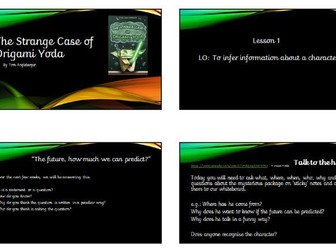
This comprehensive PowerPoint covers 15+ lessons based on Tom Angleberger’s "The Strange Case of Origami Yoda."
Overview:
Immerse your Year 5 and 6 students in this captivating English unit, meticulously planned around the popular ‘Literacy Tree’ scheme of work. This PowerPoint provides a full 15 lessons, expertly adapted for 1-hour English sessions, including dedicated ‘reading lessons’ to deepen comprehension and foster a love for the book. The unit explores the central question posed by Origami Yoda: “The future, how much we can predict?”
What’s Included:
This PowerPoint is packed with engaging activities and clear learning objectives to guide your students through a rich literary journey:
In-depth Character Analysis: Lessons begin with inferring information about characters and exploring their perspectives, such as Tommy’s initial question and later comparison of different viewpoints.
Discussion & Debate Skills: Students will develop their ability to discuss topics in groups, taking turns and acknowledging responses, and participate in a formal debate on whether the future can be predicted.
Instructional Writing: Practical lessons guide students through creating their own ‘Origami Yoda’ while focusing on imperative verbs.
Grammar & Vocabulary Development: Explicit teaching of turning nouns and adjectives into verbs using suffixes (-ise, -ate, -ify).
Writer’s Style & Viewpoint: Activities encourage students to experiment with a writer’s style, including creating ‘Yoda sentences’ and maintaining viewpoint in diary entries.
Evidence-Based Reasoning: Regular opportunities for students to gather and use evidence from the text to support arguments, both for and against Yoda’s predictions.
Drama & Role-Play: Incorporates interactive drama techniques like ‘Conscience Corridor’ to explore different perspectives.
Cohesive Writing & Editing: Focus on using language features for coherence in discussion texts and mastering KS2 punctuation, including semi-colons.
Formal Debate Planning & Writing: Structured lessons to plan and write a formal debate, including model opening paragraphs, ‘for’ and ‘against’ sections, and conclusions.
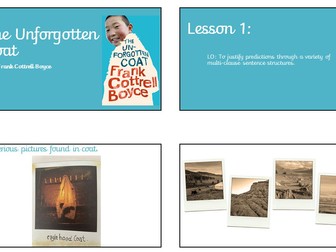
This evocative PowerPoint covers 15+ lessons, meticulously planned around Frank Cottrell Boyce’s compelling novella, “The Unforgotten Coat.”
Overview:
Engage your Year 5 and 6 students with this deeply moving and unique English unit, expertly crafted to align with the ‘Literacy Tree’ scheme of work. This comprehensive 15±lesson PowerPoint is perfectly adapted for 1-hour English sessions, including dedicated ‘reading lessons’ to ensure deep comprehension and foster empathy. Students will explore themes of friendship, displacement, memory, and the power of imagination as they follow the mysterious story of two Mongolian children and their unforgettable coat.
What’s Included:
This PowerPoint provides a complete teaching package, featuring a wide range of engaging activities and clear learning objectives to guide your students through this enriching unit:
Prediction and Inference: Initial lessons focus on making and justifying predictions based on mysterious visual prompts (e.g., pictures found in a coat, polaroids), using a variety of multi-clause sentence structures.
Vocabulary Development: Activities include using dictionaries to check spellings and meanings of unfamiliar words encountered in the text.
Shared Writing and Cohesion: Guided shared writing sessions focus on constructing coherent sentences and paragraphs, utilizing conjunctions (but, although, however, because, since, as, therefore) to link thoughts and evidence.
Narrative Writing: Opportunities for students to craft imaginative narratives inspired by the book’s themes and mysterious elements.
Tense and Cohesion: Dedicated lessons on understanding and maintaining cohesion when changing tense in a story, specifically focusing on the present and progressive present tense.
Editing and Redrafting: Structured lessons for editing work based on marking and feedback, with a focus on refining for cohesion and publishing in a journal format with accompanying visuals.
Understanding Character and Theme: Explore the journey of the characters and the nuanced themes of migration, memory, and the kindness of strangers.
Email Writing: A practical lesson involving identifying scrambled words in an email, encouraging dictionary use and problem-solving.
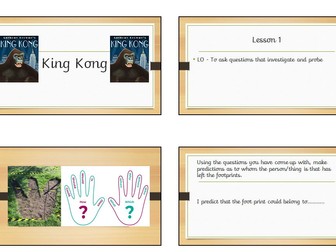
**This exciting PowerPoint covers 15+ lessons, expertly planned around the classic adventure story of “King Kong.”
Overview:**
Take your Year 5 and 6 students on an unforgettable journey to Skull Island with this captivating English unit, meticulously crafted to align with the ‘Literacy Tree’ scheme of work. This comprehensive 15±lesson PowerPoint is perfectly adapted for 1-hour English sessions, including dedicated ‘reading lessons’ to ensure deep comprehension and foster a love for this iconic tale. Students will explore themes of exploration, danger, wonder, and the consequences of human intervention as they follow the epic story of King Kong.
What’s Included:
This PowerPoint provides a complete teaching package, featuring a wide range of engaging activities and clear learning objectives to guide your students through this adventurous unit:
Immersive Setting Descriptions: Lessons focus on inferring information about the mysterious Skull Island and crafting vivid descriptive passages using evocative language.
Character Analysis & Empathy: Students will delve into the motivations and emotions of key characters like Carl Denham, Ann Darrow, and Kong himself, exploring different perspectives.
Figurative Language Exploration: Opportunities to identify and apply a range of literary devices including metaphors, similes, personification, and suspenseful language to enhance writing.
Journalistic & Persuasive Writing: Activities include writing newspaper reports, diary entries, and persuasive arguments related to the events of the story.
Grammar & Punctuation Development: Targeted lessons on applying fronted adverbials, expanded noun phrases, complex sentences, and a variety of punctuation for effect.
Oral Storytelling & Discussion: Prompts for class discussions and opportunities for students to retell parts of the narrative, focusing on dramatic effect.
Debate Skills: Engage students in debates surrounding ethical dilemmas presented in the story, such as the capture of Kong.
Vocabulary Enrichment: Introduction of rich, descriptive vocabulary relevant to the jungle, adventure, and the awe-inspiring creature.
Planning and Drafting: Structured planning stages to guide students through various writing outcomes, ensuring coherent and well-developed pieces.