How do tectonic plates move? (Lesson 3)Quick View
thegeographyco

How do tectonic plates move? (Lesson 3)

(0)
A full and complete lesson for KS3. By the end of the lesson, I will be able to: Recall the layers of the Earth Explain and create an annotated diagram of convection currents Describe the processes of slab pull and ridge push
What is the structure of the Earth? (Lesson 1)Quick View
thegeographyco

What is the structure of the Earth? (Lesson 1)

(0)
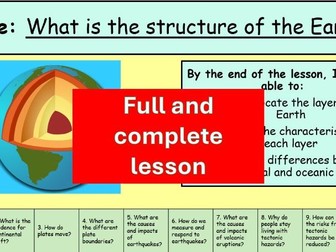
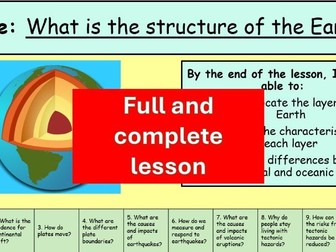
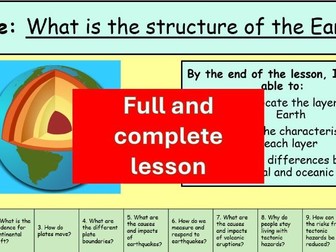
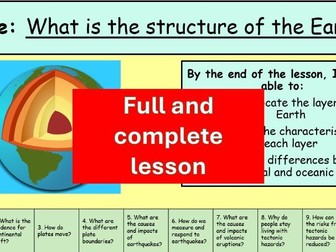
A full and complete lesson ideal for KS3. By the end of the lesson, I will be able to: Name and locate the layers of the Earth Describe the characteristics of each layer Explain the differences between continental and oceanic plates
What are the causes and effects of earthquakes? (Lesson 5)Quick View
thegeographyco

What are the causes and effects of earthquakes? (Lesson 5)

(0)
A full and complete lesson for KS3. By the end of the lesson, I will be able to: Define and locate the focus and epicentre of earthquakes Explain the difference between primary and secondary effects Explain what causes an earthquake to occur Apply knowledge to a case study example
What is extreme weather? (Lesson 1)Quick View
thegeographyco

What is extreme weather? (Lesson 1)

(0)
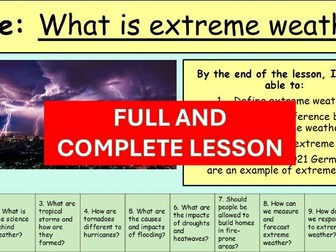
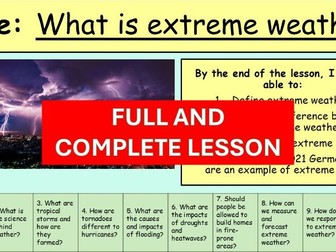
A full and complete lesson for KS3 (most suited to Year 7). By the end of the lesson, I will be able to: Define extreme weather Describe the difference between normal and extreme weather events Give examples of extreme weather Explain why the 2021 German floods are an example of extreme weather Lesson includes a range of activities including a Frayer Model, reading comprehension and a stand-up, sit down activity.
How do physical landscapes affect sport? (Lesson 3)Quick View
thegeographyco

How do physical landscapes affect sport? (Lesson 3)

(0)
A full and complete lesson designed for Year 9. By the end of the lesson, I will be able to: Identify the different physical landscapes that different sports require Describe the impact of mountains, rivers, oceans and climate on specific sports
How do people and places influence sport? (Lesson 4)Quick View
thegeographyco

How do people and places influence sport? (Lesson 4)

(0)
A full and complete lesson created for Year 9. By the end of the lesson, I will be able to: Identify human factors that influence sport Explain how population density, wealth and infrastructure have an impact on sports Determine if human or physical factors have the greatest influence
What is the science behind weather? (Lesson 2)Quick View
thegeographyco

What is the science behind weather? (Lesson 2)

(0)
A full and complete lesson for KS3 (most suited to Year 7). By the end of the lesson, I will be able to: Describe basic weather systems Understand how these systems combine to form weather Explain the difference between weather and climate
How are tornadoes different to hurricanes? (Lesson 4)Quick View
thegeographyco

How are tornadoes different to hurricanes? (Lesson 4)

(0)
A full and complete lesson for KS3 (most suited to Year 7). By the end of the lesson, I will be able to: Explain the formation of tornadoes Describe the distribution and frequency of tornadoes in Tornado Alley Identify the differences between tornadoes and hurricanes.
Will climate change impact the future of extreme weather? (Lesson 10)Quick View
thegeographyco

Will climate change impact the future of extreme weather? (Lesson 10)

(0)
A full and complete lesson for KS3 (most suited to Year 7). By the end of the lesson, I will be able to: Describe how climate change is increasing events in frequency and intensity Describe the relationship between global warming and extreme weather Discuss what individuals, communities and governments can do.
How do we respond to extreme weather? (Lesson 9)Quick View
thegeographyco

How do we respond to extreme weather? (Lesson 9)

(0)
A full and complete lesson for KS3 (most suited to Year 7). By the end of the lesson, I will be able to: Define and give examples of emergency planning, evacuation and international aid Describe methods of long-term management Design a disaster response plan