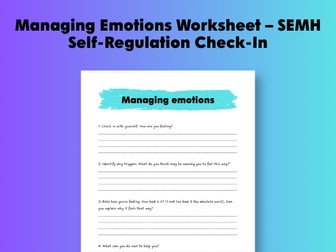
Managing Emotions Worksheet – SEMH Self-Regulation Check-InQuick View
pastoraltoolkit

Managing Emotions Worksheet – SEMH Self-Regulation Check-In

(0)
A simple, structured emotional check-in sheet designed to help pupils name what they’re feeling, understand what’s driving it, and identify a next step - without needing an adult to walk them through it. This one-page worksheet uses a clear four-step framework: Check in: How am I feeling right now? Identify triggers: What might be causing this? Rate it: A 1–5 scale to gauge intensity, with space to explain why Plan: What can I do next to help myself? Ideal for pastoral offices, nurture groups, ELSA/TA 1:1 sessions, tutor time, or as a calm-down/reset tool during a behaviour intervention. The prompts are open enough to use with a wide age range and are especially useful for pupils with SEMH needs, anxiety, or emotional regulation difficulties who benefit from a predictable, low-demand structure for processing feelings. Print and go - no prep required. Part of the growing Pastoral & Inclusion Toolkit series of practical, trauma-informed resources for SEND, behaviour, and inclusion teams.
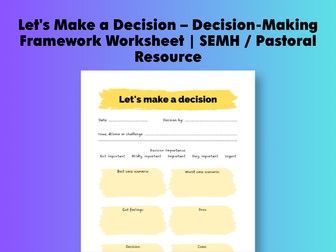
Let's Make a Decision – Decision-Making Framework Worksheet | SEMH / Pastoral ResourceQuick View
pastoraltoolkit

Let's Make a Decision – Decision-Making Framework Worksheet | SEMH / Pastoral Resource

(0)
A structured template that walks pupils through a difficult decision step by step, rather than leaving them to weigh it all up in their head at once — particularly useful for pupils who struggle with impulsivity, indecision, or executive function difficulties. The framework covers: The issue, dilemma or challenge, with a simple importance scale (not important to urgent) Best case and worst case scenarios Gut feelings, separate from pros and cons Pros and cons side by side A final decision and next steps, with space to record who made the decision and when By separating instinct (gut feelings) from analysis (pros/cons, best/worst case), this sheet supports pupils in slowing down and thinking a decision through from multiple angles before committing to a course of action. Useful for pastoral or mentoring conversations, executive function/ADHD support, restorative conversations involving a choice going forward, or as a personal organisation tool for older pupils navigating options (subject choices, friendship conflicts, behaviour choices). Print and go - no prep required. Part of the growing Pastoral & Inclusion Toolkit series of practical, trauma-informed resources for SEND, behaviour, and inclusion teams.
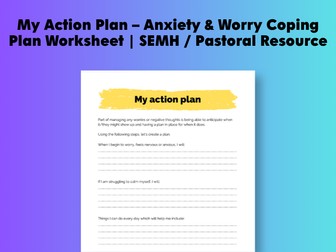
My Action Plan – Anxiety & Worry Coping Plan Worksheet | SEMH / Pastoral ResourceQuick View
pastoraltoolkit

My Action Plan – Anxiety & Worry Coping Plan Worksheet | SEMH / Pastoral Resource

(0)
A proactive planning sheet that helps pupils build their own coping strategy for worry and anxiety in advance, rather than trying to figure out what to do in the middle of a difficult moment. The sheet works through four prompts: When I begin to worry, feel nervous or anxious, I will… If I am struggling to calm myself, I will… Things I can do every day which will help me include… Things which I can do to help me relax are… By separating in-the-moment strategies from daily preventative habits, this worksheet helps pupils build a personalised, realistic toolkit they can return to again and again — turning “I don’t know what to do when I feel like this” into a plan they’ve already thought through. Useful for anxiety support plans, 1:1 pastoral or ELSA sessions, transition planning (new class, new school, exams), or as a take-home reference pupils can keep with them. Print and go — no prep required. Part of the growing Pastoral & Inclusion Toolkit series of practical, trauma-informed resources for SEND, behaviour, and inclusion teams
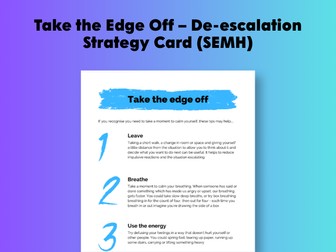
Take the Edge Off – De-escalation Strategy Card (SEMH)Quick View
pastoraltoolkit

Take the Edge Off – De-escalation Strategy Card (SEMH)

(0)
A practical, one-page prompt sheet offering four simple strategies pupils can use the moment they recognise they need to calm down - before a situation escalates further. The four steps: Leave: creating physical distance from the trigger to reduce impulsive reactions Breathe: including a box-breathing technique to slow the physiological stress response Use the energy: safe ways to release built-up tension (movement, tearing paper, carrying something heavy) Relax: practical suggestions for releasing residual tension once the peak has passed Grounded in a trauma-informed, window-of-tolerance approach, this card gives pupils a concrete, memorable script to follow rather than an abstract instruction to “calm down.” Useful as a pocket-sized reference, a poster for a nurture room or regulation station, a de-escalation tool for TAs and pastoral staff, or a resource within an individual behaviour plan. Print and go - no prep required. Part of the growing Pastoral & Inclusion Toolkit series of practical, trauma-informed resources for SEND, behaviour, and inclusion teams.
Triggers & Responses – Post-Incident Reflection Sheet | SEMH / Pastoral ResourceQuick View
pastoraltoolkit

Triggers & Responses – Post-Incident Reflection Sheet | SEMH / Pastoral Resource

(0)
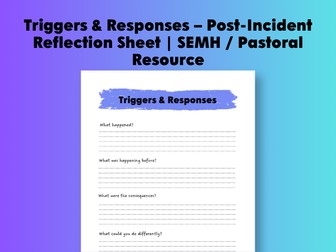
A structured reflection sheet designed to help pupils unpick an incident after the heat of the moment has passed, building self-awareness of their own triggers and response patterns over time. The sheet works through five prompts: What happened? What was happening before? (identifying the antecedent/trigger) What were the consequences? What could you do differently? If… then… (turning the reflection into a concrete future plan) This ABC-style structure (antecedent, behaviour, consequence) is a well-established approach in behaviour and inclusion work, reframed here in accessible, first-person language so pupils can complete it independently or with support from a member of staff. Useful as a restorative conversation starter, a reflection task following a behaviour incident, evidence for a behaviour plan or EHCP review, or a regular check-in tool for pupils who struggle with repeated patterns of dysregulation. Print and go - no prep required. Part of the growing Pastoral & Inclusion Toolkit series of practical, trauma-informed resources for SEND, behaviour, and inclusion teams.
Think, Feel & Act – Thoughts, Body & Behaviour Worksheet | SEMH / Pastoral ResourceQuick View
pastoraltoolkit

Think, Feel & Act – Thoughts, Body & Behaviour Worksheet | SEMH / Pastoral Resource

(0)
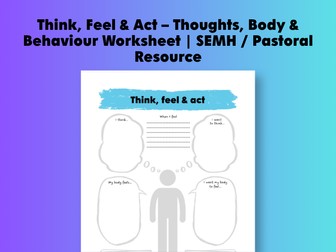
A visual worksheet that helps pupils map the connection between their thoughts, body sensations, and actions - and compare where they are now against where they’d like to be. Structured around a central figure with six linked prompts: I think… / I want to think… My body feels… / I want my body to feel… I act this way… / I want to act this way… With space at the top to name the trigger: “When I feel…” Rooted in CBT-informed practice, this worksheet makes the thought–feeling–behaviour link concrete and visual rather than abstract, helping pupils see how a thought or trigger cascades into a physical sensation and then an action - and start identifying what they’d rather think, feel, or do instead. Useful for 1:1 pastoral or ELSA sessions, PSHE lessons on emotional literacy, or as a personalised page within a pupil’s SEMH support plan. Print and go - no prep required. Part of the growing Pastoral & Inclusion Toolkit series of practical, trauma-informed resources for SEND, behaviour, and inclusion teams.
Imagine Another's Feelings – Empathy & Perspective-Taking Worksheet | SEMH / Pastoral ResourceQuick View
pastoraltoolkit

Imagine Another's Feelings – Empathy & Perspective-Taking Worksheet | SEMH / Pastoral Resource

(0)
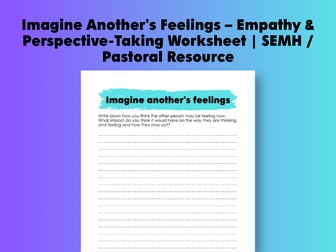
A reflective writing sheet that prompts pupils to step outside their own perspective and consider the impact of a situation on someone else. The prompt is simple but powerful: write down how you think the other person may be feeling now, and what impact this might have on the way they are thinking, feeling, and acting. Perspective-taking is a key building block of empathy and social understanding, and can be genuinely difficult for pupils who are dysregulated, egocentric in their thinking (developmentally normal at various ages), or who have social communication needs. This sheet gives that skill a concrete structure to practise in. Particularly useful following a conflict or incident involving another pupil or member of staff, as part of a restorative conversation, in PSHE lessons on empathy and relationships, or as a regular reflective task for pupils working on social understanding as part of an EHCP or SEMH support plan. Print and go — no prep required. Part of the growing Pastoral & Inclusion Toolkit series of practical, trauma-informed resources for SEND, behaviour, and inclusion teams.
Taking Control! – Self-Regulation & Locus of Control Worksheet | SEMH / Pastoral ResourceQuick View
pastoraltoolkit

Taking Control! – Self-Regulation & Locus of Control Worksheet | SEMH / Pastoral Resource

(0)
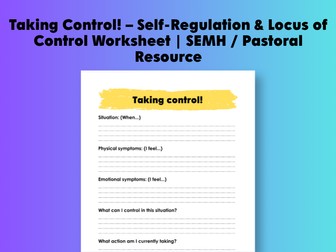
A detailed reflection sheet that helps pupils separate what’s happening from how their body and mind are responding to it — and identify what’s genuinely within their control. The sheet works through six prompts: Situation: (When…) Physical symptoms: (I feel…) Emotional symptoms: (I feel…) What can I control in this situation? What action am I currently taking? What could I do differently? (If… then I will…) By separating physical and emotional symptoms from the situation itself, and then narrowing in on what’s actually controllable, this worksheet builds a core SEMH skill: recognising the difference between what’s happening to a pupil and what they can choose to do about it. Useful for anxiety and stress management, following a dysregulated episode as a more in-depth follow-up to a quick reflection sheet, 1:1 pastoral or ELSA sessions, or as evidence within a SEMH or behaviour support plan. Print and go — no prep required. Part of the growing Pastoral & Inclusion Toolkit series of practical, trauma-informed resources for SEND, behaviour, and inclusion teams.
Best and Worst – Managing Anxiety About New Situations Worksheet | SEMH / Pastoral ResourceQuick View
pastoraltoolkit

Best and Worst – Managing Anxiety About New Situations Worksheet | SEMH / Pastoral Resource

(0)
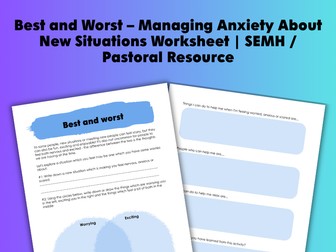
A two-page worksheet that helps pupils explore new or unfamiliar situations that are making them feel nervous, anxious or scared — and recognise that worry and excitement often overlap more than they think. Page one introduces the idea that nervousness and excitement can feel similar, and asks pupils to name a situation that’s worrying them before sorting their thoughts into a Venn diagram: things that are purely worrying, purely exciting, or a bit of both. Page two builds this into a support plan, with space to record: Things I can do to help me when I’m feeling worried, anxious or scared People who can help me Things I can do to help me relax What’s one thing you have learned from this activity? This is especially useful ahead of transitions — a new school, new class, exams, trips, or any change to routine — where anxiety and anticipation are genuinely difficult to tell apart. Useful for transition planning, anxiety support plans, 1:1 pastoral or ELSA sessions, or as a take-home resource before a known change. Print and go — no prep required. Part of the growing Pastoral & Inclusion Toolkit series of practical, trauma-informed resources for SEND, behaviour, and inclusion teams.
Finding Common Ground – Relationship-Building Activity Sheet | Pastoral / Tutor Time ResourceQuick View
pastoraltoolkit

Finding Common Ground – Relationship-Building Activity Sheet | Pastoral / Tutor Time Resource

(0)
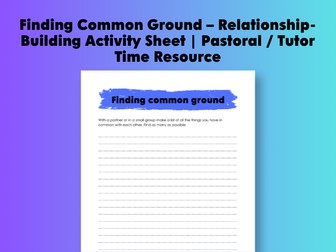
A simple, open-ended activity that gets pupils actively looking for similarities with a partner or small group, rather than focusing on differences or conflict. The instruction is straightforward: with a partner or in a small group, list as many things as possible that you have in common with each other. This kind of shared-ground exercise is a well-used restorative and relationship-building technique — it works well as an icebreaker for a new tutor group or seating plan, a warm-up before a restorative conversation between pupils in conflict, a transition activity when classes or friendship groups change, or a quick connection-building task during tutor time or PSHE. The open lined format means it scales naturally from a quick 5-minute filler to a longer, more reflective conversation. Print and go — no prep required. Part of the growing Pastoral & Inclusion Toolkit series of practical, trauma-informed resources for SEND, behaviour, and inclusion teams.
My Plan: Personal De-escalation & Support StrategyQuick View
pastoraltoolkit

My Plan: Personal De-escalation & Support Strategy

(0)
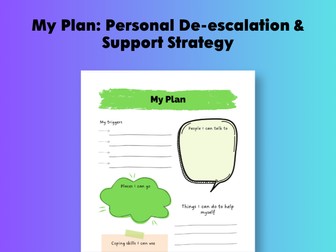
My Plan is a printable worksheet template designed to empower students to recognise and manage their own behavioural and emotional triggers. By mapping their personal triggers, safe people, safe spaces, and coping strategies in one place, students create an individualised action plan they can reference when things become difficult—whether due to anxiety, sensory overwhelm, neurodevelopmental differences, or behavioural flashpoints. Intended use: Support conversations between students and pastoral staff, SEND teams, or key adults Part of individualised behaviour or emotional regulation plans One-page reference tool for students to carry with them or display in their classroom Foundation for crisis planning or collaborative problem-solving approaches Sections included: My triggers: Helps students identify specific situations, sensations, or stressors that escalate their behaviour or emotional state People I can talk to: Names trusted adults they can approach for support or de-escalation Places I can go: Physical spaces (classroom corner, library, office) they can access to regulate or step away Coping skills I can use: Strategies they already know work (breathing, movement, sensory tools, etc.) Things I can do to help myself: Proactive actions they can take to manage their wellbeing Why it works: This resource combines trauma-informed practice with executive function support, giving students agency and a concrete plan rather than relying solely on adult intervention. It’s particularly valuable for SEND students, those with anxiety or dysregulation profiles, and anyone benefiting from external structure and choice architecture.
5...4...3...2...1: Sensory Grounding TechniqueQuick View
pastoraltoolkit

5...4...3...2...1: Sensory Grounding Technique

(0)
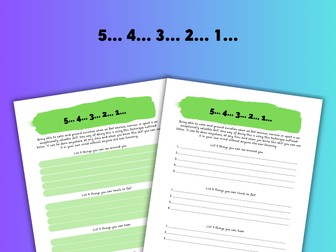
5…4…3…2…1 is an evidence-based sensory grounding worksheet that teaches students a portable, discreet anxiety and de-escalation strategy. By systematically engaging all five senses, students activate their parasympathetic nervous system and anchor themselves in the present moment—pulling attention away from anxious thoughts and back to physical reality. Intended use: Standalone handout or laminated reference card for students to use independently Part of anxiety management or coping skills training during pastoral support Teach-and-practise activity during PSHE, wellbeing, or form time sessions Accessible tool for students in exam anxiety, social anxiety, or sensory overload situations Support for students with trauma responses or panic symptoms How it works: Students work through each sensory category in descending order (5–1), listing concrete observations: 5 things you can see: Visual grounding—notice specific objects, colours, textures in the environment 4 things you can touch or feel: Tactile awareness—textures, temperature, physical sensations 3 things you can hear: Auditory attention—specific sounds, distinguishing background noise 2 things you can smell: Olfactory focus—pleasant or neutral scents 1 thing you can taste: Gustatory awareness—a particular flavour or sensation Why it works: This technique interrupts the anxiety feedback loop by shifting focus from internal catastrophising to external sensory data. It’s rooted in polyvagal theory and trauma-informed practice, making it particularly effective for dysregulated students, those with SEND, and anyone experiencing acute stress. Because it’s internal and behavioural-neutral, students can use it discreetly during lessons, exams, or social situations without drawing attention. Teacher note: Practise this during calm moments first so students develop automaticity before needing it in crisis.
Different Perspectives: Cognitive Reframing & Problem-SolvingQuick View
pastoraltoolkit

Different Perspectives: Cognitive Reframing & Problem-Solving

(0)
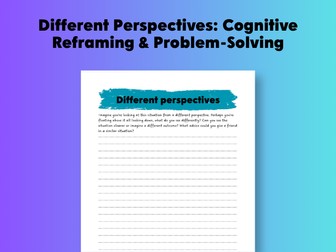
Different Perspectives is a metacognitive worksheet that teaches students to step outside their immediate emotional or situational experience and view problems through a more objective lens. By deliberately shifting perspective—imagining themselves floating above a situation looking down—students activate cognitive flexibility and access alternative solutions they couldn’t see from inside the problem. Intended use: Restorative conversations following conflict or behaviour incidents Part of collaborative problem-solving with students (building on Ross Greene’s approach) Reflection activity during pastoral support or counselling sessions Teachable moment after a social conflict or friendship breakdown Support for students in fixed thinking or catastrophising patterns PSHE lesson on resilience, empathy, or conflict resolution How it works: Students are prompted to: Shift perspective: Imagine viewing the situation from above, removing themselves emotionally Notice differences: What do they see differently from this elevated viewpoint? What becomes clearer? Explore alternative outcomes: Can they imagine a different resolution or way forward? Build empathy & problem-solve: By considering what advice they’d give a friend, students apply wisdom they couldn’t access when emotionally enmeshed Why it works: This technique leverages psychological distance—a cognitive principle showing that when we step back mentally, our prefrontal cortex (reasoning, planning) engages while our amygdala (emotion) quietens. It’s particularly powerful for: Students with rigidity or all-or-nothing thinking patterns Those stuck in blame cycles or victim narratives Building empathy and perspective-taking skills Developing agency and ownership of solutions Linked theory: Cognitive behavioural therapy, Ross Greene’s Collaborative Problem Solving, window of tolerance (Siegel).
What I Can & Can’t Control | Pastoral & Inclusion Reflection Sheet (FREE)Quick View
pastoraltoolkit

What I Can & Can’t Control | Pastoral & Inclusion Reflection Sheet (FREE)

(0)
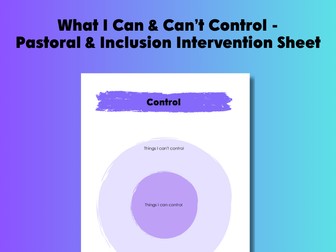
This Zones of Control–inspired reflection sheet helps students identify what is within their control and what is outside of their control, supporting emotional regulation, behaviour reflection and positive decision-making. The simple visual layout makes this resource easy to use in 1:1 pastoral conversations, small-group interventions or calm-down spaces, without requiring specialist training or preparation. Students are encouraged to focus on their choices, reactions and next steps, rather than becoming overwhelmed by situations they cannot change. This can help reduce frustration, anxiety and reactive behaviour while promoting a sense of personal responsibility and control. This resource is particularly effective when used as a guided conversation tool, rather than a written task to be completed in silence. When Could This Be Used? After a behaviour incident During a restorative or reflective conversation In pastoral check-ins or mentoring sessions As part of a self-regulation or emotional literacy intervention In inclusion rooms, withdrawal spaces or alternative provision With students who feel overwhelmed, stuck or frustrated Suitable for KS2–KS4, depending on need and context. Who Is This Resource For? Designed for use by: Teaching Assistants Pastoral support staff Behaviour mentors Heads of Year / House teams Inclusion staff Teachers No specialist SEN knowledge required. What’s Included? 1 × A4 printable reflection sheet Clear, student-friendly layout Neutral design suitable for repeated use