Binary to Hexadecimal Conversion Worksheet & Mark Scheme Bundle (KS3/GCSE Computer Science)Quick View
WilliamsCodeLab

Binary to Hexadecimal Conversion Worksheet & Mark Scheme Bundle (KS3/GCSE Computer Science)

(0)
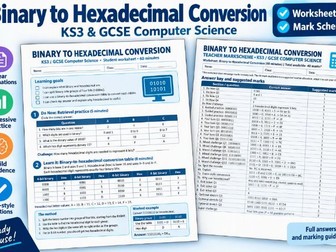
Help students master binary to hexadecimal conversion with this fully scaffolded worksheet and teacher mark scheme. Designed for KS3 and GCSE Computer Science, this resource guides learners through the conversion process step-by-step before building confidence with independent and exam-style practice. What’s included? Student worksheet (approximately 60 minutes) Complete teacher mark scheme with answers Retrieval starter activity Binary-to-hexadecimal conversion table Worked example and guided practice Independent practice questions Exam-style application questions Exit ticket and reflection activities Stretch and challenge tasks for higher-attaining students Printable and ready-to-use format Topics Covered Binary and hexadecimal number systems Nibbles and binary grouping Converting 8-bit and larger binary values into hexadecimal Understanding the relationship between binary and hexadecimal Exam technique and reasoning questions Ideal for: KS3 Computing GCSE Computer Science (OCR, AQA, Edexcel and similar specifications) Classroom lessons Cover lessons Homework Intervention and revision sessions
Binary to Denary Conversion Worksheet & Answer Key | KS3 / GCSE Computer ScienceQuick View
WilliamsCodeLab

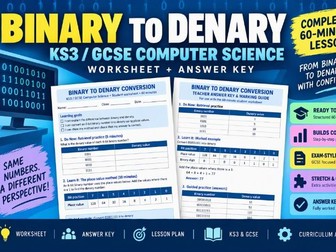
Binary to Denary Conversion Worksheet & Answer Key | KS3 / GCSE Computer Science

(0)
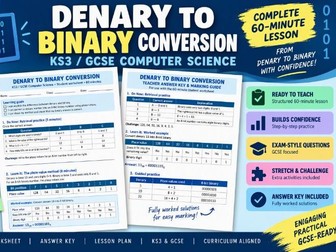
Help students develop confidence with number systems using this complete Binary to Denary Conversion lesson resource. Designed for KS3 Computing and GCSE Computer Science, this structured worksheet guides learners through the process of converting 8-bit binary numbers into denary values using place-value columns and clear step-by-step methods. The resource follows a gradual learning approach, moving from retrieval practice and teacher modelling to guided questions, independent practice, exam-style tasks, and self-assessment activities. Students learn how to identify the correct binary place values, add the appropriate column values, and explain their reasoning clearly. Included in this Student worksheet (approximately 60 minutes) Fully worked teacher answer key and marking guide Retrieval starter activity Guided and independent practice tasks Spot-the-mistake misconception activity Exam-style GCSE questions with mark scheme guidance Exit ticket and confidence reflection Optional stretch and challenge activities Topics Covered Binary and denary number systems 8-bit binary place values Converting binary to denary Showing and checking working out Common student misconceptions GCSE-style exam application questions Binary representation in computers
Denary to Binary Conversion Worksheet & Answer Key | KS3 / GCSE Computer ScienceQuick View
WilliamsCodeLab

Denary to Binary Conversion Worksheet & Answer Key | KS3 / GCSE Computer Science

(0)
Help students master one of the core number systems topics in Computer Science with this structured and engaging Denary to Binary Conversion Worksheet. Designed for KS3 and GCSE Computer Science, this resource provides a complete 60-minute lesson that gradually develops students’ understanding of binary place values and denary-to-binary conversion. This includes: Student worksheet (60-minute lesson) Teacher answer key with fully worked solutions Retrieval starter activity Guided practice questions Independent practice tasks Exam-style GCSE application questions Stretch and challenge activities Exit ticket and self-assessment reflection Topics Covered Binary number system Denary and binary comparison 8-bit binary place values Converting denary numbers into binary Checking and verifying binary conversions GCSE-style exam questions and reasoning Suitable For KS3 Computing GCSE Computer Science Cover lessons Homework tasks Revision sessions Independent learning
The 3 Basic Programming Constructs in Python | Sequence, Selection & Iteration Poster | KS3 GCSE ComQuick View
WilliamsCodeLab

The 3 Basic Programming Constructs in Python | Sequence, Selection & Iteration Poster | KS3 GCSE Com

(0)
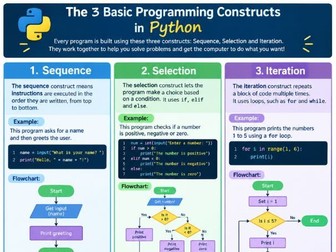
A colourful, classroom-ready Python poster explaining the three fundamental programming constructs: Sequence, Selection and Iteration. This visually engaging resource helps students understand the building blocks of all computer programs through simple explanations, Python code examples, flowcharts and key revision points. Includes: Sequence (instructions in order) Selection (decision making using if, elif and else) Iteration (repetition using for and while loops) Python code examples Flowchart representations Key terminology GCSE and KS3 revision support Perfect For: KS3 Computer Science GCSE Computer Science (OCR J277, AQA, Edexcel) Python Programming Units Classroom Displays Knowledge Organisers Revision Walls Coding Clubs Students can use this resource to quickly identify the differences between sequence, selection and iteration while making links between Python code and flowchart symbols.
Python Power-Up: Variables & Data Types Bundle (Year 7-9 Computer Science)Quick View
WilliamsCodeLab

Python Power-Up: Variables & Data Types Bundle (Year 7-9 Computer Science)

(0)
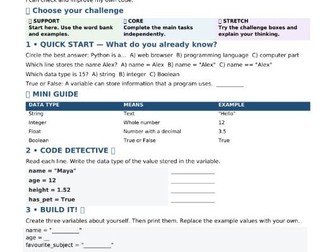
A complete, classroom-ready bundle designed to introduce students to Python variables and data types through engaging, scaffolded activities and differentiated challenges. This resource pack includes: Student worksheet focused on Python variables and data types Extended practice worksheet with additional coding activities Teacher answer key and mark scheme Support, Core and Stretch tasks for mixed-ability classes Retrieval starter questions and exit tickets Debugging activities and code correction tasks Predict-the-output exercises Mini programming challenges and independent coding tasks Self-assessment and reflection opportunities Students will learn to: Understand what variables are and why they are used Identify and use common Python data types (string, integer, float and Boolean) Create and assign variables correctly Predict program output Debug simple Python code Develop confidence writing their own programs Perfect for: Key Stage 3 Computer Science Year 7 Python units Year 8 revision and intervention Cover lessons Homework Independent learning Coding clubs
OCR GCSE Computer Science J277 Master Revision ChecklistQuick View
WilliamsCodeLab

OCR GCSE Computer Science J277 Master Revision Checklist

(0)
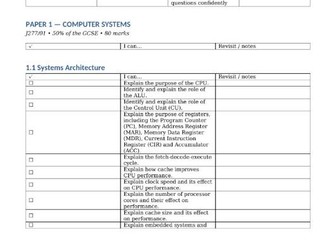
A comprehensive student-friendly revision tracker covering the entire OCR GCSE Computer Science (J277) specification. Help students take ownership of their revision with this professionally designed checklist that covers every topic from both OCR J277 exam papers. Perfect for independent revision, intervention, progress tracking, homework, mock exam preparation, and final GCSE revision. What’s Included Complete coverage of Paper 1: Computer Systems Complete coverage of Paper 2: Computational Thinking, Algorithms and Programming Detailed “I Can” statements for every specification point Student self-assessment tracking system Revision priority planner Exam readiness checklist Confidence tracking section Printable and editable format Suitable for classroom and home learning Topics Covered Paper 1 Systems Architecture Memory & Storage Networks & Protocols Network Security Systems Software Ethical, Legal, Cultural & Environmental Impacts Paper 2 Algorithms Programming Fundamentals Producing Robust Programs Boolean Logic Programming Languages & IDEs Practical Programming Skills
Logic Gates Worksheet & Answer Key | KS3 & GCSE Computer ScienceQuick View
WilliamsCodeLab

Logic Gates Worksheet & Answer Key | KS3 & GCSE Computer Science

(0)
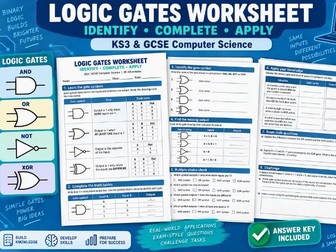
Help students build confidence with logic gates, truth tables, and circuit logic using this clear, structured, and engaging worksheet. Designed for KS3 Computing and GCSE Computer Science, this resource guides learners from recognising gate symbols through to applying logic in real-world scenarios and exam-style questions. What’s included: Introduction to AND, OR, NOT and XOR gate symbols Fully scaffolded truth table completion activities Gate identification exercises Missing output calculations Multiple-choice knowledge checks Real-world logic gate application tasks Exam-style extended response questions Challenge activities for higher-attaining students Complete teacher answer key and marking guidance included Perfect for: KS3 Computing GCSE Computer Science (Years 9-11) Starter activities Independent practice Homework tasks Cover lessons Revision and intervention sessions Resource Details: 45-60 minute lesson activity Printable worksheet format Clear gate diagrams and truth tables Suitable for mixed-ability classes Includes challenge questions to stretch learners Teacher answers provided for quick marking
Computer Science Data Representation & Logic Gates Bundle | 4 Worksheets + Mark Schemes | KS3 & GCSEQuick View
WilliamsCodeLab

Computer Science Data Representation & Logic Gates Bundle | 4 Worksheets + Mark Schemes | KS3 & GCSE

(0)
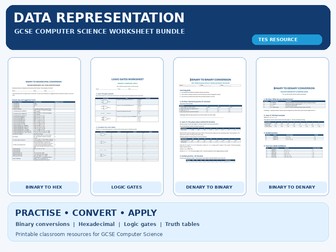
Save hours of planning with this comprehensive Computer Science worksheet bundle, covering key Data Representation and Logic Gates topics required for KS3 and GCSE Computer Science. Each worksheet is fully scaffolded, suitable for mixed-ability learners, and includes a complete answer sheet/mark scheme for quick and efficient assessment. Included Resources Logic Gates Worksheet AND, OR, NOT and XOR gates Truth tables Gate identification Output calculations Real-world applications Exam-style questions and challenge tasks Denary to Binary Conversion Worksheet Binary place value understanding Converting denary numbers to binary Guided examples and independent practice Challenge and reasoning activities Binary to Denary Conversion Worksheet Converting binary values to denary Place value and powers of two Scaffolded questions and problem-solving tasks Exam-style practice Binary to Hexadecimal Conversion Worksheet Binary and hexadecimal number systems Nibble grouping method Conversion tables Structured practice and challenge questions What’s Included? 4 ready-to-use worksheets 4 matching mark schemes / answer sheets Suitable for KS3 and GCSE Computer Science Scaffolded activities for all ability levels Exam-style and retrieval practice questions Printable and editable Word documents Perfect for lessons, homework, revision, cover work, intervention and independent learning Ideal For Years 7-11 KS3 Computing GCSE Computer Science OCR, AQA, Edexcel and other examination boards This bundle provides students with extensive practice in some of the most important Computer Science concepts, helping them develop confidence in number systems, data representation and logic circuits while reducing teacher preparation time.
OCR GCSE Computer Science (J277) – Topic 1.1 Systems Architecture Cheat SheetQuick View
WilliamsCodeLab

OCR GCSE Computer Science (J277) – Topic 1.1 Systems Architecture Cheat Sheet

(0)
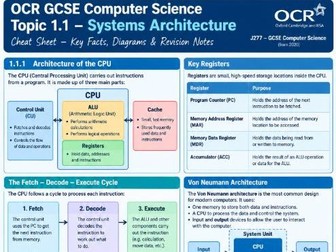
Support your students with this visually engaging and easy-to-follow OCR GCSE Computer Science Topic 1.1 Systems Architecture Cheat Sheet. Designed specifically for the OCR J277 specification, this resource provides a concise summary of the key knowledge students need for exams, revision, retrieval practice, and independent study. The resource presents complex concepts in a clear, accessible format using diagrams, tables, revision notes, and quick-check questions to reinforce learning and improve retention. Topics Covered Architecture of the CPU Control Unit (CU) Arithmetic Logic Unit (ALU) Registers Cache Memory Key CPU Registers Program Counter (PC) Memory Address Register (MAR) Memory Data Register (MDR) Accumulator (ACC) Fetch-Decode-Execute Cycle Fetch stage Decode stage Execute stage Instruction processing overview Von Neumann Architecture Stored-program concept Memory and instruction storage Input, process and output model CPU Performance Factors Clock speed Cache size Number of cores Exam-focused explanations Embedded Systems Definition and characteristics Real-world examples Dedicated functions and applications 7.Quick Knowledge Check Retrieval questions for self-assessment Ideal for revision and homework activities Perfect For OCR GCSE Computer Science (J277) Years 10-11 Revision sessions Retrieval practice Knowledge organisers Homework support Intervention groups Exam preparation