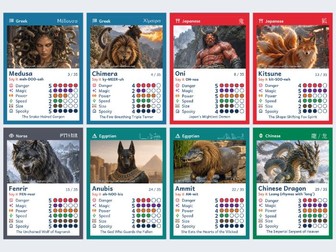
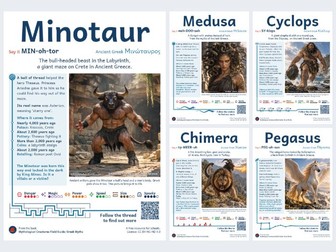
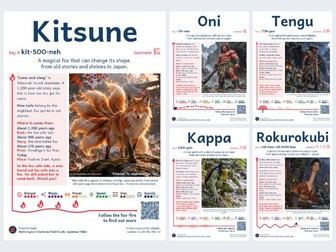
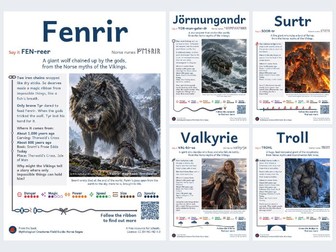
 Quick View
Christmas Monsters and Midwinter Myths KS2 Reading Comprehension Pack
Five non-fiction texts with questions and answers, one per creature. Each one explains what people believed about Europe’s Christmas monsters, why, and how we know. Free, no sign-up.
These are not retellings. Every text traces what we know back to a named manuscript, a law, a collector or an object that still exists.
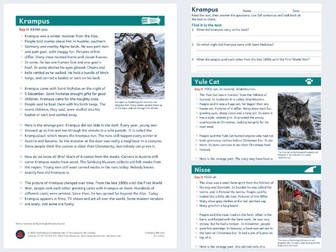
The five texts: Krampus, the monster at the door who turned out to be a neighbour in a costume. Grýla, named in Iceland in the 1200s but not a Christmas monster for another four hundred years. The Yule Cat, who ate anyone without new clothes, and the wool work that may be the real reason. Befana, whose name wore down from Epifania, and about whom almost nothing reliable survives. The Nisse, who killed a cow over a pat of butter.
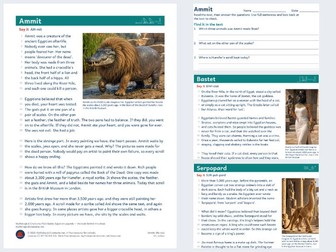
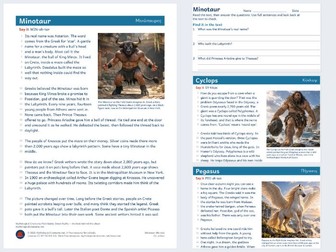
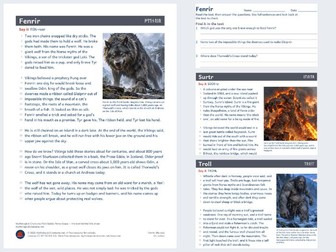
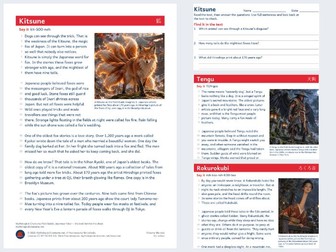
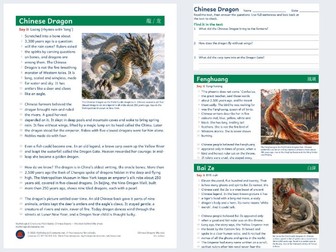
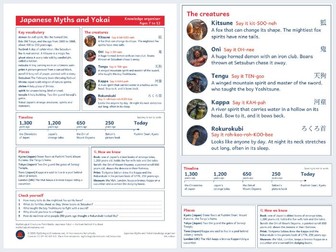
In the file: 25 pages of A4. Cover and print guide, four pages of teacher notes with suggested answers for all 40 questions, then the five creatures in colour, then the same ten pupil pages in black and white. Every text line is numbered so an answer can point to a line. Answer lines are 8mm apart.
One lesson of 45 to 60 minutes per creature. No preparation.
Curriculum: KS2 English reading comprehension, retrieval, inference and words in context. KS2 History, how we learn about the past from a range of sources, and stories passed on by word of mouth before anyone wrote them down. Australia Years 3 to 6. United States grades 3 to 6.
Most of these figures are older than the Christmas they are now attached to, which is one of the things the texts ask children to think about.
More free resources: mythologicalcreatures.net/resources
All five cultures side by side: Compare Myths from Five Cultures.
A matching card game for the same age group: https://www.tes.com/teaching-resource/resource-13657335
Eight questions per text, in four groups, each practising one skill:
Find it in the text: retrieval
Think about it: inference, explained with evidence
Words: vocabulary in context, with the line number given
How do we know? The question most comprehension sheets never ask