


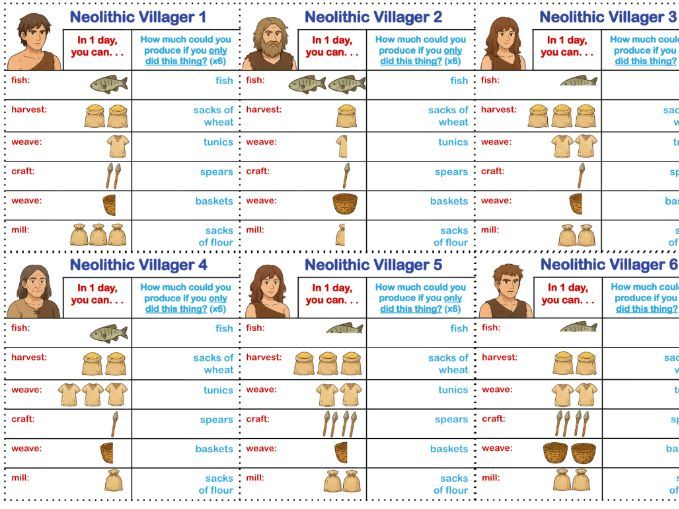
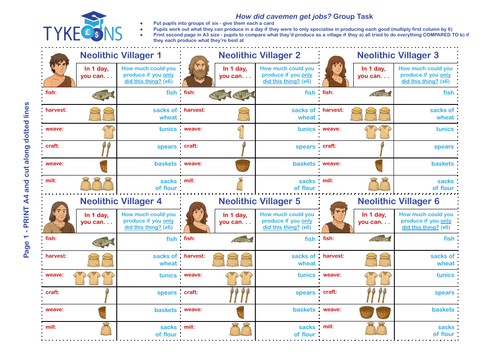
A cross-curricular group task for lower-KS2 pupils, in which they’ll get into groups of six to become members of a Neolithic village.
This was the period in which humans invented farming, and so were able to produce a lot more than in the hunter-gatherer days. How did our ancestors decide who should produce what, in order to make the whole village wealthier? This group challenge allows pupils to easily grasp how that decision was made.
Instructions:
- Print one A4 copy of page 1 for each group of six pupils, cut out the cards
- Print one A3 copy of page 2 for each group of six pupils
- Get each ‘villager’ to work out how much they could produce in a day if they ONLY focussed on only producing ONE type of item in that day (they just multiply the number in the left-hand column by six)
- Now, the village needs to get together to decide which villager to specialise in each type of work - the aim is to produce the maximum amount possible between all six people
- Finally, the village can compare what they’re able to produce by specialising, with what they WOULD HAVE produced if all of them had tried to do everything
If you want to take this further: ask pupils to consider modern examples of where people have highly specialised jobs in order to get better results as a group - the roles within the school staff (e.g class teacher, caretaker, office manager, chef, etc.) assembly line workers, different building trades, etc.
Something went wrong, please try again later.
This resource hasn't been reviewed yet
To ensure quality for our reviews, only customers who have downloaded this resource can review it
Report this resourceto let us know if it violates our terms and conditions.
Our customer service team will review your report and will be in touch.
£0.00