 Quick View
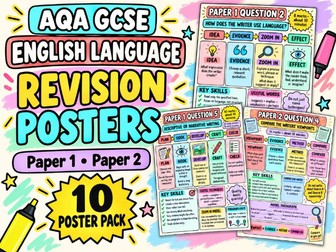
AQA GCSE English Language Revision Posters | Paper 1 & Paper 2 | 10-Poster Pack
A colourful and student-friendly collection of 10 revision posters for AQA GCSE English Language Paper 1 and Paper 2.
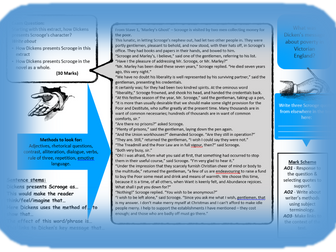
Designed to make exam skills clear and memorable, each poster breaks the question down into manageable steps using concise explanations, visual prompts, useful vocabulary, model paragraph structures and key reminders.
This resource is particularly suitable for students working towards Grades 3–5, GCSE resit learners and students who benefit from clear, accessible visual guidance.
WHAT IS INCLUDED?
• Paper 1 Question 2 – Language Analysis
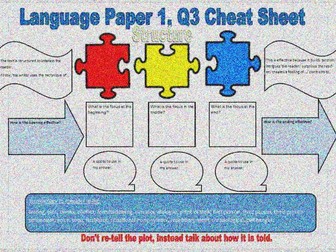
• Paper 1 Question 3 – Structure
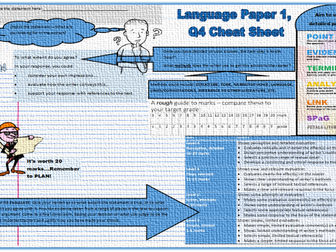
• Paper 1 Question 4 – Evaluation
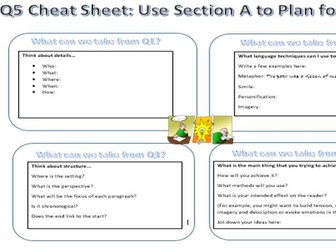
• Paper 1 Question 5 – Descriptive or Narrative Writing
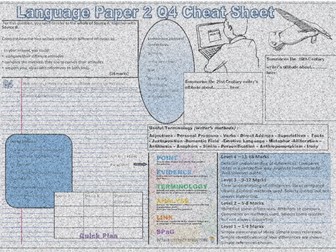
• Paper 2 Question 2 – Summarising Differences
• Paper 2 Question 3 – Language Analysis
• Paper 2 Question 4 – Comparing Viewpoints
• Paper 2 Question 5 – Writing to Present a Viewpoint
• DAFOREST Persuasive Language Techniques
• Creative Writing Techniques
Each exam-question poster includes:
• The marks and suggested timing
• A clear step-by-step approach
• Key skills and exam reminders
• Helpful sentence starters or vocabulary
• A model paragraph or response structure
• Common mistakes to avoid
• Bright, memorable visual prompts
IDEAL FOR:
• GCSE English Language revision
• Year 10 and Year 11 classrooms
• November and summer resit groups
• FE college English provision
• Intervention and catch-up sessions
• Classroom displays and working walls
• Independent revision
• Printing as A4 revision sheets for student books
• Enlarging to A3 for classroom display
The posters are designed to support the updated AQA GCSE English Language question format and have been created and professionally reviewed by an experienced GCSE English teacher and AQA examiner.
FORMAT:
One high-quality, printable 10-page PDF. This is a digital resource; no physical product will be supplied.
Please note: This independently produced resource is not affiliated with or endorsed by AQA. AI-assisted tools were used during the visual design process, with all educational content selected, adapted and reviewed by the author.