Whole School Assembly: Black History MonthQuick View
edward_lynn

Whole School Assembly: Black History Month

(0)
Black History Month Assembly (UK) - Past • Present • Future Engage your whole school with a clear, uplifting assembly that celebrates Black British history; past, present, and future. This fully editable PowerPoint with speaker notes is designed for KS3–KS5 and runs 15–20 minutes, giving you everything you need for October in the UK. The deck includes 18 clean, readable slides with built-in speaker notes, covering the UK context since 1987, Windrush and post-war contributions, contemporary figures in science, culture, sport, and public life, a myth-busting section to challenge stereotypes, a quick quiz and a short reflection to encourage participation, student voice and action ideas, and cross-curricular links across English, History, Science, Art, Music, and PSHE. Everything is editable so you can make it your own. Swap in your school logo, colours, and fonts, and add your own photos, student work, or local figures to reflect your community. The content is provided for you, but image placeholders and text boxes make it easy to tailor examples, adjust timing, and align the tone with your school’s identity. You can add your logo and local examples and deliver immediately. The tone is inclusive and positive, balancing celebration with honesty, and the content is versatile enough for whole-school assemblies, year group assemblies, tutor time, or Citizenship and PSHE sessions. By the end of the assembly, students understand what Black History Month is in the UK and why it matters, recognise contributions across multiple fields, and identify simple actions to continue learning beyond October. Format: PowerPoint (.pptx), fully editable. Audience: KS3–KS5 (ages 11–18). Keywords: Black History Month UK, BHM assembly, Windrush, diversity, inclusion, British values, PSHE, whole-school assembly.
A-Level Art (Critical & Contextual Studies) Semiotics & Interpreting ImageryQuick View
edward_lynn

A-Level Art (Critical & Contextual Studies) Semiotics & Interpreting Imagery

(0)
Resource Title: Semiotics & Interpreting Imagery – Slide Deck & Tasks Description: This resource introduces A-Level Art & Design (Critical & Contextual Studies) students to the principles of semiotics and the interpretation of imagery. Using examples from contemporary painters Issy Wood, Lenz Geerk, and Bendt Eyckermans, alongside historical artists such as Jan van Eyck, Francisco Goya, and René Magritte, the slides guide learners through the process of analysing artworks at both a literal and symbolic level. The resource includes a structured task that develops students’ ability to identify denotation (what is seen), connotation (what it suggests), and context (what it means in culture or society). A stretch and challenge extension encourages higher-level analysis through comparative study, application of critical theory such as feminism, Marxism, or psychoanalysis, and curatorial perspectives such as exhibition texts or display design. What’s included: The slide deck introduces key semiotic theory and provides visual examples from six artists. It offers a guided step-by-step analysis task with extension challenges, a modelled example using Damien Hirst’s Controlled Substances Key Painting, and discussion and activity prompts to encourage independent thinking and collaborative learning. Learning outcomes: Students will understand and apply semiotic theory to visual analysis. They will develop the ability to interpret symbols and coded meanings in artworks, link formal analysis to cultural, historical, and social context, extend interpretations through comparative and theoretical perspectives, and explore curatorial strategies for communicating semiotic readings to an audience.
Supporting Students with ADHD: A Practical Teacher Toolkit CPDQuick View
edward_lynn

Supporting Students with ADHD: A Practical Teacher Toolkit CPD

(0)
Supporting Students with ADHD: A Practical Teacher Toolkit (Editable SEND Resource) This professionally designed ADHD Teacher Toolkit is an essential resource for any primary or secondary educator seeking practical, inclusive strategies to support learners with ADHD in the classroom. Created by a SEND-aware practitioner, this resource offers evidence-informed approaches tailored to both Key Stage 1–4 students. Whether you’re preparing for Ofsted, developing inclusive provision, or delivering CPD, this resource is fully editable and ready to use immediately. What’s Included: Clear explanation of ADHD: Understand types, traits, and common myths In-school impact guidance: Practical examples for both primary and secondary settings Quick-reference teacher strategies: Straightforward tools you can implement tomorrow Daily support tools: Editable planners, visual timetables, fidget-friendly lists, movement breaks ADHD pupil passport template: Customisable to support EHCPs and pupil profiles Home–school collaboration tips: Improve communication and reduce homework stress Real-life case studies: Two detailed examples showing effective support in action Group CPD discussion slide: Ready-made questions for training or SEND team meetings Further reading list: Signposting to trusted ADHD resources and support Who Is This For? Class teachers (KS1–KS4) SENDCos and inclusion leads Teaching assistants Senior leaders preparing for Ofsted ECTs seeking behaviour and SEND guidance Why It Sells: Fully editable to suit your context Clear, concise layout — ideal for CPD or staffrooms Ofsted- and EHCP-ready content Supports your whole-school approach to SEND inclusion
PSHE - Health & Wellbeing WorkbookQuick View
edward_lynn

PSHE - Health & Wellbeing Workbook

(0)
Easy PSHE: Health and Wellbeing Workbook (KS3–KS4) Printable | Editable PowerPoint | A4 Format | Logo-Ready The Easy PSHE: Health and Wellbeing Workbook is a ready-to-use, worksheet-focused resource designed for quick delivery and maximum impact. Ideal for cover lessons, drop-down days or as a base for a wider PSHE programme, it supports confident, effective delivery across all secondary year groups (KS3–KS4). Each page is clearly structured with space for written and visual activities, providing opportunities for students to reflect, engage, and develop essential life skills. What’s Included: Branded cover and contents page Five structured sections: Managing Stress & Mental Health Puberty and Personal Hygiene The Benefits of Physical Activity Sleep and Screen Time Substance Use and Risk (Drugs, Alcohol, Vaping) Clear worksheet format for easy delivery Editable A4 PowerPoint layout, ideal for printing or digital use “Easy PSHE” logo on every page Fully customisable so schools can adapt content to fit their setting Designed in line with national PSHE curriculum aims and best classroom practice Why It Works: A practical solution for non-specialist teachers and PSHE leads alike Structured yet flexible — supports both independent learning and class discussion Saves valuable planning time while maintaining quality Suitable for a wide range of learners and year groups Whether used as a full workbook or for standalone sessions, this resource gives teachers a strong starting point for delivering thoughtful, age-appropriate PSHE.
Diversity PSHE Scheme of Work – 6 Fully Planned Lessons for Secondary (KS3/KS4)Quick View
edward_lynn

Diversity PSHE Scheme of Work – 6 Fully Planned Lessons for Secondary (KS3/KS4)

(0)
This Ofsted-ready 6-lesson scheme of work on Diversity is designed for secondary PSHE (KS3–KS4) and covers key concepts including identity, inclusion, prejudice, stereotypes, and allyship. Each lesson is fully planned with a clear structure, timings, differentiated tasks, and assessment opportunities. Grounded in statutory RSE and Health Education guidance and aligned with SMSC and British Values, these lessons will help students build empathy, understand legal protections under the Equality Act, and develop inclusive attitudes and behaviours. What’s Included: 6 detailed lesson plans (60 minutes each) Learning objectives and outcomes Starter activities, main tasks, plenaries Differentiation and extension tasks SMSC and British Values links Safeguarding guidance for delivery Assessment opportunities in each lesson Lesson Titles: What Is Diversity? Exploring Identity and Intersectionality Stereotypes and Their Impact Prejudice, Discrimination, and the Law Being an Ally and Promoting Inclusion Diversity in the Real World – Careers and Representation This scheme is ideal for classroom delivery, cover lessons, or tutor time enrichment. It is also editable and printable for easy adaptation to your school’s needs.
Human Systems Workbook – KS2 & KS3 Biology | Editable & PrintableQuick View
edward_lynn

Human Systems Workbook – KS2 & KS3 Biology | Editable & Printable

(0)
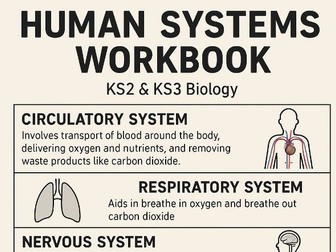
Bring the human body to life with this vibrant, easy-to-use 10-page printable workbook, designed to support KS2 and lower KS3 students learning about Biology: Human Systems. Covering the Circulatory, Respiratory, Nervous, and Skeletal systems, each section is packed with activities, diagrams, quizzes, and real-world connections through exciting STEM career spotlights. What’s Included: Circulatory System worksheet Respiratory System worksheet Nervous System worksheet Skeletal System worksheet Label-the-diagram tasks Matching and fill-in-the-blank activities Quick quizzes for recall and understanding KS3 challenge activities for stretch and depth STEM career links for every system (e.g., cardiologist, neurologist, orthopaedic surgeon) Editable Word and PowerPoint formats – perfect for printing or digital use Perfect for: KS2 Science (Years 5–6) KS3 Biology (Years 7–8) Cover lessons Homework packs Revision and retrieval Science Week or STEM enrichment Why Teachers Love It: Easy to print or edit Clear layout and visual learning support Builds knowledge and career awareness Engages a wide ability range Download once, print forever – ideal for classrooms, home learning, or science departments building curriculum packs.
A Complete A-Level Photography Personal Investigation Template & ExampleQuick View
edward_lynn

A Complete A-Level Photography Personal Investigation Template & Example

(0)
This professionally structured Photography Personal Investigation Essay Template is designed specifically for AQA A-Level Photography students who want to confidently meet all four Assessment Objectives (AO1–AO4). Whether you’re students are just starting or refining their final draft, this editable document guides you step-by-step through planning, researching, analysing, reflecting, and evaluating your photographic work with clarity and purpose. With built-in prompts, placeholders for your images, and guidance on what the examiners are looking for, this template helps you: ✔ Explore your theme with depth and meaning ✔ Research and link influential photographers with your own ideas ✔ Document your process of development and experimentation ✔ Reflect critically and evaluate your outcomes effectively
Whole School Assembly Bundle: Equality, Environment, and Wellbeing ⭐ 5 Assembly Pack | Save Time | Ready to Deliver | KS3–KS5Quick View
edward_lynn

Whole School Assembly Bundle: Equality, Environment, and Wellbeing ⭐ 5 Assembly Pack | Save Time | Ready to Deliver | KS3–KS5

5 Resources
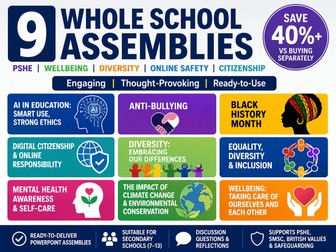
This powerful and thought-provoking Whole School Assembly Bundle brings together five top-quality, ready-to-use presentations designed to engage and educate secondary students on essential themes for personal development and school culture. Perfect for form time, PSHE, or whole-school delivery. ✅ What’s Included: Anti-Bullying (£1.99) Raise awareness and promote a culture of kindness, empathy, and bystander responsibility. Ideal for Anti-Bullying Week or any time a reminder is needed. Diversity – Embracing Our Differences (£1.00) Celebrate individuality and challenge stereotypes. A vibrant assembly that fosters inclusive attitudes and mutual respect. Equality, Diversity & Inclusion (£2.99) A deeper dive into the principles of EDI – exploring fairness, representation, and how we can all contribute to an inclusive school environment. Climate Change & Environmental Conservation (£1.99) Educate students on the causes and impact of climate change, while encouraging environmental responsibility through everyday actions. Wellbeing – Taking Care of Ourselves and Each Other (£1.99) A vital assembly on self-care, emotional wellbeing, and supporting others – ideal for Mental Health Awareness Week or termly PSHE focus. 🎯 Perfect For: Whole school or year group assemblies PSHE or tutor time enrichment Non-specialist delivery – no prep needed KS3, KS4, KS5 (fully adaptable) Each assembly includes: ✔ Engaging visuals ✔ Real-life examples and scenarios ✔ Key vocabulary and discussion prompts ✔ Clear learning objectives and takeaways 📥 Download once, use forever. Equip your school with assemblies that educate, inspire, and create real impact. Bundle and save – all five for one unbeatable price!
Whole School Assembly: Equality, Diversity & InclusionQuick View
edward_lynn

Whole School Assembly: Equality, Diversity & Inclusion

(0)
Assembly Description: Equality, Diversity, and Inclusion (EDI) This assembly focuses on the vital principles of equality, diversity, and inclusion (EDI) within our school community. It aims to educate students on the importance of treating everyone fairly, valuing our differences, and creating an inclusive environment where everyone feels welcome and respected. Content Overview: Understanding Equality: Discussing the importance of ensuring equal opportunities and fair treatment for all, regardless of background or identity. Celebrating Diversity: Highlighting the richness that diverse cultures, perspectives, and experiences bring to our community. Fostering Inclusion: Exploring ways to create a supportive and welcoming environment for everyone, challenging exclusion and discrimination. Relevance to PSHE Lessons: This assembly is an excellent complement to PSHE (Personal, Social, Health, and Economic) education lessons. It reinforces key PSHE themes such as respect for others, understanding diversity, and promoting social inclusion. By integrating these principles into the assembly, students can better understand and apply them in their daily lives, fostering a more empathetic and cohesive school community. Link to OFSTED Requirements: The assembly aligns with OFSTED’s requirements for promoting the spiritual, moral, social, and cultural (SMSC) development of pupils. It supports the following OFSTED criteria: Promoting Equality and Diversity: Encouraging respect for all people and challenging discriminatory behaviour. Fostering Good Relationships: Helping students develop positive relationships and a sense of belonging within the school community. Preventing Bullying: Addressing issues of bullying and discrimination, and promoting a safe and supportive environment for all students. By addressing these key areas, the assembly not only enhances students’ understanding of EDI but also contributes to the school’s overall effectiveness in meeting OFSTED standards. This assembly is a valuable opportunity to reinforce the principles of equality, diversity, and inclusion within our school. It supports PSHE education and aligns with OFSTED requirements, helping to create a respectful, inclusive, and supportive school environment for all.
A-Level Photography Scheme of Work - Personal Investigation PreparationQuick View
edward_lynn

A-Level Photography Scheme of Work - Personal Investigation Preparation

(0)
A-Level Photography Scheme of Work: Preparing for Personal Investigation and Ideas Generation This 12-week scheme of work is designed to help A-Level Photography students prepare for their personal investigation by focusing on ideas generation through a series of structured exercises. The programme aims to develop students’ creative thinking, research skills, and ability to articulate and refine their photographic concepts. Key Features: Introduction to Personal Investigation: Initial brainstorming, mind mapping, and research to generate and expand on ideas. Research and Analysis: In-depth research on photographers and artists, case studies, and presentations to enhance critical analysis skills. Experimentation and Technique Development: Hands-on workshops and mini-photoshoots to explore various photographic techniques. Concept Development: Workshops on developing and articulating concepts, project proposals, and peer reviews. Practical Application: Photoshoots, editing sessions, and critique sessions to refine and evaluate work. Final Preparations: Final edits, portfolio compilation, and presentation preparation. Extension Tasks: Each week includes extension tasks to challenge students further, such as creating visual journals, comparative analyses, experimental images, mood boards, and reflective essays. Assessment: Continuous assessment through participation in workshops, presentations, and critique sessions, along with evaluation of research, experimentation, and final portfolios. Benefits: Encourages creative thinking and independent research. Develops technical and conceptual photography skills. Prepares students for their personal investigation with a comprehensive and structured approach. Evidence for OFSTED: Documentation: The scheme’s emphasis on research pages, visual journals, and reflective essays provides ample evidence of students’ learning journeys and progress, which can be showcased during OFSTED inspections. Student Engagement: The variety of activities and the focus on student-led projects demonstrate high levels of student engagement and ownership of learning, which are key indicators of effective teaching and learning practices. By aligning with OFSTED’s criteria and focusing on comprehensive skill development, the A-Level Photography Scheme of Work ensures that students are well-prepared for their personal investigations and future academic and professional pursuits. This makes it an excellent choice for schools aiming to excel in OFSTED deep dives.
Whole School Assembly: Diversity, Embracing Our DifferencesQuick View
edward_lynn

Whole School Assembly: Diversity, Embracing Our Differences

(0)
Diversity: Embracing Our Differences Description: This comprehensive 10-slide presentation is designed for a whole school assembly to educate and inspire students about the importance of diversity. It covers key concepts, benefits, challenges, and actionable steps to promote an inclusive environment within the school. Perfect for engaging the entire student body, this presentation ensures that all students understand and appreciate the value of diversity. Slide Breakdown: Title Slide: Introduces the theme of the presentation. What is Diversity?: Defines diversity and highlights its various aspects. Why is Diversity Important?: Explains the benefits of diversity in learning, personal growth, and empathy. Diversity in Our School: Showcases the school’s diverse student body, programs, clubs, and events. Benefits of a Diverse School Environment: Discusses how diversity creates an inclusive atmosphere, prepares students for the future, and fosters innovation. Challenges to Diversity: Addresses common challenges such as stereotypes, inclusion, and communication barriers. Promoting Diversity and Inclusion: Offers strategies for education, dialogue, and policy implementation. How You Can Contribute: Encourages students to be open-minded, stand against discrimination, and celebrate differences. Stories of Diversity: Shares personal stories and highlights inspirational figures who promote diversity. Conclusion: Summarizes key points and calls the audience to action, encouraging them to embrace diversity. Key Features: Engaging Content: Each slide is thoughtfully designed to keep students engaged and informed. Actionable Steps: Provides practical advice on how students can contribute to a more inclusive environment. Inspirational Stories: Includes real-life examples to inspire and motivate students. Ideal For: Whole school assemblies Diversity and inclusion workshops Educational programs Benefits: Enhances students’ understanding of diversity Promotes a positive and inclusive school culture Encourages proactive behavior towards inclusion and empathy This presentation is a valuable tool for any educational institution looking to foster a deeper understanding and appreciation of diversity among its entire student body.
Art and Design Christmas Quiz 2024Quick View
edward_lynn

Art and Design Christmas Quiz 2024

(0)
Resource Title: Art Christmas Quiz PowerPoint – Festive Fun for KS3, KS4, and KS5 Description: Engage your students this festive season with our Art Christmas Quiz PowerPoint, designed for KS3, KS4, and KS5 learners. This resource combines art history, festive traditions, and creative fun to provide a perfect end-of-term activity. Features: Many multiple-choice questions covering topics such as Renaissance art, Pop Art, colour theory, and festive art traditions. Answers slide for easy review and discussion. Christmas-themed design with festive art decorations to keep students engaged. Differentiated content suitable for a range of year groups, ensuring accessibility and challenge for all. Benefits: Ideal for wrapping up the term with a fun, educational activity. Encourages teamwork, critical thinking, and creativity. Perfect for art lessons or cross-curricular festive activities. Bring some creative cheer to your classroom this Christmas.
Whole School Assembly; Wellbeing: Taking Care of Ourselves and Each OtherQuick View
edward_lynn

Whole School Assembly; Wellbeing: Taking Care of Ourselves and Each Other

(0)
Title: Wellbeing: Taking Care of Ourselves and Each Other Description: This engaging 10-slide presentation is designed for a whole school assembly to educate students about the importance of wellbeing. It covers key aspects of physical, mental, emotional, and social wellbeing, providing practical strategies for students to improve their overall health and happiness. Perfect for schools looking to promote a culture of self-care and support, this presentation is both informative and inspiring. Slide Breakdown: Title Slide: Introduces the theme of the presentation. What is Wellbeing?: Defines wellbeing and highlights its various aspects. Importance of Wellbeing: Explains why wellbeing is crucial for health, performance, and happiness. Physical Wellbeing: Discusses the importance of exercise, nutrition, and sleep. Mental Wellbeing: Covers mindfulness, positive thinking, and seeking help. Emotional Wellbeing: Focuses on self-awareness, resilience, and healthy emotional expression. Social Wellbeing: Highlights the importance of relationships, community, and communication. Strategies for Improving Wellbeing: Provides practical tips for establishing routines, engaging in hobbies, and finding balance. School Support Systems: Details the support available within the school, such as counselors, clubs, and peer support. Conclusion: Summarises key points and encourages students to take steps towards improving their wellbeing. Key Features: Engaging Content: Each slide is designed to captivate and inform students. Actionable Steps: Offers practical advice on how students can improve their wellbeing. Supportive Environment: Emphasizes the importance of a supportive school community. Ideal For: Whole school assemblies Wellbeing workshops Educational programs Benefits: Enhances students’ understanding of wellbeing Promotes a culture of self-care and support Encourages proactive behavior towards health and happiness This presentation is an invaluable resource for any educational institution aiming to foster a deeper understanding and commitment to wellbeing among its students.
Whole School Assembly: Anti BullyingQuick View
edward_lynn

Whole School Assembly: Anti Bullying

(0)
Resource Description: Anti-Bullying Assembly Presentation Are you looking for an effective way to address bullying in your school? This comprehensive anti-bullying assembly presentation is designed to engage students and raise awareness about the impact of bullying. What’s Included: PowerPoint Presentation: A well-structured slide deck featuring essential information on bullying, including definitions, statistics, the signs of bullying, and actionable steps for prevention. Supporting Photos: Each slide includes impactful images that reinforce the message and engage your audience visually. These photos help illustrate key points and evoke empathy, making the presentation more memorable. Interactive Discussion Points: Suggested questions and prompts throughout the slides encourage student participation and discussion, fostering a supportive environment. Resource Links: Access to additional resources for students, parents, and teachers to continue the conversation about bullying prevention. Why Choose This Resource? This presentation is not just a tool for raising awareness; it’s a call to action for creating a safer and more inclusive school environment. Equip your students with the knowledge and support they need to stand up against bullying and promote kindness and respect within your community. Ideal For: Schools, educational organizations, and community groups looking to implement an anti-bullying initiative or enhance their existing programs. Purchase this resource today and take the first step towards making your school a bullying-free zone!
GCSE Art: Portraiture-Focused Scheme of  WorkQuick View
edward_lynn

GCSE Art: Portraiture-Focused Scheme of Work

(0)
A comprehensive 12-week GCSE Art scheme of learning. Key Features: New Threshold Concepts Weekly Learning Objectives: Clear goals to keep students focused and motivated. Learning Outcomes: Specific skills and knowledge students will gain each week. Challenge Tasks: Opportunities for students to push their boundaries and explore advanced techniques. Differentiated Tasks: Tailored activities to support all learners, ensuring everyone can succeed. Artist Research: In-depth studies of renowned artists to inspire and inform students’ work. Home Learning Tasks: Practical assignments to reinforce classroom learning and encourage independent practice. Highlights: Introduction to Portraiture: Master facial proportions and basic drawing techniques. Exploring Different Mediums: Experiment with various materials to discover unique effects. Light and Shadow: Learn to create depth and realism through shading. Expressive Portraits: Capture emotions and expressions to bring portraits to life. Cultural and Historical Portraits: Understand the influence of culture and history on portrait art. Contemporary and Abstract Portraits: Embrace modern styles and abstract approaches. Self-Portraits and Digital Techniques: Reflect personal identity and explore digital art tools. Personal Project Development: Plan and execute a unique portrait project, culminating in a final presentation. This scheme of learning is perfect for educators looking to inspire their students and foster a deep appreciation for the art of portraiture. Equip your classroom with a structured, engaging, and enriching art curriculum that will help students excel in their GCSE Art studies.
Whole School Assembly: The Impact of Climate Change and Environmental ConservationQuick View
edward_lynn

Whole School Assembly: The Impact of Climate Change and Environmental Conservation

(0)
Title: The Impact of Climate Change and Environmental Conservation Description: This engaging 10-slide presentation is designed for a whole school assembly to educate students about the critical issues of climate change and the importance of environmental conservation. It provides a comprehensive overview of the causes and effects of climate change, the impact on both the environment and human life, and practical steps for conservation. Perfect for schools looking to raise awareness and inspire action among students, this presentation is both informative and motivating. Slide Breakdown: Title Slide: Introduces the theme of the presentation. Understanding Climate Change: Defines climate change and explains its primary causes. Evidence of Climate Change: Highlights key evidence such as rising temperatures, melting ice caps, and extreme weather events. Impact on the Environment: Discusses the effects on biodiversity, ocean acidification, and deforestation. Impact on Human Life: Covers health risks, food security issues, and displacement caused by climate change. The Importance of Environmental Conservation: Explains why conservation is crucial for protecting ecosystems, ensuring sustainable resources, and mitigating climate change. Ways to Conserve the Environment: Provides practical tips on reducing waste, conserving energy, and supporting renewable energy. How You Can Make a Difference: Encourages personal actions, community involvement, and education/advocacy efforts. Success Stories: Shares global initiatives and local heroes making a positive impact on the environment. Conclusion: Summarises key points and calls the audience to action, encouraging them to take steps towards environmental conservation. Key Features: Engaging Content: Each slide is designed to captivate and inform students. Actionable Steps: Offers practical advice on how students can contribute to environmental conservation. Inspirational Stories: Includes real-life examples to inspire and motivate students. Ideal For: Whole school assemblies Environmental education programs Awareness campaigns Benefits: Enhances students’ understanding of climate change and conservation Promotes a culture of environmental responsibility Encourages proactive behavior towards sustainability and conservation This presentation is an invaluable resource for any educational institution aiming to foster a deeper understanding and commitment to environmental conservation among its students.
Photography Analysis Framework & Glossary (Photo Literacy)Quick View
edward_lynn

Photography Analysis Framework & Glossary (Photo Literacy)

(0)
Resource 1: Photography Analysis Framework for A-Level Students: This comprehensive framework is designed to help A-Level Photography students critically analyse their work. It provides clear, structured sections that guide students in evaluating their photographs, including subject matter, composition, use of light and color, technical choices, and links to their personal investigations. Additionally, it helps students reflect on emotional impact, meaning, and their development as photographers. This resource includes sentence starters for easy integration into written analysis, making it ideal for supporting coursework or exam preparation. Key Features: Step-by-step guide for analysing photography at GCSE and A Level Easy-to-use sentence starters to help students articulate their thoughts Covers both technical and creative aspects of photo evaluation Encourages reflection on personal development and project progression Suitable for A-Level and higher-level photography students Resource 2: Photography Glossary for A-Level Students: This concise photography glossary is an essential reference for any A-Level Photography student. It provides clear definitions of key terms related to composition, exposure, technical settings, and artistic techniques. Perfect for use in written analysis, it helps students gain a deeper understanding of important concepts like aperture, ISO, cropping, abstraction, and post-processing. The glossary is a practical tool to improve both technical knowledge and analytical writing. Key Features: Definitions of 15+ key photography terms Focus on technical and artistic vocabulary relevant to A-Level courses Supports analytical writing and project development Helps students improve both technical skills and conceptual understanding Ideal for classroom use or individual study These resources can help students excel in their photography projects by providing both a clear analytical framework and essential terminology knowledge.
GCSE English Knowledge Organiser: “An Inspector Calls”Quick View
edward_lynn

GCSE English Knowledge Organiser: “An Inspector Calls”

(0)
GCSE English Knowledge Organiser: “An Inspector Calls” Unlock the secrets of J.B. Priestley’s classic play with this comprehensive knowledge organiser, designed specifically for GCSE English students. This invaluable resource provides everything you need to excel in your studies and ace your exams. Features: Detailed Context: Understand the historical and social backdrop of the play, from pre-WWI tensions to post-WWII reflections. Concise Plot Summary: Grasp the key events and turning points in each act. Character Analysis: In-depth profiles of all major characters, including Arthur Birling, Sheila Birling, and the enigmatic Inspector Goole. Key Themes: Explore the central themes of social responsibility, class inequality, gender roles, and more. Essential Quotes: Memorize and analyze pivotal quotes that capture the essence of the play. Literary Devices: Identify and understand the use of dramatic irony, symbolism, and other literary techniques. Exam Tips: Practical advice on how to structure essays, analyze characters, and relate themes to context. Why Choose This Knowledge Organiser? Comprehensive Coverage: All the essential information in one place. Student-Friendly: Clear, concise, and easy to understand. Exam-Focused: Tailored to help you succeed in your GCSE exams. Equip yourself with the knowledge and confidence to tackle “An Inspector Calls” with this expertly crafted organiser. Perfect for revision, homework, and classroom study.
*FULLY SCAFFOLDED* GCSE Photography Natural Forms Project for borderline studentsQuick View
edward_lynn

*FULLY SCAFFOLDED* GCSE Photography Natural Forms Project for borderline students

(0)
This fully scaffolded GCSE Photography PowerPoint is designed to guide weaker students through the topic of ‘Natural Forms.’ It provides clear, step-by-step instructions for various photoshoot activities, including shadow prints, cyanotypes, and Polaroid photography. Each slide includes detailed tasks, such as creating annotated contact sheets, selecting and editing the strongest photos, and writing analyses. The PowerPoint also suggests photographers to research, linking their work to the theme of natural forms. Purpose: This resource is tailored for weaker students, ensuring they can follow along and complete the tasks with ease. It is designed to support them in achieving a pass, especially when combined with quality teaching and guidance. The presentation is also dyslexia-friendly, with clear fonts and structured layouts to enhance readability and comprehension. Key Features: Step-by-Step Instructions: Each slide provides detailed guidance for photoshoot activities, making it easy for students to understand and follow. Photographer Research: Suggestions for photographers to research, helping students connect their practical work with historical and contemporary practices. Dyslexia-Friendly Design: Clear fonts, structured layouts, and concise instructions to support students with dyslexia. Comprehensive Coverage: Covers various techniques and processes, including shadow prints, cyanotypes, and Polaroid photography, ensuring a broad understanding of natural forms in photography. This PowerPoint is an excellent tool for helping students develop their photography skills and understanding of natural forms, providing a solid foundation for their GCSE coursework.
GCSE English Revision Cards: “An Inspector Calls”Quick View
edward_lynn

GCSE English Revision Cards: “An Inspector Calls”

(0)
Boost your GCSE English revision with these expertly crafted revision cards for J.B. Priestley’s “An Inspector Calls.” Designed to help you master the key elements of the play, these cards are an essential tool for effective study and exam preparation. Features: Comprehensive Coverage: Each card covers crucial aspects of the play, including context, plot summaries, character analysis, themes, key quotes, and literary devices. Concise and Clear: Information is presented in a clear, concise format, making it easy to understand and remember. Portable and Convenient: Perfect for on-the-go revision, whether you’re at home, in the classroom, or commuting. Exam-Focused: Tailored to help you succeed in your GCSE exams with practical tips and essential knowledge. What’s Included: Context: Understand the historical and social backdrop of the play. Plot Summaries: Follow the key events and turning points in each act. Character Analysis: Detailed profiles of major characters, highlighting their roles and development. Themes: Explore central themes such as social responsibility and class inequality. Key Quotes: Memorize and analyze significant quotes that capture the essence of the play. Literary Devices: Identify and understand the use of dramatic irony, symbolism, and more. Why Choose These Revision Cards? Student-Friendly: Designed with students in mind, making revision engaging and effective. High-Quality Content: Expertly written to ensure accuracy and relevance. Boosts Confidence: Helps you feel prepared and confident for your exams. Equip yourself with the knowledge and confidence to tackle “An Inspector Calls” with these essential revision cards. Perfect for revision sessions, homework, and classroom study.