IBDP Lesson & Unit Planning TemplateQuick View
paulthomasdevine

IBDP Lesson & Unit Planning Template

(0)
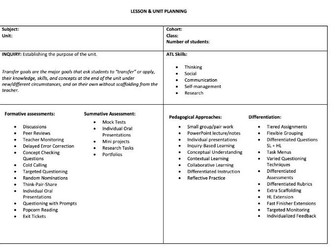
The purpose of this document is to serve as a lesson and unit planning template for teachers. It provides a structured framework for organizing instructional content, assessments, and pedagogical strategies. Key components include: Unit Information: Details about the subject, class, cohort, and number of students. Inquiry Goals: Transfer goals for student application of knowledge and skills. ATL Skills: Areas of focus like thinking, social, communication, self-management, and research skills. Assessment Methods: Formative: Strategies like discussions, teacher monitoring, and exit tickets. Summative: Mock tests, mini-projects, and portfolios. Pedagogical Approaches: Techniques like collaborative learning, inquiry-based learning, and differentiated instruction. Differentiation: Strategies for various learner needs, such as tiered assignments and extra scaffolding. Lesson Planning: Spaces for outlining weekly lessons, learning objectives, experiences, and resources. Reflection: Sections to evaluate what worked well, what didn’t, and suggestions for future teaching improvements.
LEARNING BEHAVIOUR (CANVAS TEMPLATE)Quick View
paulthomasdevine

LEARNING BEHAVIOUR (CANVAS TEMPLATE)

(0)
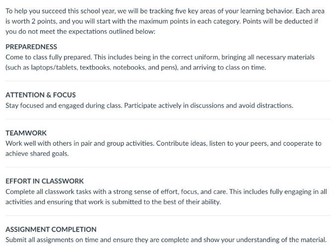
This resource is a Learning Behavior Tracking Template, designed to help teachers monitor and encourage positive learning habits among students. It provides a structured system for tracking student behavior in five key areas: Preparedness: Ensuring students arrive on time, in uniform, and with necessary materials. Attention & Focus: Monitoring student engagement and participation during lessons. Teamwork: Assessing students’ ability to collaborate effectively with peers. Effort in Classwork: Evaluating the completion and quality of in-class tasks. Assignment Completion: Tracking whether assignments are submitted on time and demonstrate understanding. Key Features Scoring System: Each area is worth 2 points, with deductions of 0.5 points for unmet expectations. Clear Rubrics: Descriptive criteria outline the expectations for various performance levels (e.g., “Consistently Prepared” to “Rarely Prepared”). Weekly Structure: Teachers are encouraged to track behaviors weekly, using a 10-point starting system for efficiency. Teacher Instructions: Steps for setup in learning management systems (e.g., creating assignment groups) are included. Purpose: The template is designed to: Promote accountability for students’ learning behaviors. Develop habits that contribute to academic success. Allow teachers to identify and address behavioral challenges systematically. It serves as both a tool for continuous monitoring and a means of motivating students to maintain high standards in their classroom behaviors