Bundle
 Quick View
AI in Schools Leadership Toolkit - KCSiE 2026: Action Plan, Policy Checklist, Framework and Poster
Four resources giving school leaders everything they need to introduce AI safely, with full KCSiE 2026 compliance. Save over 30% compared to buying individually.
This bundle brings together the core leadership and CPD resources for implementing AI in schools. Each resource is fully aligned to KCSiE 2026 and referenced to specific statutory paragraphs so you can demonstrate compliance to governors and Ofsted at every stage.
What’s included:
90-Day AI Action Plan (£5.00 individually): a 12-week implementation template covering Listen, Prepare, Pilot, Review and Scale. Every action is mapped to KCSiE 2026 paragraph references with named owners and space for dates and status tracking. Take it straight to SLT and start.
AI Policy and Safeguards Checklist (£5.00 individually): a three-page audit checklist covering nine areas: governance, policy and acceptable use, data protection, safeguarding, academic integrity, pupils and parents, image and data exposure, procurement, and training and review. Every item tells you which school policy it belongs in and whether it is statutory or local practice.
The Cognitive Debt Framework (£5.00 individually): a one-page pedagogical framework showing how to use AI at five stages of learning so students think harder, not less. Mapped to Bloom’s taxonomy with ready-to-use prompts and referenced to Piaget, Vygotsky, Dewey, Bruner and others. Use it for department CPD, INSET or whole-school training.
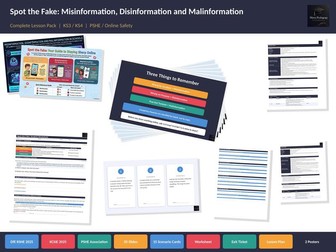
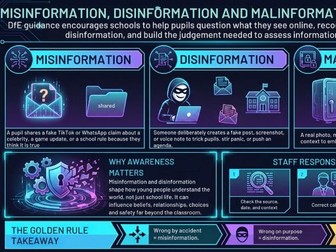
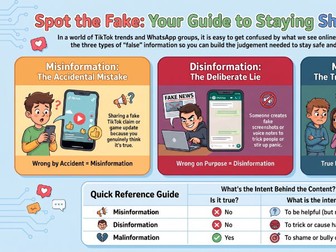
Misinformation, Disinformation and Malinformation Staff Poster (free individually): a staffroom display poster covering the three types of false information students encounter online, with a staff response protocol. Supports KCSIE 2026 paragraph 135.
All resources are provided as print-ready PDFs with Meta Pedagogy branding.
Tags: AI in schools, KCSiE 2026, AI policy, AI action plan, safeguarding, headteacher, SLT, governors, AI implementation, cognitive debt, school leadership, CPD, INSET, online safety, data protection, deepfakes, filtering and monitoring