IB MYP Science Summative Assessment - CellsQuick View
sundus_mehmood

IB MYP Science Summative Assessment - Cells

(1)
This is a summative assessment that may also be used as a formative assessment, specifically based on Criterion A - Knowing and understanding. It consists of all task-specific clarifications and carries 15 maximum points/marks which can be easily converted to the MYP Levels 1 - 7/8 using the rubric given in the assessment. It mimics the eAssessment format by highlighting command terms in bold and using an image of the light microscope in one of the questions, too. It is more suitable for MYP I and II (Science/Integrated Science).
The Social Dilemma Educational Film Guide | NETFLIX | Profits DonatedQuick View
streamed_store

The Social Dilemma Educational Film Guide | NETFLIX | Profits Donated

(2)
This educational movie guide from Graeme Mitchell at SustainEd is a fantastic resource to complement the powerful new Netflix documentary The Social Dilemma. Perfect for Social Studies, English, Science, and Technology classes. The Social Dilemma is being hailed as one of the most important documentaries of our time. An insightful exploration of the extreme impact that social media platforms like Facebook, Instagram, and Tik Tok have over modern-day society, The Social Dilemma cleverly tackles concepts like technology addiction and data collection and manipulation and makes them understandable and urgent for a teenage audience. The Social Dilemma Movie Guide Includes: A student movie guide - printer-friendly version (4 pages) A student movie guide - Google Slides version that can be copied and edited and used with Google Classroom. An answer key (2 pages) is included with this movie guide, however, many answers will vary as students are encouraged to construct their own meaning. Vocabulary Guide Quote Reflection Guide What, So What, Now What Reflection Guide
Wars of the Roses (KS3/Year 7): Causes, Key Events, Consequences & WomenQuick View
Blainesmith12345

Wars of the Roses (KS3/Year 7): Causes, Key Events, Consequences & Women

(0)
Please see attached a SOW, series of Lesson Slides and Research Investigation Essay/Task (fitting with MYP criteria) which is accessible to Year 7/KS3 Students. Has a focus on the role of women: particularly Margaret of Anjou, Elizabeth Woodville and Margaret Beaufort and how they played a role during this conflict. Teachers who also teach A-Level may want to consider using this unit of work to also reduce the complexity and use is as a transition/introduction to the Wars of the Roses too.
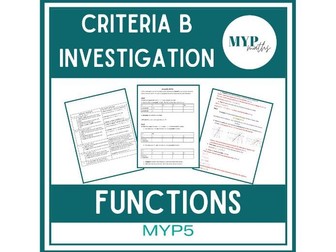
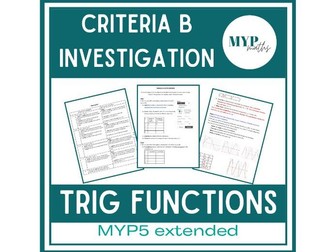
IB MYP Maths (Criteria B) - Probability InvestigationQuick View
teachingmypmaths

IB MYP Maths (Criteria B) - Probability Investigation

(0)
In this investigation, students use their knowledge of showing outcomes by listing and sample space diagrams to explore the chances of winning in different games. Including the assessment, rubric, task specific clarification, marking guidelines and sample answer. Recommended for MYP2.
IB MYP Science Criterion D Cancer Assessment Task - Grade 6 & 7 Student GuidesQuick View
johnpowerbiology

IB MYP Science Criterion D Cancer Assessment Task - Grade 6 & 7 Student Guides

(0)
Do you need to teach your students how to complete Criterion D Assessment Tasks, using the IB command terms and Assessment Rubric? These editable 2-part guides each include a PowerPoint presentation with videos and linked articles, as well as a MS Word Docs which students fill in to create a complete Criterion D report. It introduces G6 and G7 students to the process of researching and writing IB MYP Science Criterion D reports: Reflecting on the Impacts of Science. These scaffolded resources can be used online or in person. Two versions of the product are included: Grade 6 - using MYP Year 1 Criterion Grade 7 - using MYP Year 3 Criterion The Google Slides presentations include: All resources students need for background research into cancer and chemotherapy. Separate sections which directly link to sections of the structured guide. Use of IB MYP Science Command Terms for Criterion D Assessments The Google Doc Structured Guides include: IB Definitions of Command Terms IB Criterion D Assessment Rubrics Separate sections for each part of the assessment report. Step-by-Step instructions in how to complete the report. As an IBMYP Science Teacher with 27 years experience teaching IB Diploma Biology and IB MYP Science, I have created multiple resources which I am uploading to TpT now.
MYP Science Criterion A Assessment - Matter Test including Answers & Mark SchemeQuick View
johnpowerbiology

MYP Science Criterion A Assessment - Matter Test including Answers & Mark Scheme

(0)
Save yourself time with this ready-made IB MYP Science Test for the Chemistry topic Matter and Atoms. This summative assessment task includes a printable PDF with answer key, mark scheme, and student reflection, as well as an editable MS Word doc so that you can modify the questions if you wish. This one-hour Criterion A Assessment includes questions on all three MYP strands: Scientific Knowledge, Problem Solving, and Scientific Judgements. MYP Science Content Covered: States of matter Changes of state The water cycle Subatomic particles Elements, molecules and compounds Periodic table Atomic number Atomic mass Chemical reactions Factors affecting the rate of reaction Bohr models of atoms Energy levels of atoms Features: MYP Rubric for MYP Year 3 (Grade 8) Task Specific Rubric and Mark scheme Cover Page Teacher’s Notes Answer Key Two Versions: Editable Google Doc & PDF Student Reflection Well-Presented**
Lesson 8: How significant is the legacy of the Roman civilization?Quick View
timkajones

Lesson 8: How significant is the legacy of the Roman civilization?

(0)
This lesson considers the significance of Rome’s legacy. Student’s make a judgment on various legacies from Rome. The second half of the lesson is a reflection on the SOW so far. They consider the significance of the civilizations they have already studied. They then complete a piece of extended writing reflecting on which civilization they believe was the most significant. The SOW follows one of the MYP inquiries considering Ancient History. The inquiry is focused on the concept of significance and the students work with Ian Dawson’s significance criteria. The inquiry has a strong grammar and literacy focus with sentences, word classes, paragraph structure and other language features considered. All information is included in the lessons - often taken from the MYP course book but other sources have been used to flesh out the detail. I have taught this inquiry to Year 7 (British) and it is aimed at higher level students. Of course, information can be amended to meet the needs of all.
The Bayeux TapestryQuick View
Eldritch2

The Bayeux Tapestry

(0)
The Bayeux Tapestry, designed for Year 7 History, but could be used across other age groups in KS3 if adapted. This is a full lesson for 55 minutes, the slideshow comprehensively examines the Bayeux Tapestry as a Norman account of the 1066 Norman Conquest and Battle of Hastings at a KS3-level of ability. An animated video of the tapestry is linked with questions to accompany. The lesson also includes a colouring-in activity with provided annotations of the scene of Harold’s death at the Battle of Hastings. A critical reflection exercise follows where students are challenged to objectively scrutinise the validity and reliability of the tapestry as a historical source; a collation of evidence over two slides is provided for print or digital view for them to consider and then write an informed response to as a way to conclude the lesson. Crossword activity also included, can be printed out.
Micro House Architecture UnitQuick View
DesignandEngineering

Micro House Architecture Unit

(0)
Statement of Enquiry: We must think of affordable, sustainable and innovative solutions to adapt to the needs of growing urban populations. In this outstanding, creative scheme of work, students are given a brief to design and make a scale model of a micro-house, the size of a shipping container to help solve the housing crisis in dense-urban areas. Included is a unit plan which outlines all lessons and activities. With practical, written and theory work closely related to the IB philosophy and 4 Design objective strands. Project applies a practical understanding of factual, conceptual and debatable questions. The scheme is a full term (12 - 20 week) project though could be condensed or even further extended if necessary. Students can work within the full digital project portfolio provided or in sketchbooks. Components can be laser cut or by hand so the scheme is adaptable for different school set-ups. Final model has been made out of foamcore but other materials could be substituted e.g. cardboard, acrylic or MDF. IB Unit plan included. Student and teacher examples included. – Lessons include in order: ♦ Introduction to the problem. What is a housing crisis? ♦ Data. Factors and trends. What has led to this crisis? ♦ User Research. Why design around the needs of a user? ♦ Product Analysis. How do we really understand a product? ♦Technical drawing (Orthographic) ♦CAD- SketchUp (Sketch). How can we prototype without any materials? ♦Optional CAD & CAM- 2D Design & Laser Cutting ♦Ergonomics & Anthropometrics Theory ♦Final prototyping ♦Criteria D Summative Contextual Assessment Task - How could we market and sell our design (estate agent task)? This unit/project is designed for a term (12-14 weeks) though can be extended or condensed by modifying the design process and portfolio accordingly. If you enjoyed this project/scheme of work. Please visit my shop where there are a range of creative and engaging design and engineering projects. ↠This file may be zipped. Once downloaded right click the file and select ‘extract all’ to open. ↞ ✎Please note I am a UK seller and unless otherwise stated the product uses standard English. This should not affect the use of this product in other countries. ✎ ♥ After using this product please leave a rating and comment. ♦ If there are any issues with the product please contact me (via the Ask a Question tab) before leaving feedback. © DesignandEngineering
Criteria B Revision MYP Maths Year 2 Worksheet with SolutionsQuick View
Ms_Whitney_Maths

Criteria B Revision MYP Maths Year 2 Worksheet with Solutions

(0)
Transform your MYP Math lessons with our exclusive Investigating Patterns Worksheet, the ultimate resource for mastering Criteria B. Covering all strands with worked solutions attached. This comprehensive worksheet is meticulously crafted to reinforce key command terms across Strand I (Mathematical Calculations), Strand II (Describing Relationships and Generalizing), and Strand III (Verifying and Justifying Understanding). Elevate your students’ proficiency in analyzing patterns, making mathematical calculations, and effectively communicating their insights. Download now and empower your learners with a targeted revision tool that aligns seamlessly with MYP Criteria B. Boost engagement and understanding in your classroom today!
Frankenstein - The Importance of Chapter 10Quick View
medden

Frankenstein - The Importance of Chapter 10

(0)
Three lessons that cover Chapter Ten. Lesson 1: Group work on extracts looking at the themes of Responsibility, Nature vs Nurture, Humanity and Guilt in Chapter Ten. Lesson 2: Independent consolidation of learning using a carousel. Lesson 3: Focus on the purpose and effect of the Narrative Shift to the Creature’s voice. Students are directed to consider Marxism, Psychology and the role of the Outcast to further critical thinking. They are also directed to consider The Sublime, Pathetic Fallacy and Metaphor, as well as focus on Shelley’s language choices. These lessons are 40 minutes each and aimed at high ability Grade 10s who have read the chapter already.
KS3: Religion and Art (Topic) - 6 LessonsQuick View
sophie_elizabeth_whitcombe

KS3: Religion and Art (Topic) - 6 Lessons

(0)
This topic, suitable for Year 8s and 9s, explores how each of the six major world religions express their belief through art. Lesson 1 - How is Christianity represented through art? + Unit Plan for students’ books Lesson 2 - How is Islam represented through art? Lesson 3 - How is dance incorporated into Hinduism? Lesson 4 - How did Jewish artists document the Holocaust? Lesson 5 - What is the martial art of Gatka? Lesson 6 - What is the symbolism used in a Tibetan Mandala? Please ensure you read the speaks notes at the bottom of the slides entitled for instructions/suggestions.
The Lion The Witch and The Wardrobe Full unitQuick View
1lozz

The Lion The Witch and The Wardrobe Full unit

(0)
A series of adaptable, interactive and fun lessons on The Lion The Witch and the Wardrobe for online or offline teaching containing presentations and worksheets, speaking, presentation, creative writing and reading tasks. My students have loved this unit (age 11-12). Suitable for Key Stage 2 or 3. In line with MYP but suited to NC UK as well. Formative and summative assessment opportunities.
Lesson on Poe's 'The Raven'Quick View
IsobelDuncan

Lesson on Poe's 'The Raven'

(0)
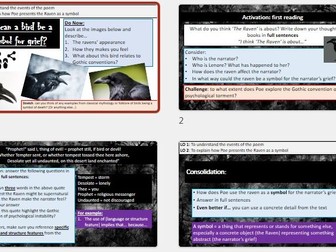
A lesson reading and understanding Edgar Allen Poe’s ‘The Raven’ Learning objectives: to read and understand the events of the poem and to explain how Poe presents the Raven as a symbol Has Learning Objectives, a Do Now, Activation, Demonstration and Consolidation activity. Also has a fun exit ticket challenge question. Some slides have an extension or challenge activity. Comes fully resourced and supported with key vocabulary. 6 slides Designed for G8 / KS3 students Engaging, fun, and interesting!
Weapons of mass destruction.Quick View
Walters26

Weapons of mass destruction.

(0)
Sixth lesson in scheme of work focusing on religion, peace and conflict. These lessons look at a number of different aspects of war including the causes, the moral aspect of going to war, pacifism, weapons of mass destruction and the just war theory. This lesson introduces students to the concept of weapons of mass destruction and the moral arguments for and against them. Students understand which countries have them and reason why the support them or not. Students look at the UKs nuclear program and the lesson includes extra links to interactive websites and videos if time in lesson. This is a complete lesson that has been designed with non subject specialists in mind so that it is fairly easy to pick up and teach. Lesson includes differentiated tasks, work sheets, on screen task management board and relevant information.
Gandhi and Ahimsa.Quick View
Walters26

Gandhi and Ahimsa.

(0)
Sixth lesson in SOW looking at main beliefs of Hinduism. This lesson looks at one of the worlds most well known Hindus, Gandhi and his belief and practice of Ahimsa. Students are familiarized with the biography of Gandhi, his salt march and some of his quotes. Lessons are designed with non subject specialists in mind to be able to pick up and teach. Relevant information is on screen and task information is one screen also. Lesson includes all relevant resources ready to print. Lessons designed for KS3 but can be adapted up or down to suit ability of students.
El futuro y yoQuick View
gfitzgibbon

El futuro y yo

(0)
In this activity, students will practice answering questions in Spanish using the future tense about other students in the class! For quick and easy differentiation, you can print out the same copy and have students choose to use the simple future tense (ir + a + infinitive) or the more advanced future tense. The activity includes 14 questions (7 fill in the blank and 7 translation) and is personalized to the interests of the students in the class. An answer key is also included for the future tense. This is a print and go activity and can be used any time after teaching Spanish future tense and students will be very engaged as it is all centred on them and their fellow classmates! Optional extension: I tally their answers afterwards and create a quick PowerPoint of ‘Most Likely To’ and have students who were most chosen to send me in their photos.