Year 3 and 4 full unit.
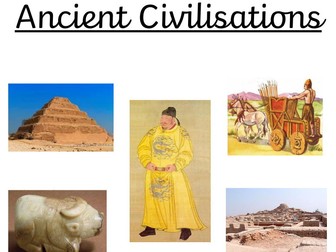
Includes lessons on the greatest achievements for:
Ancient Egypt
Shang Dynasty
Indus Valley
Ancient Sumer
6 powerpoint lessons and resources I have created included.
These detailed course / revision notes were specially written to give GCSE Classical Civilization students a comprehensive understanding of the key knowledge from the specification for Women in the Ancient World: OCR GCSE Classical Civilisation (9-1)
Women of Legend
Young Women
Women in the home
'Improper’ Women
Women and religion
Women and power
Warrior Women
Women to be Feared
Each of the above is split into two sections: Greece, firstly, and then Rome.
These extensive notes are especially useful for students whose note-taking in lesson isn’t as good as others, or whose organisational skills mean they are missing notes/handouts on certain topics / areas. These notes will certainly help reduce the time it takes them to catch up with their peers, and also students like to use these as a checklist of topics to go into in further detail. They give peace of mind that every corner of the specification/syllabus has been covered.
These notes can be given to students to work through at their own pace, or split up and given to students as and when each part of the content is studied throughout the course. As the teacher you may find it useful to go through the notes with my students as they highlight and annotate them with anything extra you want to give them according to their level. These notes though are comprehensive and detailed and work just as well as a stand alone revision aid as they do an in-class resource.
Hopefully these notes help to save your students (and you!) some time in the hectic run up to exams. Thanks for taking a look :)
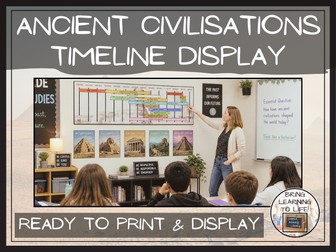
An ancient history classroom timeline display to help you decorate your classroom this year! The posters or handouts timeline the following civilisations or periods in history:
Pre-History
Ancient Mesopotamia
Indus Valley Civilization
Ancient Greece
Ancient Persia
Ancient Rome
Ancient Egypt
Indus Valley
Ancient India
Ancient China
Imperial China
Medieval Europe
Maya Civilization
Aztecs
Incas
The posters make a great classroom display to aid your students learning and can also be used as handouts for students to refer to. The timeline allows you to explore how each civilisation overlapped through history.
Included in this resource:
A one meter poster with civilisations from Europe, Asia and Africa
A one meter poster with all civilizations
A 70cm poster with civilisations from Europe, Asia and Africa
A 70cm poster with all civilisations
One page handouts for students
JPEG photo files for more flexibility with printing
⏚⏚⏚⏚⏚⏚⏚⏚⏚⏚⏚⏚⏚⏚⏚⏚⏚⏚⏚⏚⏚⏚⏚⏚⏚⏚⏚⏚⏚⏚⏚⏚⏚⏚⏚
For more great resources follow my store ⇉⇉ CLICK HERE
These are worksheets to accompany the start of teaching a unit on Ancient Civilisations for Year 7s or to 10+ year old students. The full unit compares the Ancient Civilisations of Sumer, Rome, Greece and China by focusing on particular topics like leadership, social structure and legacy.
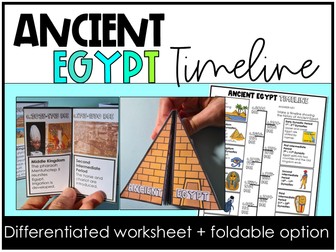
This timeline activity is a hands-on visual way for students to put the events of Ancient Egypt in order, so that they can see how one of the great civilisations began, flourished, declined, and eventually ended.
This activity meets the following learning objectives:
develop an understanding of when the first civilisations appeared (Ancient Egypt)
develop an understanding of a historical period
develop an understanding of how the Ancient Egyptian civilisation changed over time
sequence important events on a timeline
There are several options to choose from:
Cut and paste (more detail) or students write events (less cutting)
Worksheet or foldable timeline
Worksheet timeline has easier and harder options: write or glue events beside the dates (easier option) or write dates and write/glue events (harder version).
I hope your children enjoy making their timelines.
You may also like:
Ancient Egypt Activities Pack
Ancient Egypt Hands-on Activities
Achievements of Ancient Egypt
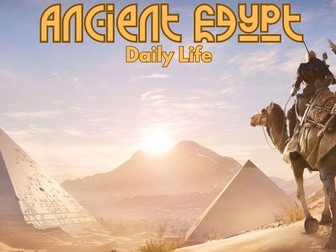
Explore what everyday life was like in Ancient Egypt with this engaging PowerPoint lesson and supporting research worksheet.
This resource helps pupils discover how people lived, worked and spent their time in one of the world’s most fascinating ancient civilisations. Learners will explore different aspects of Egyptian society, including homes, food, clothing, jobs, education, family life and entertainment.
The lesson includes a research worksheet that allows pupils to investigate different areas of Ancient Egyptian daily life independently, helping them develop their research, reading and recording skills.
This resource includes:
A fully editable PowerPoint presentation exploring daily life in Ancient Egypt.
Information about Ancient Egyptian homes, food and clothing.
Details about jobs, trades and different roles within society.
Information about education, family life and entertainment.
An exploration of how life differed between different groups of people.
A research worksheet to support independent learning and recording of information.
Editable Canva version included:
A link to an editable Canva version of this resource is included with your purchase. This allows teachers to customise the presentation and worksheet, adapt the content, add their own activities, or tailor the resources to suit the needs of their learners.
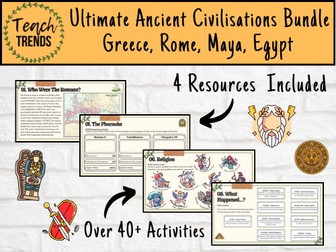
**Explore the Ancient World with the Ultimate Civilisations Bundle! **
Take your class on an unforgettable journey through four of the most fascinating civilisations in history! This all-in-one Ancient Civilisations Resource Bundle includes information and activity packs on:
Ancient Greece – Discover mighty gods, brave warriors, and the birthplace of democracy! From Olympic Games to marvellous myths, pupils will dive into a world of legend and learning.
Ancient Egypt – Step into the land of Pharaohs and pyramids! Unearth mummies, decode hieroglyphs, and explore the powerful Nile in this pack packed with wonder.
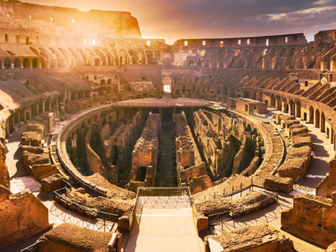
Ancient Rome – March into history with gladiators, emperors, and incredible inventions! Learn how Roman roads, baths, and laws shaped the world we live in today.
Ancient Maya – Journey to the jungles of Central America to explore majestic temples, mysterious calendars, and the clever minds behind chocolate and astronomy!
Each pack is bursting with child-friendly texts, exciting activities, timeline tasks, comprehension questions, and creative challenges to spark curiosity and build knowledge. Ideal for KS2 classrooms, home learning, or cross-curricular projects.
Four civilisations. Endless discovery. One powerful bundle.
Transport your classroom across the ancient world with this monologue bundle, combining Roman, Greek, and Egyptian gods and goddesses into one engaging performance resource.
Perfect for themed days, cross-curricular learning, or enriching topics on Ancient Civilisations, this bundle offers an interactive approach to history. Pupils can explore different cultures, compare beliefs, and develop performance skills - all while building confidence and creativity.
PDF and Word formats.
Bring Ancient Egypt to life! This complete bulletin board kit includes a bold display title, decorative borders, and a stunning central Pharaoh mask image.
This is a set of presentations and teaching resources about a wide range of different ancient civilisation. Your students will be able to look at life in ancient China, ancient Greece, ancient Egypt and ancient Rome. The slides are a great way of getting your students to think about how people lived in the past, using primary and secondary sources.
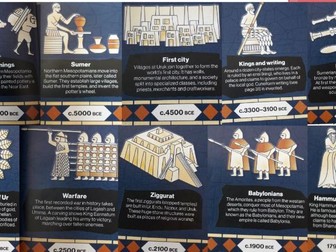
4 lessons on ancient Mesopotamia covering the four main civilisations: Sumer, Akkad, Babylon and Assyria.
Each power point contains general information, links to articles and/or videos, various activities that are quick but fun, and the occasional creative challenge. (Please note you will need Microsoft Power Point for some of the activities to work).
These lessons are suitable for all ages and were created specifically for lock down: providing extra information and activities for children at home to help keep them busy and expand their learning.
These lessons were not made to fit into a specific curriculum, but could be adapted for normal lessons.
Accompanying kahoots:
Mesopotamia: The Cradle of Civilisation by Nicola.Apps
Summary: Ancient Mesopotamia by Nicola.Apps
Civilisations have developed over time and space evolving into modern day societies.
This is a collection of video clips I put together to introduce this unit. I would also begin with a map of the area.
How do we define a civilisation? - I have already added my unit to introduce this.
What were the significant stages in our evolution toward modern day societies?
Was the evolution of society inevitable?
Are our modern societies better?
How do our religious systems, health practices, social organisation (includes leadership) and communications of today compare to civilisations of the past?
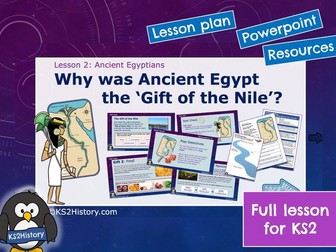
A full lesson for KS2 exploring the importance of the River Nile to the Ancient Egyptian civilisation. The resource includes a detailed lesson plan, Powerpoint and pupil resource sheets.
Why was Ancient Egypt the ‘Gift of the Nile’?
In this lesson, pupils will play a map-work game in pairs to help them to investigate the basic geography of Ancient Egypt. Then they will learn about the important natural resources provided by the River Nile and its role in farming. Pupils will use their new knowledge to create an information poster about the Nile and an optional extension activity will challenge pupils to explore modern-day maps of Egypt to make comparisons.
Objectives:
To understand the importance of the River Nile in Ancient Egypt
To give examples of the natural resources
The lesson plan includes differentiation ideas to adapt the activities for the needs of your class.
This primary history resource is created by KS2History.
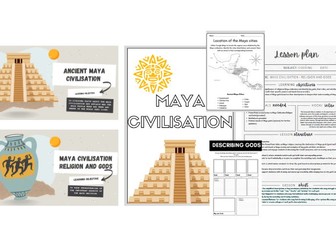
This unit explores the ancient Maya civilisation, focusing on who the Maya were, where they lived, and their major achievements. Students gain a chronological understanding of Maya history and geography, investigating their complex social, agricultural, and architectural accomplishments. Through mapping activities, visual resources, and discussions, students learn about key Maya cities and cultural practices, fostering a deeper appreciation for this influential civilisation within world history.
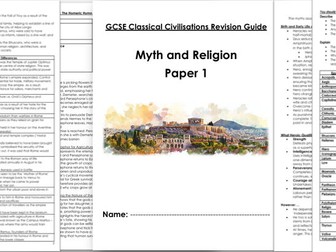
This comprehensive revision guide has been carefully designed to support students studying the OCR GCSE Classical Civilisation: Myth and Religion module. It provides clear, structured, and exam-focused notes covering all required content, helping students to develop both knowledge (AO1) and analysis (AO2) skills
The guide contains detailed yet condensed revision notes for all eight topics:
The Gods
Heroes (Heracles)
Temples
Foundation Myths
Festivals
Myth and Symbols of Power
Death and Burial
Journeying to the Underworld
All required prescribed sources are fully included and clearly explained, such as:
Homeric Hymn to Demeter
Metamorphoses (Orpheus & Eurydice)
Ara Pacis Augustae
Temple of Apollo Epikourios
The guide has been updated with:
Clear headings and subheadings
Bullet-pointed notes for easy reading
Logical progression from knowledge → analysis → evaluation
Visual organisation to improve recall
Guided Reading: The Ancient Maya Civilisation – Reading Comprehension
Take students on a journey to Central America to explore the fascinating world of the Ancient Maya civilisation. This engaging nonfiction text introduces young readers to Maya achievements in architecture, farming, mathematics, and writing, while highlighting their careful observation of the stars and the creation of an advanced calendar.
The comprehension questions are designed to develop literal understanding, inferential thinking, and evaluative skills, helping students connect facts with reasoning and historical interpretation. The extension task encourages creativity and reinforces learning through drawing and summarising key facts.
This resource is ideal for:
Upper primary / Grade 3–4 students
Integrating history and literacy
Guided reading, independent work, or homework
Developing critical thinking and historical awareness
What’s included:
A clear, accessible text on the Ancient Maya civilisation
Literal, inferential, and evaluative comprehension questions
An extension task for creative application and review
Perfect for bringing the story of the Maya to life while strengthening reading comprehension and historical understanding.
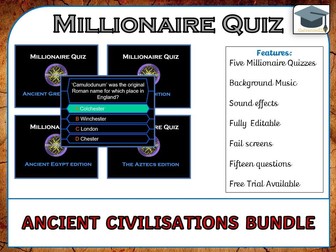
Five of the best editable Millionaire Quizzes available featuring background music, failscreens, sound effects and increasingly hard questions. Video previews of each are available on their separate pages.
Year 4 unit pack consisting of 5 lessons. Planning and resources for:
Rise of a civilisation
Timeline of significant events within the land of Mesopotamia
Gods and goddesses
Inventions
Rise and fall of a civilisation
All lessons link to the enquiry question/ statement The first civilisation was a success.
QR code and web link provided upon purchase
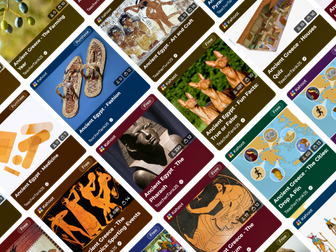
Travel back in time with TeacherTank25’s Ancient Civilisations quizzes.
Journey through the fascinating worlds of Ancient Egypt, the Minoans, and Ancient Greece. Explore powerful pharaohs, towering pyramids, mysterious gods, and daily life in Egypt; discover the palaces, frescoes, myths, and sea trade of the Minoans at Knossos; and uncover democracy, legends, battles, and great thinkers from Ancient Greece.
These quizzes are designed to:
Make key knowledge engaging and memorable
Reinforce classroom learning or support home study
Provide interactive fun for KS2–KS3 pupils
Perfect for lessons, revision or independent learning - bringing ancient history to life, one quiz at a time.
 Quick View

 Quick View
 Quick View
 Quick View
 Quick View
 Quick View
 Quick View
 Quick View
 Quick View
 Quick View
 Quick View
 Quick View
 Quick View
 Quick View
 Quick View
 Quick View
 Quick View
 Quick View