For art and design teachers.
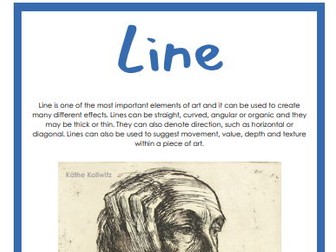
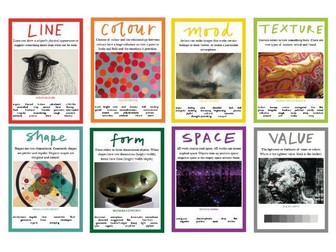
7 PDF posters which visually describe 8 formal elements of art: line, colour, mood, texture, shape, form, space and value.
Each poster includes an art historical reference, and artistic vocabulary relating to the element.
These can be printed up to A3 and used as a display or as a teaching resource.
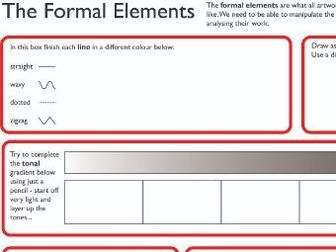
An activity sheet to help familiarise pupils with the formal elements of art. An activity each for: line, shape, tone, form, colour, texture and pattern. Great for a starter, homework or cover lesson.
Requires a range of skills - adding tone, creating pattern and replicating texture.
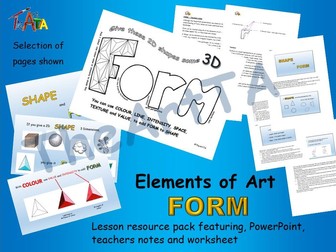
This resource aims to present Shape and Form, as an element of art, to a primary school audience.
It can be used as a standalone lesson or part of a program of study.
This resources contains:
• PowerPoint presentation, explaining the definition and concept of shape and form in art and showing students how they can use art elements and techniques to achieve 3D effects in their artwork. There are opportunities for class discussion and participation within this, and many visual examples.
• PDF of teachers notes to accompany the PPT offering explanations and tips to hopefully make the lesson as effective as possible, even for those without an art background.
• PDF worksheet using the letter shapes from the word ‘Form’ to use and develop the knowledge and skills gained from the lesson to create form. Completed worksheet can be used for future reference and evidence of learning within the art curriculum.
• PDF teachers’ notes for worksheet listing materials needed and explaining the tasks involved to complete it.
All images in this resource are the property of TheArtTA
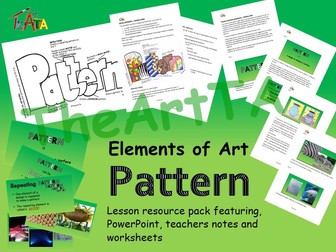
This resource aims to present Pattern, as an element of art, to a primary school audience.
Consisting of an updated PowerPoint presentation featuring many pictorial examples and opportunities for class discussion and participation, including a ‘guess the close up’ activity for natural patterns. There is then a worksheet to complete to demonstrate the pattern knowledge which has been gained.
It can be used as a stand alone lesson or part of a program of study, e.g. designing Roman mosaics.
Resources included:
PowerPoint presentation illustrating and explaining the different types of patterns that can be found.
A fun pattern based worksheet PDF to complete, using the knowledge they have acquired to create varied patterns. This can be added to art books for future student reference and evidence of study for this element of the curriculum.
PDF document of teachers notes for the PPT presentation, including explanations and discussion ideas to help make the presentation usable even by those who are not art experts.
PDF document of teachers notes for the worksheet including possible ideas for curriculum fulfilment/learning objectives.
I have used this resource successfully with classes from yr1 to yr6.
All images in this resource are the property of TheARTTA
6 PDF posters useful for art and design teachers to display the formal/visual elements in their classroom. Can also be used as a teaching resource.
Each poster has art vocabulary and artist references related to the element.
Can be printed up to A3 in size.
Complete lesson for Art and Design on the 7 Element of Art (Line, Shape, Colour, Value, Form, Space and Texture) including a printable worksheet and mini-starter game on “What is Art?”. This lesson is aimed for students from year 5 to year 8 completing Art across all worldwide curriculums.
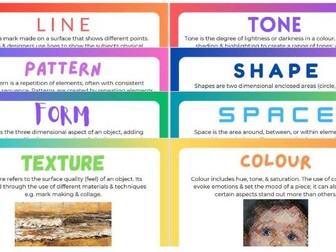
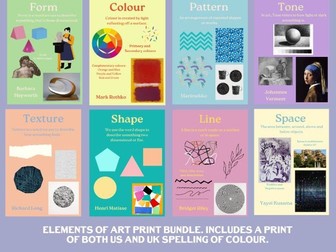
A bundle of vibrant, colourful elements of art posters for digital download. This package is a great resource for art teachers, artists or home schoolers. The files can be scaled to fit A5 up to A3 size making them perfect for classroom displays. They can be laminated and then used again, year after year!
This bundle contains 9 prints for you to download and print: LINE, TONE, PATTERN, SHAPE, FORM, TEXTURE, SPACE and COLOUR. There are two Colour/Color prints included to cater for both US and British English spelling.
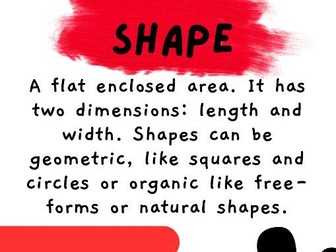
Each print contains a definition and a link to a contextual source. See example pictures (Shape and Line) for detail.
— PLEASE NOTE —
This is a listing for an instant digital download purchase. No physical item will be shipped.
— YOU WILL RECEIVE —
8 high-quality PDF print ready files of each of the above listed art elements.
— PRINTING —
1 | Print at home/office.
2 | Take to a local print store.
3 | Upload the files to an online printing service and have it delivered to your door.
You can get creative and print your file on postcards, envelopes, mugs, phone cases, wrapping paper, decals or wherever you wish.
— PAPER —
Preferred options are heavyweight smooth card stock and matte art paper.
— LICENSE INFO —
Please keep in mind that this print is for PERSONAL USE only. You may not forward, resell or distribute the files in any way. Hannah Elizabeth Artist retains all rights.
A word list, organised by the formal elements of art, which students can use when writing/discussing art work. Can also be printed on bigger sized paper to be displayed in the classroom.
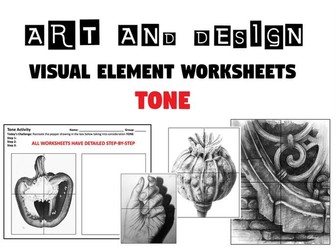
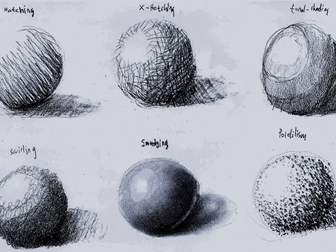
TONE DRAWING WORKSHEETS for students to practice and improve their tonal range.
These worksheets host a step-by-step guide to help students complete the worksheets independently. All worksheets are accessible for all abilities and year groups (KS3+KS4).
Tone is an important ‘Visual Element’ in Art to master and these sheets are a great way to practice and refine various techniques. I have also included a Tone flash card which talks through the various principles of using tone in Art. This would be a great slide on the board well students are completing the task. It is also printable to A3 for a poster.
These worksheets could be used for a tone building lesson / cover lesson / homework task / assessments. The tasks can be used for Art and Design or Design and Technology lessons.
This download includes:
• x1 PowerPoint holding all worksheets so you can edit
• x1 PDF Tone Challenge - printable size A4 (produces 8 slips)
• x1 PDF Still life worksheet - printable size A4 (produces 2 worksheets)
• x1 PDF Hand worksheet - printable size A4 (produces 2 worksheets)
• x1 PDF Natural form worksheet - printable size A4 (produces 2 worksheets)
• x1 PDF Pepper worksheet - printable size A4 (produces 2 worksheets)
• x1 PDF Architecture worksheet (Ian Murphy) - printable size A4 (produces 2 worksheets)
• x1 PDF Architecture worksheet (Gaudi) - printable size A4 (produces 2 worksheets)
• x1 PDF Tone flash card / poster - printable sizes A5 / A4 / A3
***(each A4 worksheet can be cut in half to accommodate 2 students - please see image for layout)
See all my other resources for creative lessons, booklets, displays, certificates and more…
This lesson covers all the elements of art: Line, shape, form, colour, value, texture and space.
It can be used for upper elementary or senior primary learners, either home-schooled or as a whole class.
It explains each element and encourages learners to identify how each is used in a painting.
Learners will create a poster of the elements of art during the lesson. For each element that is discussed, learners will fill in an area on their poster with examples of the element. Alternatively, the learners can complete the poster activity after the lesson at their own pace.
At the end of the lesson, there are two extension activities for those learners who are more advanced and would like to take their learning further.
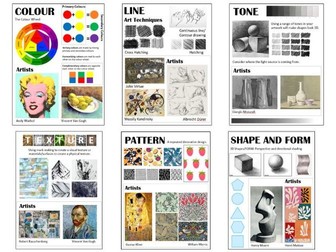
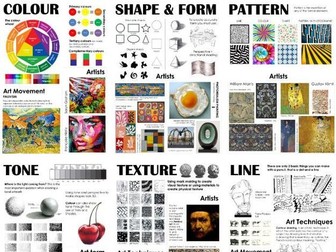
6 PDF Art Formal Elements posters.
Colour, Texture, Shape & Form, Line, Tone, Pattern.
Great for displays or as a teaching aid.
Each Formal Element poster includes Artwork examples and movements or practical techniques.
Can be printed up to A2 size.
Please leave a review
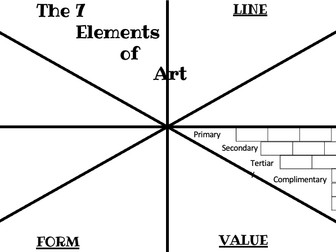
Posters describing 7 elements of Art: Value, Texture, Shape, Form, Colour, Space and Line.
Text description together with an image of an artists work and keywords.
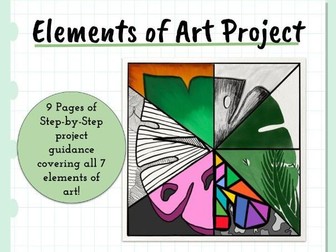
You will receive a step-by-step 9 page booklet for the project.
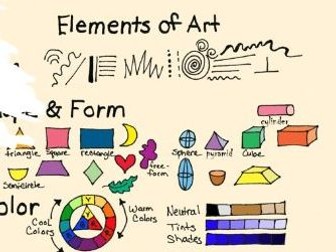
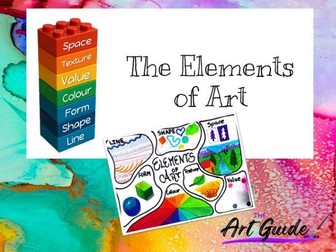
In this unit we will learn about the different Elements of Art. The elements of art are the building blocks of an artwork: colour, line, shape, form, value, texture, and space. They are the tools artists use when creating an artwork. Each of these art fundamentals are closely related and many of them overlap. When combined, they produce a complete artistic vision.
We will communicate our understanding of these elements of art by working collaboratively to create an Elements of Art Poster. We will explore what 7 key elements are and how these elements make up and create a sense of space in the picture in combination with the principles of design to create a piece of artwork.
These are the skills you will be able to do by the end of the unit:
Identify the 7 elements of art
Use a variety of materials to demonstrate your understanding of the elements
Work collaboratively in a team to create a poster demonstrating the different elements of art and their key characteristics
Communicate our thoughts and findings using a common language
✳Do you love the look of these worksheets? Check out my ‘Elements of Art’ guided sketchbook pages.
A perfect way to start the year with a new class, project or teacher.
This PowerPoint introduces the Seven Elements of Art and Design with clear examples of each element for all students to understand.
Following this are examples of students work creating a display page with each of the elements.
Finally, there is an assessment for learning opportunity to examine different elements of art within famous pieces of art work.
The elements of art are the building blocks of an artwork: colour, line, shape, form, value, texture, and space. They are the tools artists use when creating an artwork. Each of these art fundamentals are closely related and many of them overlap. When combined, they produce a complete artistic vision.
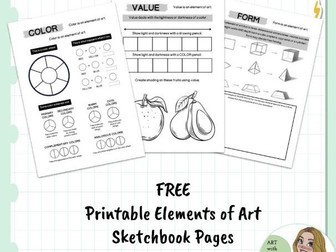
INCLUDED: 7 Printable Elements of Arts Sketchbook Pages
This Download Includes:
✓ Free PDF of Elements of Art Sketchbook Pages
TERMS OF USE We like to keep things simple.
Material included in this download may be use for
✓ Personal (To use within your classroom or personal creations)
☺ LIKE THIS? LEAVE A REVIEW
If you enjoyed this then I would truly appreciate it if you could spend 2 minutes out of your busy day to leave a review! This not only helps me improve but gives me the thumbs up to keep on creating! Thank you in advance! You rock!
Happy Creating wherever you are in the world!
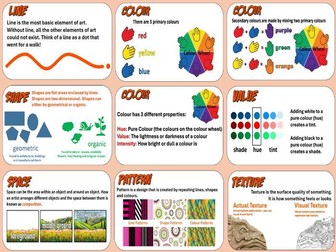
The Elements of Art are the building blocks in Art and Design. Throughout their learning journey in art and design children should become familiar with these 8 elements of art (line, shape, form, colour, value, texture, space and pattern) to enable them to understand the subject and to be able to express and communicate their ideas, thoughts and feelings about art. This presentation explains the eight elements and can be used throughout key stages 1 & 2.


 Quick View