This CPD resource is designed to help staff develop a clear understanding of metacognition and how it can be effectively integrated into classroom practice. Drawing on the EEF’s evidence-based guidance, it explains how students can develop awareness of their own learning, understand task demands, and select strategies to plan, monitor, and evaluate their thinking. The resource also provides practical, actionable approaches that teachers can use to embed metacognitive strategies across all subjects, supporting students to become more independent, reflective, and effective learners.
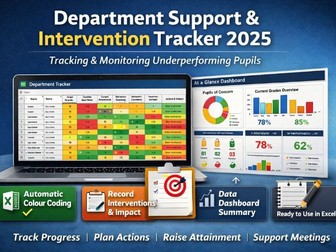
This Excel pupil tracking and intervention tracker is designed to help teachers and departments quickly identify and monitor pupils of concern and underperforming learners. It provides a simple, ready-made system for data tracking, monitoring progress, and recording interventions, supporting raising attainment across a department.
All formulas and colour coding are already built in. There is no setup required just enter pupil information and the tracker automatically updates and highlights concerns, saving valuable teacher workload time.
This resource is ideal for secondary teachers, Principal Teachers, Faculty Heads, Data Leads and Senior Leaders who need clear evidence of support, intervention and impact.
Perfect for:
tracking underachieving pupils
recording concerns and barriers to learning
departmental monitoring and review meetings
inspection or quality assurance evidence
raising attainment strategies
targeted support planning
closing the attainment gap
What this tracker records
This resource allows you to record and monitor:
pupil name and candidate number
class, teacher and stage/year group
course/level (e.g. National, Higher, GCSE, A-Level etc.)
target grade/band
current working grade
baseline data or prior attainment
assessment results and progress over time
homework completion
attendance percentage
behaviour/engagement concerns
barriers to learning
pupils of concern / underperforming pupils
tier/level of intervention
actions and support strategies put in place
review date and follow-up
outcome/impact of intervention
staff member responsible
parent/carer contact notes
additional pastoral notes or comments
Key features
fully editable Excel file
automatic colour coding and formulas already applied
intervention tier system built in
fields for attendance, behaviour, homework and progress
space to record actions, outcomes and impact
dashboard overview for departmental data
suitable for whole-school or department use
What it helps you do
identify pupils who are not meeting targets
plan and record interventions
evaluate impact over time
evidence support for inspections or SLT
streamline departmental tracking and monitoring
reduce admin and teacher workload
This is a ready-to-use pupil data tracker designed to make tracking and monitoring simpler, faster, and more consistent across your department.
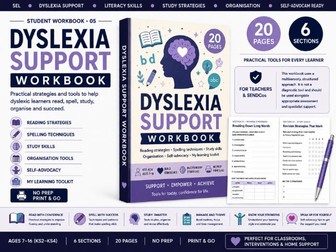
This booklet gives information about dyslexia and how teachers and teaching assistants can support student's within the classroom. The booklet includes:
- A quiz to show understanding
- Explains what dyslexia is and why its important to identify
- How it effects reading and writing, amongst other information
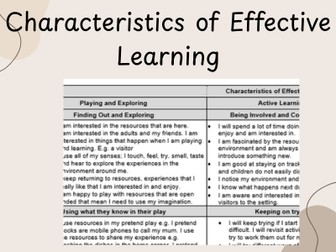
This Characteristics of Effective Learning document provides a clear and practical breakdown of how children demonstrate learning behaviours across the EYFS.
It unpacks the three key areas—Playing and Exploring, Active Learning, and Creating and Thinking Critically—through child-friendly “I can” style statements. These statements make it easy to identify, support and assess how children engage with their learning in continuous provision and adult-led activities.
The document supports practitioners in recognising how children explore, stay motivated, develop resilience, generate ideas and think critically. It also highlights how children use prior experiences, problem-solve, and adapt their thinking, helping to build a deeper understanding of how learning happens—not just what is learned.
It comes in an editable word format.
This CPD session offers an engaging and original approach to introducing or revisiting assessment for learning. Grounded in educational research, this CPD session is interactive, well-structured, and has been successfully tried and tested. The aim of the CPD session is to develop the knowledge, skills, and strategies needed in order to utilise assessment for learning even more effectively in lessons, and it achieves this by embarking upon the following learning journey:
1. Understand what assessment for learning is and why it is effective.
2. Break down the individual components of assessment for learning.
3. Observe and evaluate a model of assessment for learning
4. Collaborate in developing your own assessment for learning strategies.
Included in this pack are: Full PowerPoint presentation, videos for analysis, hyperlinks to Youtube videos, resources for CPD activities, instructions and guidance for trainers/ presenters.
All images and videos are licensed for commercial use, and are cited on the final slide.
These teaching and learning CPD sessions offer engaging and original approaches to introducing or revisiting a range of effective pedagogical strategies. Grounded in educational research, these sessions are interactive, well-structured, and have been successfully tried and tested.
The aim of each teaching and learning CPD session is to develop the knowledge, skills, and strategies needed in order to utilise in practice in each key area, and as an aid in achieving these aims, the trainer is supported with:
-Colourful, engaging, and comprehensive PowerPoint presentations;
-Videos for analysis of key techniques;
-A wide range of interactive resources for CPD activities;
-Instructions and plans to assist delivery.
All images and videos are licensed for commercial use, and are cited on the final slide of each PowerPoint.
35 slides, with hints, activities and strategies for supporting EAL students. Also included are activities for staff training. Please note I have included some strategy mats that I've uploaded previously.
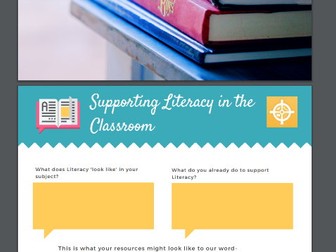
Staff Development Day focused on Supporting Literacy in the Classroom (Secondary School)
FAO: Literacy Coordinator or HoD.
Session Outcomes: To share best practice, to be informed by research, to take away strategies to try in lessons and to be more confident in how to support Literacy.
This resource was created to include staff discussions, explore literacy for staff who are unfamiliar, to begin to look at Activating Prior Knowledge and other reading strategies.
Also included in a matching PowerPoint with YouTube clips linked. Gives a real lesson example and includes how staff may want to start marking Literacy within their subject.
Was very successful and engaging.
This marked assignment achieved outstanding grade feedback that meeting the requirements of the CACHE diploma and outcomes of the course. It is in word format that will allow you to edit the document and save you time researching some of the key tasks.
Promotes active progress and communication between student, teaching assistant and teacher.
This is a resource which can be used in secondary or primary.
It enables the teaching assistant to support children more effectively and maintain communication between what is happening with the progress of the student and the teacher. This then helps the teacher to plan effectively for future lessons.
It can be used for one lesson or episode or a series of episodes.
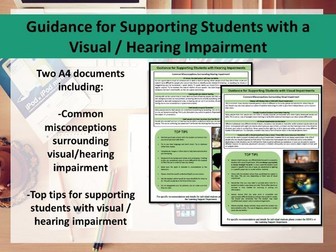
Two A4 documents including:
-Common misconceptions surrounding visual/hearing impairment
-Top tips for supporting students with visual / hearing impairment
Contains very useful information for any staff member (teacher/ support staff etc) working with a student with visual / hearing impairment.
A selection of teacher guidance sheets to support the provision of SEN pupils during and after current Covid 19 LOCKDOWNs.
The bundle includes:
SEN Remote Learning teacher guidance
Recovery levers tracker
Reintegration (return to school) teacher guidance
This is my supporting statement for the role of Deputy Head, which can also be adjusted to suit any senior leadership role. I was a senior leader when I used this to apply for Deputy Head positions. This statement was my success in securing every interview in every role I applied for when I was searching for my Deputy Head job. I really want to share this to help you achieve your goal.
This is a set of 7 PowerPoint slides I put together, I have made it editable so you can add or delete any of the elements. Its a great looking presentation and has space for your school crest, logo etc. and space on the footer for your key message. Take a look, its pretty!
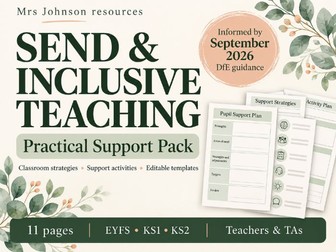
Pastoral support plans are personalised strategies designed to provide emotional, spiritual, and practical assistance to individuals in need.
This document has been designed to offer support and guidance to those experiencing personal challenges, crises, or difficult circumstances. Pastoral support plans may encompass counseling, mentorship, prayer, community outreach, and other forms of assistance tailored to the unique needs of each individual. By developing and implementing pastoral support plans, schools and organisations can create a nurturing and empathetic environment where individuals feel valued, supported, and empowered to navigate life’s challenges.
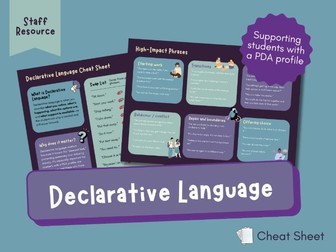
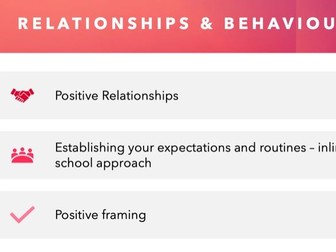
This includes a PPT and staff workbook (editable PDF). This is perfect for Teacher training or ECT or as recap.
Key topics:
Positive framing
Anxiety
Defensiveness
Establishing routines
A set of 7 templates that are suitable for all subjects. Includes;
Key Words
Grade tracker
Chapter Summary
SMART targets for this term
PEEL Essay Planner
Cornell Notes paper
Mind Map Template
Ready to go, simply print and use in lessons with all ages and in all subjects or send home. These templates can support students who need more assistance structuring their work.
These resources are a small selection that I have used and adapted across the many SEN settings, in which, I have worked. There are two social stories and a listening visual aid (instruction card) - created originally as part of a social communication programme. They were used with KS1 and KS2 students for the most part but they can also be adapted to suit KS3 autism/SEBD.