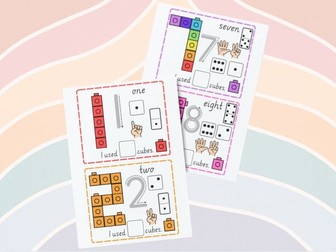
A handy Maths Toolkit designed to support independent learning across a range of mathematical concepts. This printable resource includes a variety of visual aids such as bar models, part-whole models, number lines, number tracks, a hundreds square, and more to help children choose the most appropriate strategy when solving problems. Perfect for table mats, maths working walls, or independent use during lessons.
You can print this resource, hole punch and turn it into a booklet/toolkit for each child to use. Alternatively, print the pages/representations you need one at a time!
Please note no widgits are included in this download.
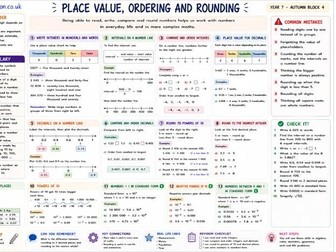
A handy KS2 Maths Toolkit designed to support independent learning across a wide range of mathematical concepts. This printable resource includes key visual aids and reference materials, such as place value charts, number lines, bar models, part-whole models, multiplication grids, Roman numerals, prime, square and cube numbers, and more, helping children select the most appropriate strategy when solving problems.
Perfect for table mats, maths working walls, or independent use during lessons. Print the full resource, hole-punch the pages and create a personalised maths toolkit for each child, or print individual pages as and when you need them.
Please note no widgits are included in this download.
Pack of ten animal number themed slides. Each slide shows a different habitat with a range of animals to find and count.
Perfect for maths themed morning work or guided activities
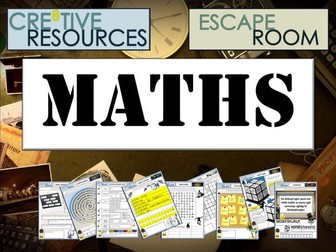
Brand New Maths Escape Room - Virtual Escape Room by Cre8tive Resources! This lasts an hour or under depending on how quick the teams can solve each puzzle! Students love this style of lesson, great as an educational treat for your class. C8/ES/11
✰✰✰✰✰✰✰✰✰✰✰✰✰✰✰✰✰✰✰✰✰✰✰✰✰✰✰✰✰✰✰✰✰✰✰✰✰✰✰✰✰
Product Contents:
☞ Escape Room Interactive Tracker PowerPoint - Keeps the competitive nature on display
☞ Escape Room Puzzle Keys (Six Sets for Six Teams)
☞ Escape Room Team sheet - Record codes, answers clues as they progress through the 7 rooms
☞ Escape Room Puzzles (7 Rooms = 7 Different styles of Puzzles involving numeracy, literacy and lateral thinking)
☞ Teacher Answer Sheet - Quickly confirm to teams they have solved the puzzle correctly
☞ Teacher instructions of how to set up the escape room and what to print and top tips and shortcuts.
☞ Successful Escape Certificates for those that complete the entire challenge (There is a difficult bonus escape too :) for any quick teams
☞ The 7 Rooms each have a specific Puzzle that has been adapted to suit the topic of this Escape Room and is suitable to KS3 and KS4 Student
✰✰✰✰✰✰✰✰✰✰✰✰✰✰✰✰✰✰✰✰✰✰✰✰✰✰✰✰✰✰✰✰✰✰✰✰✰✰✰✰✰
The 7 Rooms include: Secret Bunker, Space Station, Garden Tunnel, The Office, Dungeon, The Island, Skate Park (Each Puzzle has been adapted to suit the topic of this Escape Room and is suitable to KS3 and KS4 Student or even bright KS2 students.
JUST PRINT AND GO!
They can also be used to encourage a flipped learning environment.
✰✰✰✰✰✰✰✰✰✰✰✰✰✰✰✰✰✰✰✰✰✰✰✰✰✰✰✰✰✰✰✰✰✰✰✰✰✰✰✰✰
You may also want to check out some of our popular selling MATHS resources for your students:
✰ Probability - Maths Escape room
✰ End of Term Maths Escape Room
✰ Algebra Escape Room
✰ Different Shapes - Escape Room
✰ Christmas Maths Escape Room
✰ Christmas Maths Bundle
✰ Sequence and Series Math Topic
✰ Numbers - Math Escape room
✰ Data and Statistics - Math Resource
✰ Careers in Maths
✰ Coordinate Geometry Resource
A set of exam style questions for paper 2, along with a mark scheme.
Also includes additional familiarisation questions for paper 1 and 2 along with suggested answers.
All based on the 2026 preliminary material for AQA Level 3 Certificate in Mathematical Studies.
The additional questions are called “Set B” and “Set C” as the first ones are available freely on my website.
Please note that these resources may be available without payment after the 2026 exams series.
Our maths posters have had a revamp and they’re better than ever!
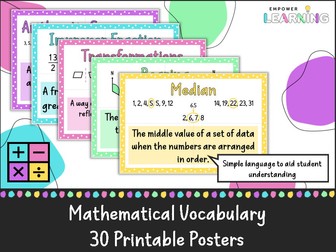
Set of 30 colourful posters featuring a variety of mathematical vocabulary. Posters feature diagrams and examples, as well as clear definitions for each piece of vocabulary. They’re a fantastic addition to any mathematics classroom, or for alternate use, they work great as revision/flash cards!
The following words are included:
Arithmetic Sequence
Acute Angle
Bearing
Chord
Circumference
Coefficient
Congruent
Correlation
Diameter
Formula
Gradient
Improper Fraction
Irrational Numbers
Mean
Median
Mode
Obtuse Angle
Parallel
Perpendicular
Perimeter
Prime Number
Radius
Range
Reflex Angle
Regular Polygon
Scale Factor
Square Number
Symmetry
Transformations
Unit Fraction
Set to be printed on A4 but can be blown up to A3 or shrunk to A5 depending on preference.
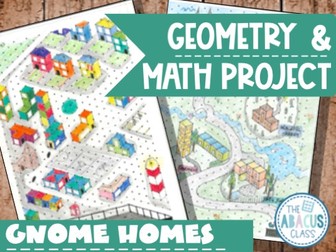
This project based learning resource is an engaging Geometry based Math mini project revolving around designing a Gnome village or town using isometric paper and is a great back to school or end of term activity. The project lasts up to 5 lessons plus there are additional problem solving worksheets that could fill 2 more lessons. Includes fun geometric tasks, bursting with mathematical concepts and math skills such as isometric drawings, 3D shapes, elevation drawings and plans. It also offers opportunities to be creative and to develop number problem solving strategies.
I’m certain you and your students will enjoy Gnome Homes. My students always love it and still talk about it years later!
The aim of the task is to create all the 15 different shapes out of 4 Multilink cubes and then design a Gnomes village using these shapes as buildings. The village/town must be decorated in a theme and as this can be set as a competition within the class or year group, the student with the most creative Gnome Homes, wins.
Not only must students design their village, they must also work out the costs involved with each building relating to the ground rent, paint for the walls and tiles for the roofs.
There are activities and problem solving questions based on the task, that are available for students who need extension work.
Finished products can be laminated for a super wall display.
Can be set as a class or year group competition and entries displayed.
What’s Included
Teacher Guide
Starter activity
Printable Isometric Paper
Examples of previous work
Student worksheets
Problem Solving Tasks
Answer Keys
**Here’s what others say **
“Students completed this at the end of the year and loved it. The directions were really clear and I love the built in differentiation. One of their favorite activities of the year!”
“My students’ creativity really came through with this activity. I had gnome villages with everything from carnivals to an IKEA store. The real-world connection of costs of building was great.”
“This was a super fun project for my enriched students. They were engaged and practicing without even realizing they were.”
“Amazing resource!”
This is a game for revision for KS2 maths SATS. Suitable mainly for Year 6, but can be adapted for other year groups. The instructions are:
Put the children into pairs
Give each pair 20 counters and cards with A, B, C and D
Each pair works out the answer the question and they have to put their counters on the correct answer card.
If they are not sure, they can split their counters.
When the answer is revealed, if they have counters on an incorrect answer, they lose those counters.
The winning pair are the ones who have the most counters left at the end.
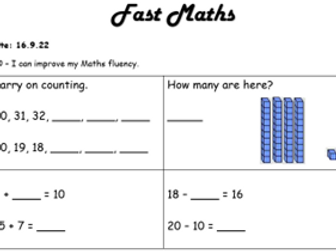
I have uploaded my Year 2 Fast Maths which aims to consolidate and increase Maths fluency, starting with a recap of Summer Term Year 1 Maths and then Year 2 Autumn Term content. Maths includes number and addition skills. The pack includes 6 weeks worth of daily Fast Maths sheets (2 per page).
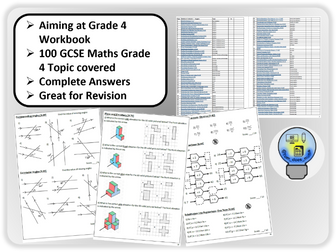
Here is a complete workbook of Grade 4 topics for GCSE Maths. Answers also included.
I created this for my classes this year as they are mixed ability within foundation GCSE. I also made an aiming at grade 2 and aiming at grade 3 workbooks that I will hopefully also upload.
They are great for all general work, classwork, homework, revision.
To decide on the topics I did some brief analysis of recent papers and what topics came up compared to marks needed for a grade 4. If students are confident on the majority of the topics in this workbook, then they should be able to achieve a grade 4.
Note in the top right corner on Page 3 there is a blank space, here I added a QR code to the answers, you could do similar.
There are exactly 100 topics covered across:
Four Operations
Fractions
Factors, Multiples and Primes
Decimals
Percentages
Fractions, Decimals & Percentages
Rounding
Powers and Roots
Indices
Ratio
Algebra
Expanding & Factorising
Solving Linear Equations
Straight Line Graphs
Inequalities
Angles
Angles in Polygons
2D Shapes
Perimeter
Area
3D Shapes
Measure
Time
Money
Compound measure
Scale Drawings
Transformations
Similarity
Probability
Venn Diagrams
Averages & the Range
Frequency Tables
Scatter Graphs
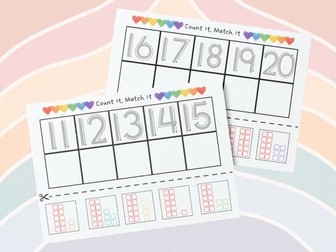
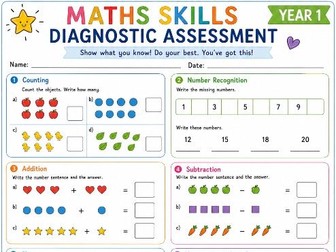
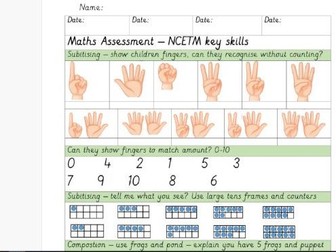
Help identify pupils’ strengths and areas for development at the start of Year 1 with this engaging Maths Skills Diagnostic Assessment.
This colourful and accessible assessment provides a snapshot of key early maths skills and can be used to support baseline assessment, transition from Reception to Year 1 and early-term planning. The activities are designed to give teachers a quick overview of each child’s confidence and understanding across a range of foundational maths areas.
The assessment includes:
Counting and counting objects
Number recognition
Writing numbers
Addition within 10
Subtraction within 10
Naming 2D shapes
Comparing length
One more and one less
Recognising and counting money
Telling the time
Simple problem solving
Teacher skills checklist
Space for teacher notes and observations
Perfect for:
Year 1 pupils
KS1 maths
Baseline assessments
Start-of-year assessments
Transition from Reception to Year 1
Maths diagnostic assessment
Identifying gaps in learning
Early intervention
Teacher assessment
Maths planning
This low-preparation resource is ideal for gaining a quick overview of pupils’ existing maths knowledge and identifying areas that may require further teaching or support. The accompanying teacher checklist and notes section make it easy to record observations and use assessment information to inform future planning.
Year 6 Theme Park Enterprise Maths Project
Looking for an engaging, low-input project your Year 6 children can complete independently?
This cross-curricular Theme Park Project combines maths, problem solving, creativity and teamwork across ten structured lessons.
Perfect for:
independent learning,
split classes,
end-of-term projects,
transition activities,
enterprise weeks,
maths enrichment,
or keeping Year 6 meaningfully occupied while teaching another group.
Children work in teams to design, budget, expand and advertise their own theme park while completing maths-rich challenges and problem-solving tasks.
Included:
10 project lessons
Printable student booklet
MUST / SHOULD / COULD differentiation
Maths-focused problem solving challenges
Budgeting and enterprise activities
Scale drawing tasks
Data handling and statistics
Advertising and persuasive writing tasks
Early finisher extension ideas
Printable challenge cards
Colourful visuals and engaging layouts
Maths Skills Covered:
Budgeting
Percentages
Area and perimeter
Scale
Timetables
Data handling
Profit and loss
Problem solving
Money calculations
Cross-Curricular Links:
English
Art & DT
Computing
Geography
Enterprise
Teamwork and communication
Ideal for Year 6 pupils working independently in pairs or groups.
PDF and PowerPoint presentation format.
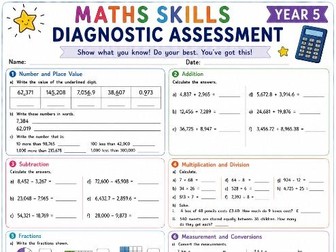
Help identify pupils’ strengths and areas for development at the start of Year 5 with this engaging Maths Skills Diagnostic Assessment.
This colourful and accessible assessment provides a useful snapshot of children’s mathematical knowledge and understanding as they progress through Key Stage 2. It is designed to help teachers identify gaps in learning, recognise areas of confidence and use assessment information to inform early-term planning and targeted support.
The assessment includes:
Number and place value
Reading and writing numbers to 100,000
Recognising the value of digits
Addition and subtraction
Multiplication and division
Written calculation methods
Fractions and equivalent fractions
Comparing, adding and subtracting fractions
Measurement and unit conversions
Perimeter
Money and calculating change
Telling and calculating time
2D shapes and their properties
Lines of symmetry
Problem solving
Teacher skills checklist
Teacher notes and next steps section
Perfect for:
Year 5 pupils
KS2 maths
Start-of-year assessments
Baseline assessments
Diagnostic assessment
Transition from Year 4 to Year 5
Identifying gaps in learning
Early intervention
Maths planning
Teacher assessment
This low-preparation resource is ideal for gaining an overview of pupils’ mathematical skills at the beginning of Year 5. The accompanying teacher checklist and notes section make it easy to record observations, identify areas for further development and use assessment findings to inform teaching, intervention and next steps.
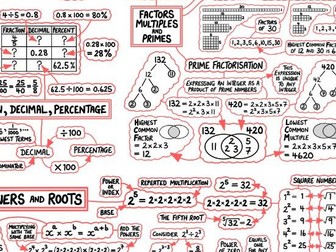
A hand-drawn poster providing beautiful visual notes of all the content required for the Number topic of the GCSE (9-1) Maths syllabus. The poster shows clearly which concepts are required for the Foundation and Higher levels of the course. The PDF file is designed to be printed as an A3 poster and can be combined with the other 4 topic maps to produce a large display of the whole GCSE (9-1) Maths course. Can be used as a classroom display or printed individually for students to track their progress and review.
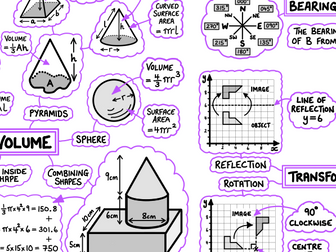
A hand-drawn poster providing beautiful visual notes of all the content required for the Geometry topic of the GCSE (9-1) Maths syllabus. The poster shows clearly which concepts are required for the Foundation and Higher levels of the course. The PDF file is designed to be printed as an A3 poster and can be combined with the other 4 topic maps to produce a large display of the whole GCSE (9-1) Maths course. Can be used as a classroom display or printed individually for students to track their progress and review.
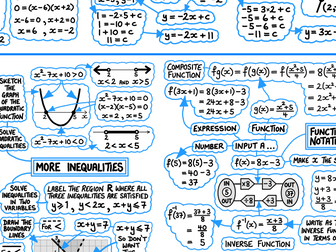
A hand-drawn poster providing beautiful visual notes of all the content required for the Algebra topic of the GCSE (9-1) Maths syllabus. The poster shows clearly which concepts are required for the Foundation and Higher levels of the course. The PDF file is designed to be printed as an A3 poster and can be combined with the other 4 topic maps to produce a large display of the whole GCSE (9-1) Maths course. Can be used as a classroom display or printed individually for students to track their progress and review.