Coal Mining 1750 - 1900Quick View
Roy_Huggins

Coal Mining 1750 - 1900

(0)
These award winning resources, will simply take your breath away. They look in depth at the problems facing coal miners and the solutions that they came up with from 1750 - 1900. The PowerPoint includes the aims and objectives, information slides, eight activities, an assessment, pupil mark scheme and three outstanding video clips from interviews with Doncaster coal miners that I created as part of an oral history project. The worksheet can be used along side the PowerPoint, but contains and additional four differentiated activities for lower ability students. Meanwhile, the card sort exercise is designed as a mini plenary to help you assess what your students have learnt so far in preparation or the assessment task. The aims and objectives are: Theme: How did the steam engine revolutionise industry? Know: What changes took place in the coal mining industry 1750 - 1850? Understand: How the new methods increased coal production? Evaluate: How did the steam engine revolutionise mining production? Skills: Cause, Consequence, Significance, Evaluation and Judgement. What Am I Looking For this lesson? Identify = the changes that took place in the coal mining industry. Describe = the changes that took place in the coal mining industry. Explain = how the new machinery and steam engines improved coal production? Analyse = form a judgement how far the steam engine revolutionized coal production? In 2011, I was awarded a teaching award for the oral history resources and interactive content that I developed for these lesson resources, which you can download for a bargain price! Activity 1: A Snowballing Exercise Activity 2: Produce a spider graph summarising the problems facing miner using a clip from worst jobs in history Activity 3: Class Feedback and review of what has been learnt Activity 4: Jot down five facts about surviving a rood collapse in a coal mine Activity 5: Guess my job Activity 6: Card Sort Activity 7: Class discussion: How far did the steam engine solve the problems facing miners Activity 8: Spider Summary Activity 9: Assessment with student mark scheme. Have fun - these resources should span 2/3 lessons but can easily be adapted. Kind Regards Roy
BRITAIN 1750-1900: AN INTRODUCTIONQuick View
aliciamesa

BRITAIN 1750-1900: AN INTRODUCTION

(0)
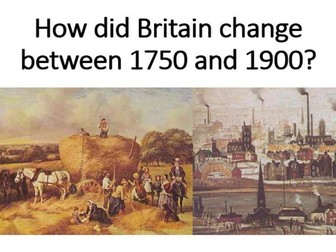
A great resource to introduce changes in Britain between 1750 and 1900. Contains pictures for students to compare and contrast and classroom activities (chart to categorize changes, fill in the blanks and questions). An introduction to the Industrial Revolution.
Canals 1750 - 1900Quick View
Roy_Huggins

Canals 1750 - 1900

(0)
These outstanding resource has been designed to put some of the fun back in to the teaching of the industrial revolution by looking at why and how canals were built from 1750 - 1900. They are based upon some classic interactive resources that have never failed to engage my students over 30 years. These have been updated and If you have previously purchased this lesson, it was updated in December 2023, so you should be able to download the free updates. When you purchase this lesson you will be able to download 41 slide PowerPoint presentation and two accompanying worksheets that should take 2 lessons to complete. The PowerPoint includes aims, objectives, differentiated outcomes, information slides, historical sources, diagrams, templates, writing frames, quizzes, word searches and a wide range of differentiated tasks that mirror the information in the two work sheets. The PP also includes a section called extra resources that you can dip into if you wish. I have also unloaded everything in PDF as well. Your students will love this resource, especially the boys. Treat yourself to a break. Download this resource and give yourself more time to spend with your family, whilst being confident in the knowledge that you will being delivering a ‘good’ to ‘outstanding’ lesson with your students that they will love and find interesting. The aims and objectives are: Theme: The Transport Revolution Know: Why were canals built during the Industrial Revolution? Understand: How did canal engineers overcome the problems of building a man made waterway without a current? Evaluate: What impact did canals have on the cost of moving goods? Skills: Numeracy, Cause & Consequence. WILF: What Am I Looking For? Can You Describe: Why and how were canals built? Can You Explain: Why canals were built and how engineers overcame the shape of the land? Can You Analyse: Begin to come to a judgement on why Britain underwent a Transport Revolution 1750 – 1900. If you like this resource then why not check out our other resources on similar topics in our TES shop. You can also follow ‘The History Academy’ on Twitter, Google Plus, YouTube and Facebook for the latest updates or even to get in touch and chat about how you have used this resource or to ask questions. We aim to produce cheap and affordable resources for the price of a good cup of coffee so that you can spend more time doing the things that you want. All our authors are paid the living wage so when you purchase our resources you are buying into our shared values of fair play and decency. Anyway, have fun and stay in touch via social media for the latest updates. Don’t forget to check out our YouTube Channel with over 600 free videos: @historyacademy Kind Regards Roy
How Britain changed 1750-1900 (3 lessons)Quick View
katherinelroe

How Britain changed 1750-1900 (3 lessons)

(0)
Three one-hour lessons with all activities explained on Power Point. The focus is on continuity and change between 1750-1900. Once students understand the basic changes which took place during the Industrial Revolution, they carry out more detailed research and analysis using the information provided. They also develop their knowledge of key terms for this unit via a homework and key terms test. The lessons end with an assessed piece of writing analysing areas of change and continuity (writing frame and mark sheet included)
1750 to 1900: an age of changeQuick View
wodewee

1750 to 1900: an age of change

(0)
An introductory lesson/task for the Industrial Revolution. Pupils read the information sheet to complete a comparison task/sheet on aspects of British life in 1750, and then in 1900. (L5 task) Additional questions ask pupils to consider the similarities and differences between today and 1750 (or 1900), and consider the reasons for those differences. (L6+ tasks) I have also added a numeracy based task on the growing population. Enjoy.
Industrial Revolution 1750-1900Quick View
TimelineTeaching

Industrial Revolution 1750-1900

(0)
How did life change between 1750 and 1900? Whole lesson plus differentiated resources for teaching 11-14s ‘how did life change between 1750-1900?’ Students will start by looking at inventions and guessing whether they were created before or after 1750, and then look at the Industrial Revolution. Students complete a table (differentiated) using the information sheet (PROVIDED!) about changes in; Population Work Transport Health and Medicine Living Conditions Finally, students complete one of 3 differentiated tasks summarising the changes between 1750-1900. Also includes a ‘quick quiz’ plenary! Please review if you purchase, and check out my other industrial revolution resources!
AQA GCSE History: Medicine 1750-1900Quick View
JAB1984

AQA GCSE History: Medicine 1750-1900

(0)
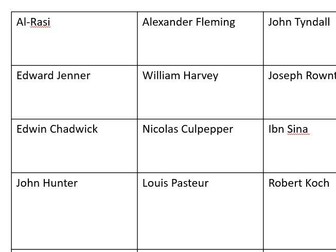
Full unit of work. Lessons include: Public health Chadwick and Snow Germ theory Lister Great Stink James Barry 10 lessons in total, all resourced and ready to go.
Transport Revolution 1750 - 1900: CanalsQuick View
Roy_Huggins

Transport Revolution 1750 - 1900: Canals

(1)
These outstanding resource has been designed to put some of the fun back in to the teaching of the industrial revolution by looking at why and how canals were built from 1750 - 1900. They are based upon some classic interactive resources that have never failed to engage my students over 30 years. These have been updated and If you have previously purchased this lesson, it was updated in December 2023, so you should be able to download the free updates. When you purchase this lesson you will be able to download 41 slide PowerPoint presentation and two accompanying worksheets that should take 2 lessons to complete. The PowerPoint includes aims, objectives, differentiated outcomes, information slides, historical sources, diagrams, templates, writing frames, quizzes, word searches and a wide range of differentiated tasks that mirror the information in the two work sheets. The PP also includes a section called extra resources that you can dip into if you wish. I have also unloaded everything in PDF as well. Your students will love this resource, especially the boys. Treat yourself to a break. Download this resource and give yourself more time to spend with your family, whilst being confident in the knowledge that you will being delivering a ‘good’ to ‘outstanding’ lesson with your students that they will love and find interesting. The aims and objectives are: Theme: The Transport Revolution Know: Why were canals built during the Industrial Revolution? Understand: How did canal engineers overcome the problems of building a man made waterway without a current? Evaluate: What impact did canals have on the cost of moving goods? Skills: Numeracy, Cause & Consequence. WILF: What Am I Looking For? Can You Describe: Why and how were canals built? Can You Explain: Why canals were built and how engineers overcame the shape of the land? Can You Analyse: Begin to come to a judgement on why Britain underwent a Transport Revolution 1750 – 1900. If you like this resource then why not check out our other resources on similar topics in our TES shop. You can also follow ‘The History Academy’ on Twitter, Google Plus, YouTube and Facebook for the latest updates or even to get in touch and chat about how you have used this resource or to ask questions. We aim to produce cheap and affordable resources for the price of a good cup of coffee so that you can spend more time doing the things that you want. All our authors are paid the living wage so when you purchase our resources you are buying into our shared values of fair play and decency. Anyway, have fun and stay in touch via social media for the latest updates. Don’t forget to check out our YouTube Channel with over 600 free videos: @historyacademy Kind Regards Roy
The Textile Industry 1750 - 1900Quick View
Roy_Huggins

The Textile Industry 1750 - 1900

(0)
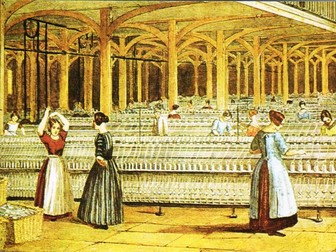
These outstanding resources have been designed to help students studying how the Industrial Revolution changed the Textile Industry between 1750 - 1900. It is suitable for a range of learners and includes some great ideas and strategies to try out with your students. The information in both the PowerPoint and the worksheet looks at the how the new inventions transformed the textile industry. Both have been beautifully illustrated and carefully linked to the decline of the domestic system and the birth of factories and mills. The follow up activities look at how the new machines changed the way people worked and looks at some of their negative reactions. When you purchase this resource you will be able to download a fully editable 3 page Microsoft Word document and a 16 slide PowerPoint Presentation, which includes aims, objectives, a snowballing starter and an introduction and a range of activities, video clips and extension exercises to support the worksheet. The information in both resources looks the Flying Shuttle,The Spinning Jenny, The Water Frame, the Mule and the Power Loom. The main activity focuses around a summary table on each invention for the students to complete. The next section looks at the impact of the new machines in the way that they changed the way in which people worked. For the final question, I have also linked in a clip to the song 'Poverty Knock' to help students with the last question. Where appropriate, I have provided differentiated activities. The aims and objectives for this lesson are: Theme: Why did Britain have an Industrial Revolution 1750 - 1900? Know: Why did Britain's Textile Industry change 1750 - 1900? Understand: How did each new invention contribute to the changes? Evaluate: What impact did these new machines have on peoples’ lives? WILF: What Am I Looking For? Identify and describe: Why did Britain's textile industry change 1750 - 1900? Explain: How did each new machine contribute to the changes taking place? Analyse: What impact did these new machines have on peoples’ lives? If you like this resource then why not check out my other resources on this topic in my TES shop. For example, I have produced a card sort on the textile industry which would make a great starter, plenary or homework activity. You can also follow 'The History Academy' on Twitter, Google Plus, YouTube and Facebook for the latest updates or even to get in touch and chat about how you have used this resource or to ask questions. We aim to produce cheap and affordable resources for either the price of a good cup of coffee or a happy meal so that you can spend more time doing the things that you want. Kind Regards Roy
Transport Revolution 1750 - 1900: RoadsQuick View
Roy_Huggins

Transport Revolution 1750 - 1900: Roads

(0)
These fun and engaging resources on the Transport Revolution, focus on the development of the new roads, turnpike trusts, coaching inns and the impact that they had on everyday life. They are designed to be suitable for the full range of ability and include a wide range of differentiated tasks and activities that should last at least two lessons. When you purchase these resources you will be able to download a Powerpoint presentation and three worksheets that can be printed separately or as a booklet. The first worksheet looks at the state of the roads in 1750 and why the government decided to set up the Turnpike Trusts after the 1745 Jacobite Rebellion. The Second worksheet can be used either in lesson or set as homework and looks at the different road designs that the road builders experimented with until they finally settled on McAdams design. Later they added tar and created TarMcadams or Tarmac as we call it today. The third worksheets looks at the impact of the new roads and the development of coaching inns and the rise of the highwayman. The PowerPoint includes aims, objectives, tasks and activities to help facilitate the lesson. All the documents have also been uploaded as PDFs just in case you need to upload them or don’t have access to Office. The series of lessons follow on from the free introductory lesson that has been uploaded to the TES website. If you wish to preview the high quality resources and activities that have been created for this series, then please download it first to make sure that these resources fit with your teaching style. The aims of this lesson are: Theme: The Transport Revolution 1750 - 1900 Know: What state were the roads in 1745? Understand: What improvements were made to the building of roads? Evaluate: How did these improvements help the Industrial Revolution? Skills: Cause, Consequence, Change, Continuity and Source Evaluation. WILF: What Am I Looking For? Can You Describe: The problems with Britain roads in 1745? Can You Explain: How did the building and design of roads improved? Can You Analyse: Begin to come to a judgement on how successful these changes were to both society and the economy? If you like this resource then why not check out my other resources on this topic in my TES shop, where many have been bundled together to provide you with further savings. You can also follow ‘The History Academy’ on Twitter, Google Plus, YouTube and Facebook for the latest updates or even to get in touch and chat about how you have used this resource or to ask questions. We aim to produce cheap and affordable resources for either the price of a good cup of coffee or a happy meal so that you can spend more time doing the things that you want. Anyway, have fun and stay in touch via social media for the latest updates. Kind Regards Roy
Building the Railways 1750 - 1900Quick View
Roy_Huggins

Building the Railways 1750 - 1900

(0)
These tried and tested resource looks at one of the most amazing feats of the modern age, the building of the railways in Victorian Britain. The accomplishment of the navvies, often overlooked in history, rivals that of the pyramid builders and those who built the Great Wall of China. This resource is part of a series that have been written on the Transport Revolution. It follows on from the birth of the railways, but can be sued a stand alone resource. The PowerPoint is design to support the worksheet, but can be used independently. The activities are designed to appeal to a wide range of learners. There are five activities in the PowerPoint including, a snowballing starter of the key words, a class debate, heads and tails, labelling exercise and a word search. The aims and objectives are: Theme: Transport Revolution 1750 - 1900 Know: What problems faced engineers whilst building the railways? Understand: How did engineers overcome the shape of the land? Evaluate: Why did the railways rapidly grow from 1850 – 1900? Skills: Cause, Consequence, Significance and Source Analysis WILF: What Am I Looking For? Identify & describe: how railway engineers built the railways? Explain: How railway engineers overcame the shape of the land? Analyse: Begin to come to a judgement on why the railways expanded rapidly between 1850 – 1900? The PowerPoint also includes some links to some amazing videos on You Tube. Please remember that the PP must be in show mode in order for the hyperlink to work. Anyway, have fun with this lesson. My students always love it. Its fully customisable as everything in provided in Microsoft documents. You may want to include some local examples of viaducts, cuttings, embankments if you want to contextualise the learning to your local environment. Kind Regards Roy
Industrial Revolution 1750 -1900Quick View
Roy_Huggins

Industrial Revolution 1750 -1900

20 Resources
These outstanding resources on Britain’s Industrial Revolution cover the period 1750 - 1900. They have been produced by experienced teachers and finel tuned in the classroom. They have been bundled together in order to provide you with not only exceptional value but to draw together all our resources on this topic to a viable scheme of work. If you would like to know more about each resource the please click on them. You can of course also purchase them separately, bit you would miss out on a significant discount!
Oral History: Population Movement 1750 - 1900Quick View
Roy_Huggins

Oral History: Population Movement 1750 - 1900

(6)
This outstanding lesson has been designed to help students studying population movement 1750 - 1900. It had been field tested and refined many times and is a really fun and engaging lesson, which has a really big impact of students. It can be used with the full spectrum of ability as it includes a range of tasks and activities which can be selected in whole or part to suit your students. You will need access to You Tube in order to be able to access the song. When you download this lesson you will be able to access a Microsoft Word document which contains the lyrics to the song ‘Dalesman’s Litany’ and PowerPoint. There is enough work to fully engage a normal class of students for at least one lesson. The PowerPoint facilitates the lesson and includes aims, objectives, differentiated outcomes, a snowballing starter. The next couple of slides set the scene and explains why Britain’s population was on the move. This is followed up by two source activities which could be print off and completed as an investigation or used as part of a class discussion to help set the scene for the main activity. The next slide is a pro and con thinking skills organiser on the problems facing historians when they use oral history as evidence. This could be competed as an activity or as a plenary. I have included a completed version at the end of the presentation. The next activity involves playing the song by clicking on the hyperlink in show mode. I personally would give students a copy of the lyrics to annotate but if you are short on the photocopying budget then you can get around it by getting them in pairs or groups to write down the jobs / places that the person in the folk song has done / lived to help illustrate the impact of the changes on peoples lives… The aims and objectives for this lesson are: Theme: Why did Britain have an Industrial Revolution 1750 - 1900? Know: Why was Britain’s population on the move 1750 – 1850? Understand: What factors caused this change? Evaluate: How useful is oral history as evidence about the past? WILF: What Am I Looking For? Identify and describe: Why was Britain’s population of the move? Explain: What factors caused this change? Analyse: How useful is oral history as historical evidence? If you like this lesson then why not check out my other resources on this topic in my TES shop. I have unloaded this one for free as its my favourite lesson of all time. If you wish you can also follow ‘The History Academy’ on Twitter, Google Plus, YouTube and Facebook for the latest updates or even to get in touch and chat about how you have used this resource or to ask questions. We aim to produce cheap and affordable resources for either the price of a good cup of coffee or a happy meal so that you can spend more time doing the things that you want. Kind Regards Roy
Coal Mining Problems 1750 - 1900Quick View
Roy_Huggins

Coal Mining Problems 1750 - 1900

(0)
These great resources look at the problems facing coal miners from 1750 - 1900. The PowerPoint includes the aims and objectives, information slides, eight activities, an assessment, pupil mark scheme and three outstanding video clips from interviews with Doncaster coal miners that I created as part of an oral history project. Meanwhile, the card sort exercise is designed as a mini plenary to help what students have learnt so far or a preparation or the assessment task. The aims and objectives are: Theme: How did the steam engine revolutionise industry? Know: What changes took place in the coal mining industry 1750 - 1850? Understand: How the new methods increased coal production? Evaluate: How did the steam engine revolutionise mining production? Skills: Cause, Consequence, Significance, Evaluation and Judgement. What Am I Looking For this lesson? Identify = the changes that took place in the coal mining industry. Describe = the changes that took place in the coal mining industry. Explain = how the new machinery and steam engines improved coal production? Analyse = form a judgement how far the steam engine revolutionized coal production? I was awarded a teaching award from BECTA in 2011 for the oral history resources and interactive content that I developed for these lesson resources. Activity 1: A Snowballing Exercise Activity 2: Produce a spider graph summarising the problems facing miner using a clip from worst jobs in history Activity 3: Class Feedback and review of what has been learnt Activity 4: Jot down five facts about surviving a rood collapse in a coal mine Activity 5: Guess my job Activity 6: Card Sort Activity 7: Class discussion: How far did the steam engine solve the problems facing miners Activity 8: Spider Summary Activity 9: Assessment with student mark scheme. You may also wish to download the differentiated worksheet that could be used to accompany these resources. However, these resources can easily stand on there own. Kind Regards Roy
Crime and Punishment 1750-1900 lessonsQuick View
dhartley25

Crime and Punishment 1750-1900 lessons

(0)
A double lesson giving a good overview of the causes of crime and punishment and why crime changed during this period. It includes a challenging thinking activity using sources that gets pupils digging into causation.
Transport Revolution in Britain 1750 - 1900Quick View
Roy_Huggins

Transport Revolution in Britain 1750 - 1900

(6)
This great resource has been tried and tested over the past 30 years and has never failed to grab the attention and engage my students. This introductory lesson looks at the causes and consequences of the Transport Revolution in Britain. The worksheet is designed for middle and top set students, whilst the accompanying PowerPoint has a mix of activities to engage the full range of abilities. As with all my activities, they designed to be interactive and promote discussion and develop students thinking skills. Both resources have been uploaded using both Microsoft Office and PDF files. They include: A snowballing starter activity of the key words for the lesson Source matching exercise of different transport methods in the 18th Century A self / review activity of the answers Map Exercise: What changed / stayed the same 400AD to 1700 Heads and tails activity of the causes and consequences of 18th century transport revolution A thinking skills review exercise of which were the most important factors Map Exercise: What changed / stayed the same 1700 to 1800 The aims and objectives are: Theme: The Transport Revolution 1750 - 1900 Know: What problems faced Britain’s transport network in 1750? Understand: Why did Britain’s transport network change in the 18th Century? Evaluate: Why were these changes necessary? WILF: What Am I Looking For? Identify & describe: The problems facing the transport network in 1750? Explain: What pressures were forcing the system to change? Analyse: Begin to come to a judgement on which pressures or causes were the most important? If you like this resource then why not check out our other resources on similar topics in our TES shop. You can also follow ‘The History Academy’ on Twitter, Google Plus, YouTube and Facebook for the latest updates or even to get in touch and chat about how you have used this resource or to ask questions. We aim to produce cheap and affordable resources for the price of a good cup of coffee so that you can spend more time doing the things that you want. All our authors are paid the living wage so when you purchase our resources you are buying into our shared values of fair play and decency. Anyway, have fun and stay in touch via social media for the latest updates. Don’t forget to check out our YouTube Channel with over 600 free videos: @historyacademy Kind Regards Roy
Industrial Revolution 1 - Changes 1750/1900Quick View
rachellbull

Industrial Revolution 1 - Changes 1750/1900

(53)
Very simple lesson suitable for a low ability group but could be modified for higher ability students. Gives an introduction to the Industrial Revolution that provides an overview of the main changes that took place between 1750 to 1900.