Christmas Dance Quiz EscapeQuick View
Cre8tiveHumanities

Christmas Dance Quiz Escape

(0)
Christmas Dance whole class escape room. No printing required! Just project the Powerpoint and off you go. Built in timers, Video clips and answer reveals after every slide. This is an educational fun immersive ‘Escape room’ experience. Have the students compete individually, in teams or as a whole class the choice is yours! This resource is a great team-building activity to keep your students engaged during the last few days (or week) leading up to the end of term. There are seven different challenging puzzles and you have the choice of setting the timer at easy, medium or high difficult level for each escape. Students will complete a variety of tasks using different skills including: problem-solving, critical thinking, reading comprehension, literacy challenges and some clever deduction to work out who has stolen the presents this Christmas. The puzzles, bonus questions and challenges are a fun way to assess a topic or subject area. This resource covers a variety of different elements including: vocabulary, key terms. key themes, general subject knowledge, literacy and much more… Dance Escape Room is fully editable and takes less than 1 Minute to set up. Dance Escape Room Contents ☞ Interactive 26 slide Powerpoint Escape Room Challenge ☞ Optional Escape Certificates ☞ Optional Team Sheet (Print it or use scrap paper instead) Common FAQ’s ★Group sizes: 1-30 students per team - (Participants up to 180) ★Time: Approximately 50-60 minutes (Provide hints along the way if time is a factor!) ★Materials: Aside from Powerpoint - all students need is a pen / pencil. How to run this Dance escape Challenge This escape room can be done without any printing we have however still included a team sheet (Slide 2) should you wish to use it, if not plain paper will more than suffice. The escape room is story driven by a YouTube video which is split into 9 sections. Introduction - Puzzle 1 – Puzzle 2 - Puzzle 3 – Puzzle 4 – Puzzle 5 – Puzzle 6 – Puzzle 7 - Success At various points you will be instructed to pause the video at these points you can go to the next slide in the presentation. Each video section (excluding Introduction and Success) will be followed by a puzzle. Every puzzle has three built in timers in the lower right hand corner to put the teams on a time limit of your choice if you so wish.
GCSE AQA Dance Section C Revision ResourceQuick View
daisymoorcroft1

GCSE AQA Dance Section C Revision Resource

(0)
Outlines 6 examples, inferences and contributions in a clear table format to support students planning a 6-mark response for any of the professional works in relation to costume, lighting, aural setting and physical setting. Includes revision worksheet to support comparison of the works, as well as exemplar answers.
GCSE Dance Programme Note LessonQuick View
eleanorparry

GCSE Dance Programme Note Lesson

(0)
A powerpoint and worksheet designed to support you and your students in writing their programme notes for Choreography. It gives examples of previous programme notes also to allow for student analysis.
The Dance Christmas Quiz!Quick View
godwin86

The Dance Christmas Quiz!

(0)
A professionally designed Christmas quiz for teachers of Dance to use with KS3-5 students, featuring 60 well-presented questions and an answer sheet. If you like it: leave a 5* rating and email us (godwin86@gmail.com) and we’ll send you a beautiful Christmas Crossword worksheet for free! The quiz also includes a word-search (on screen) and a couple of anagram rounds. Fifty of the questions are all Christmas-related and not connected to a specific school-subject: the final ten are subject specific and deal either with GCSE terminology of “fun facts”. Differentiation can easily be achieved by changing quiz group sizes. The quiz is suitable for KS3-5. Completing and peer-marking the 60-question quiz should take the best part of a 1-hour lesson.
Dance GCSE - Dance SkillsQuick View
Cre8tive_Resources

Dance GCSE - Dance Skills

(0)
Dance GCSE Escape Room based on Dance Skills This escape room has taken between 15 -20 hours to create from scratch. The Escape Room follows a detective agency theme where students will have to solve a series of puzzles based around the central dance GCSE topic or set text. As well as solving puzzles they will have to answer a series of bonus questions testing their Dance theory subject knowledge to the max! As students complete each puzzle they receive a piece of evidence to help solve the mystery. Teams must be careful as they are racing against up to 5 other teams via an interactive PowerPoint displayed on the board to see who will escape first!! This Dance Escape Room is a great way to have an education treat lesson for your students and make learning new topics / or consolidating old ones fun! The Escape Room is fully editable so you can chose to adapt the vocabulary and questions if you wanted. This Escape lasts an hour or under depending on how quick students can solve each puzzle! C8/ES/504 Each Escape Puzzle is designed by our amazing Dance subject specialist. How can this resource be adapted for social distancing? Upload / send the sheets digitally so students who can work independently through them (don’t use the keys or PPT tracker if so) Could use as part of a Recovery Curriculum Set the 7 Puzzles for Homework Pairs instead of groups Dance Product Contents: ☞ Escape Room Interactive Tracker PowerPoint - Keeps the competitive nature on display ☞ Escape Room Evidence Keys (Six Sets for Six Teams) ☞ Escape Room Detective sheet - Record codes, answers clues as they progress through the 7 rooms ☞ Escape Room Puzzles (7 Rooms = 7 Different styles of Puzzles) ☞ Teacher Answer Sheet - Quickly confirm to teams they have solved the puzzle correctly ☞ Teacher instructions of how to set up the escape room and what to print and top tips and shortcuts. ☞ Successful Escape Certificates for those that complete the entire challenge (There is a difficult bonus escape too :) for any quick teams ☞ The 7 Rooms each have subject specific Puzzle that has been adapted to suit the topic of this Escape Room and are suitable for a variety of students ✰✰✰✰✰✰✰✰✰✰✰✰✰✰✰✰✰✰✰✰✰✰✰✰✰✰✰✰✰✰✰✰✰✰✰✰✰ Search ‘Cre8tive Resources’ for support with our library of resources or send us an email. Leave a review and email TheCre8tiveResources@gmail.com for a free resource as a thank you!! Explore all our resources on TES ✰✰✰✰✰✰✰✰✰✰✰✰✰✰✰✰✰✰✰✰✰✰✰✰✰✰✰✰✰✰✰✰✰✰✰✰✰
Dance/Movement StoriesQuick View
Pauladance12

Dance/Movement Stories

(0)
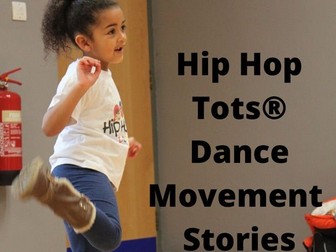
Participants will get to dive right into their own themed story adventure whilst moving their bodies. Aimed to spark imagination and improve control of movement, these dance stories will get children thoroughly engaged. the two themes are “Passing Through the Jungle” and “Journey to Space.”
AQA A Level dance: New Specification: Richard AlstonQuick View
CBlake14

AQA A Level dance: New Specification: Richard Alston

(0)
This presentation looks at Richard Alston's choreographic approach. The new AQA specification states that you need to look at two practitioners, in addition to Christopher Bruce, and know and understand their choreographic approach in relation to the compulsory Area of Study. This presentation looks at Alston's choreographic approach which includes: movement style, choreographic style and technique. It also includes tasks which encourage independent learning (practical and theoretical). At the end of the presentation are some of the specification's example examination questions for students to attempt. I am currently working on a Siobhan Davies presentation as these are the two practitioners that we have chosen to study alongside Bruce. These resources are works in progress and will be adapted in time but I hope that it is a useful and accessible starting point.
Dance Worksheet (Cover work)Quick View
Kitingal

Dance Worksheet (Cover work)

(0)
This is a 4 page dance worksheet that could be adapted for drama students. The worksheet comprises of key dance vocabulary, dance actions, staging and wordsearch. An ideal worksheet for cover lesson at KS3 or a revision tool for KS4 students.
5 basic dance movementsQuick View
alice_coates96

5 basic dance movements

(0)
This can be used as a visual to show pupils and remind them of the 5 basic dance movements throughout the lesson introducing each one each lesson. This is more beneficial to a year 7 group just starting dance or with year 8’s to reinforce these.
GCSE Dance skillsQuick View
Leannesresources

GCSE Dance skills

(0)
This 17 slide powerpoint includes: Matching task for definitions of Physical skills Slides that ask learners to explain what Physical skills are being used by dancers in a given image Slides that ask learners to explain HOW they could improve their strength, stamina and flexibility. Matching task for definitions of Expressive skills Slides that ask learners to explain HOW they could improve their Focus/eyeline + Musicality Matching task for definitions of Technical skills Matching task for definitions of Mental skills A self-assessment task, asking learners to highlight their strengths. areas for improvements and target set in terms of the different skills they have covered in the previous slides.
Goldilocks & the 3 Bears - 3 Dance lessonsQuick View
clairepring

Goldilocks & the 3 Bears - 3 Dance lessons

(0)
Three easy to follow dance lessons following the story of Goldilocks that allow the children to be very active and creative. The first lesson plan follows Goldilocks travelling through the forest & entering the house. The second lesson introduces the porridge and the chairs. The third lesson has Goldilocks trying out the beds & the bears returning. A final lesson could be added to amalgamate the whole story. Each lesson plan includes suggested music (with a link to it), a column at the side that identifies the key skill for each section of the lesson as well as hints & tips along the way to help you identify good work and anticipate any possible problems. The lessons are very inclusive as they ask the children to find their own way of moving, they also do not require the teacher to dance along - but to ask questions & describe what they see the children doing.
Dance Movement Displays - Teacher ResourceQuick View
Danceresources23

Dance Movement Displays - Teacher Resource

(0)
Explore our practical “Dance Movement Component Displays” – designed with students in mind. These four displays spotlight key elements: actions, space, dynamics, and relationships. We print them for our dance studio in size 150 x 113 dimensions using ‘Adverset,’ printing. Perfect for both lesson revision and sparking movement ideas, these displays make learning interactive and enjoyable.
Dance Display Poster (Movement Examples)Quick View
katelouisematthews

Dance Display Poster (Movement Examples)

(0)
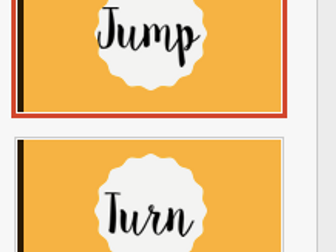
Single PDF of ‘Movements’ poster which is optimised for A1 and A2 printing. The poster gives examples of some ‘actions’ including Turns, Elevation, Travels and Balances. Also available as part of a full pack of 5!
Fireworks Dance / Movement Session for PMLD learnersQuick View
MaddieRadford02

Fireworks Dance / Movement Session for PMLD learners

(0)
A powerpoint activity including music, symbols and engaging visuals designed to get learners with PMLD/SEND needs moving! This supports the theme of fireworks. You work your way through each action/activity on each slide using your chosen resources to complete the action. Actions included: warming up twist & spin push and pull relaxation Fully adaptable for wheelchair users.
GCSE Dance Knowledge OrganisersQuick View
Sophie94K

GCSE Dance Knowledge Organisers

(0)
An abundance of GCSE Dance knowledge organisers covering the following areas; 6 set professional works Key words & skills (GCSE Dance overview) Performance skills Critical Appreciation Aural Setting of set works Movement Material of set works Stimulus & intentions of set works Costume of set works Lighting of set works Set design of set works Props of set works
Mark making and movement: using ‘Write Dance’Quick View
talk4meaning

Mark making and movement: using ‘Write Dance’

(1)
Michael Jones explains the importance of mark making in learning to write and describes a project involving four year olds in six Luton schools that also provides pointers towards helping older children with additional learning needs.