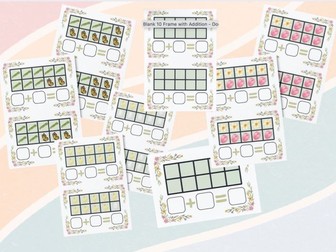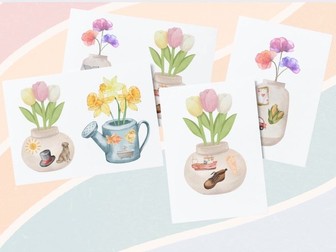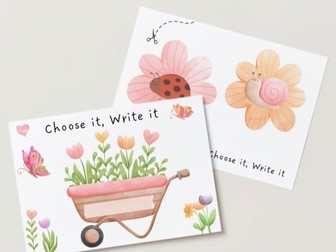
Lovely flower/spring/planting themed phonics activity
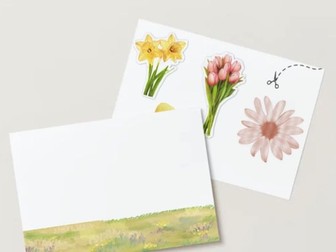
Laminate or use mats inside reusable pockets for the children to use the flower picture prompts to write what they can see… e.g. snail
Flower cut outs are a range of Phase 3 & CVCC words
A ready-to-use whole-school assembly PowerPoint celebrating the season of spring. Suitable for KS1 and KS2 pupils, this engaging assembly explores seasonal changes, nature, global celebrations and creative spring activities while encouraging curiosity about the natural world.
What’s Included
Fully prepared PowerPoint assembly
Bright, engaging and child-friendly slides
Cross-curricular links to science, geography and literacy
Opportunities for discussion and reflection
Suitable for whole-school or phase assemblies
No preparation required – simply open and present
Assembly Content
Introduction to spring and why seasons change
Signs of spring in nature, including blooming flowers and warmer weather
Nature’s changes during spring such as animal awakening and plant growth
Bird migration and seasonal wildlife changes
Spring traditions and celebrations from around the world, including:
Easter celebrations
Holi festival
May Day festivities
Hanami in Japan
Passover, Nowruz and Qingming
Spring weather and natural phenomena such as rainbows and pollination
Interactive ideas including seed planting, nature walks and seasonal art
Spring milestones and important seasonal events
Celebrating spring through poetry and creative expression
Art and craft activities inspired by the season
Ideal For
Whole-school assemblies
Seasonal assemblies
Spring term topics
Science and nature learning
Cultural awareness and global celebrations
Key Stage Suitability
KS1 and KS2
Easily adaptable for different age groups
Updated for Spring 2018!
Download our five-lesson literacy unit of poetry planning for Years 1 and 2, based on performing Spring poetry and built around the KS1 new curriculum literacy objectives.
In this unit, pupils will read a classic Spring poem about a fast white bunny and they will consider how the sounds and language patterns come alive when the poem is read aloud, particularly reflecting on the use of verbs and similes. Children will work towards creating their version of the Easter poem and turning it into an effective performance.
The aims of the unit for pupils are:
• To listen to a classic Spring poem being read aloud
• To identify verbs and similes
• To prepare a poetry performance including actions
• To perform a poem to an audience
The PDF file contains 5 full literacy lesson plans, copies of the poem and all accompanying pupil resources.
You may also like our other KS1 packs:
Going to Sea Poetry Pack
Summer Performance Poetry Pack
Spring themed Camera Caption sheets x2
Laminate for children to write onto or write with pencil, they are a lovely prompt to get your little ones writing!
Camera cut outs
Table sign
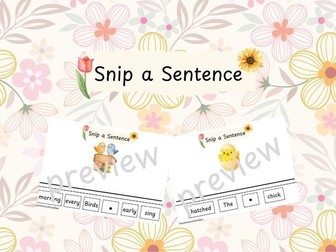
In this activity children will cut up, reorder, and create simple sentences.
This resource includes 12 sentences,ranging in complexity.
This resource supports:
Understanding of sentence structures
Reading of sentences
Word order in sentences
Farm related vocabulary
Builds awareness of full stops,capital letters and finger spaces
Reading of high frequency words
Develop scissor control
Hand-eye coordination
**Bring the season to life with this fun and interactive Spring Hunt Scavenger Sheet! This resource encourages children to explore the outdoors and spot signs of spring.
**
Children will:
Search for common springtime sights (like flowers, birds, bugs, and more!)
Tick off each item as they find it
Engage with nature through active, hands-on learning
Perfect for forest school, outdoor learning, or a spring topic starter. Simply print, pop onto a clipboard and go — ideal for individual use, pairs, or group walks!
Perfect for: Nursery · Reception · Year 1 · Year 2 · Nature walks · Seasonal activities · Outdoor learning
Theme planning around weather and Spring for week 4 of Spring 2.
Includes planning sheet for theme, understanding of the world, provision enhancements, EAD and outdoor provision.
Includes a seperate guided reading plan.
Includes a seperate learning challenges (quest) sheet.
Font used; Twinkl Light but these documents are fully editable should you not have access to this or wish to change it. I have also saved the planning as a PDF.
Also include many resources highlighted on the plans.
Sequence of 5 days of instructions for children to read and write their own Spring Poems. Suitable for EYFS/KS1. Document is PDF. Can be used in the classroom or online learning.
Disclaimer: I do not own the font in this document. The font is Twinkl Cursive. A collection of poems included in this document (Source - Google Images). This free document is to be used for personal use or as a teaching resource only.
A fun spring-themed phonics activity where children look carefully at the picture and spot the CVC words they can see.
Children then write the words on the recording sheet, helping them practise reading and spelling Phase 2 CVC words.
Children can choose from two different spring pictures, making the activity flexible for groups or repeated practice.
What’s included:
2 different spring spotting pictures
Recording sheet for writing the words found
Phase 2 phonics focus
Simple, child-friendly layout
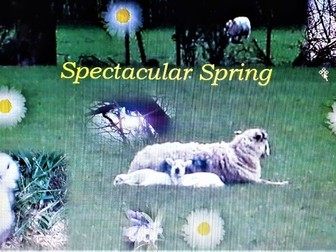
This 18 slide PowerPoint highlights the ‘Spectacular’ signs of Spring.
I have included photographs taken in and around Wythenshawe and a video providing audial and visual aids to celebrate this wonderful time of year. The rhyming string throughout the PowerPoint complements the photographs. This resource would be a great introduction to a nature sound walk for children in early years and a visual aid introducing signs of Spring. The language can be adapted to cater for the needs of your children. Metaphors have been used throughout the poem which would be a great introduction to poetry for older children and also to introduce the use of cameras to capture the beauty of nature.
A flexible teaching resource for primary aged children. A quartet for voices and percussion.
This resource is intended to be used as flexibly as possible by teachers and their students. It may be used as a stand-alone piece for performance, as a warm-up to a music or singing lesson or as a unit of work.
The set includes; Teacher Notes; Full score in 4 parts for voices and percussion instruments; Creative planning grid for Key Stage 2 with ideas for lessons and activities.
Instrumentation
The notation is for voices and any percussion instruments. Additionally, any instruments which use the treble clef including tuned percussion may be used. The voice parts may be doubled by instruments in any octave.
Aims
These quartet meet the aims and develop the skills set out in the National Curriculum for Music for Key Stages 2 and 3. (2013) and ABRSM music medals. This unit of work also supports ‘A national Plan for Music Education’ (2022, pp.15 -34).