
AI Literacy: Misinformation, Deepfakes and Verification LessonQuick View
linabew

AI Literacy: Misinformation, Deepfakes and Verification Lesson

(0)
AI literacy lesson on hallucinations, misinformation, deepfakes and verification, with case studies, worksheets and answers. Complete AI literacy lesson on hallucinations, misinformation, deepfakes and verification, with case studies, worksheets and answers. This complete, classroom-ready lesson teaches pupils how to evaluate AI-generated claims and other digital information. Pupils learn that confident or professionally presented output is not automatically reliable evidence. The lesson introduces and applies the following concepts: Generative AI hallucinations Provenance and original sources Relevant expertise Supporting evidence Independent corroboration Currency of information Deepfakes and manipulated media Proportionate verification decisions
GCSE Computer Science: Bitmap Images, Colour Depth and Compression LessonQuick View
linabew

GCSE Computer Science: Bitmap Images, Colour Depth and Compression Lesson

(0)
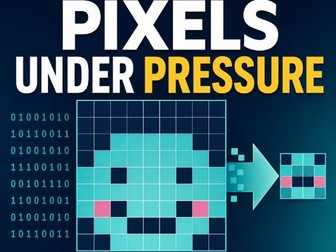
Complete GCSE Computer Science lesson on bitmap images, colour depth, file-size calculations and compression, with worksheets and answers. Pupils begin by decoding an 8 × 8 binary image and calculating its memory requirement in bits and bytes. They compare bitmap and vector graphics before exploring resolution, metadata and how colour depth determines the number of available colours. The lesson then introduces the formula: Uncompressed image size = width × height × colour depth Pupils complete supported calculations using 1-bit, 2-bit, 4-bit, 8-bit and 24-bit colour. The compression activities introduce lossless compression and run-length encoding. Pupils encode and decode pixel rows, investigate when RLE reduces file size and construct an example where RLE becomes inefficient. Pupils also compare lossy and lossless compression and consider appropriate uses for PNG, JPEG, GIF and SVG formats. This resource contains: Approximately 70-minute lesson plan Learning objectives and success criteria Teaching sequence and suggested timings Key vocabulary and common misconceptions Binary mystery-image starter Bitmap vocabulary matching cards Visual colour-depth reference sheet Printable 8 × 8 pixel-design activity Binary pixel-encoding exercise Run-length encoding investigation Lossy and lossless compression scenarios Scaffolded GCSE examination questions Answers and marking guidance The complete lesson can be delivered from the printable pack. It requires no external websites, videos or student accounts. Suitable for GCSE Computer Science and higher-attaining Key Stage 3 classes.