GCSE PE - Paper 1 RevisionQuick View
MrShepherd_Teaching

GCSE PE - Paper 1 Revision

(0)
Engage your students with a complete 70-minute revision session for GCSE PE Edexcel Component 1. This ready-to-teach lesson is designed to cover Cardiovascular and Respiratory Systems, Short- and Long-Term Effects of Exercise, and Aerobic vs Anaerobic Exercise. The session is fully structured, moving from AO1 (knowledge) → AO2 (application) → AO3 (analysis/evaluation), culminating in a 9-mark exam question with model answer and mark scheme. What’s Included: 20-slide PowerPoint with clear objectives, starter, mini tasks, application questions, and plenary Diagrams for heart, lungs, and breathing mechanics Scenario-based AO2 questions linking theory to sport AO3 discussion tasks to develop analysis and evaluation skills A fully worked 9-mark exam question answer broken down by AO1, AO2, AO3 Mark scheme guidance for all exam-style questions Plenary/exit activities to consolidate learning Learning Outcomes: Recall key structures and functions of the cardiovascular and respiratory systems Apply knowledge to sporting examples and scenarios Analyse how the systems work together during exercise Evaluate the effects of short- and long-term training adaptations Suitable For: Year 10 and 11 GCSE PE students Teachers wanting a structured, high-impact revision lesson Why You’ll Love It: Links topics together to support understanding Engages students with questions and interactive discussion tasks Saves planning time with ready-to-use slides and answers Fully aligned with Edexcel Component 1 specification
Team Building ActivityQuick View
MrShepherd_Teaching

Team Building Activity

(0)
This comprehensive resource offers an exciting collection of interactive team-building challenges perfectly tailored for primary and secondary school pupils. The resource is designed as 6 challenges for 6 tutor classes on a 20 minute rotation between each classroom. Designed to foster collaboration, communication, and problem-solving skills, these activities bring a dynamic and engaging element to any lesson or school event. Key Benefits for Pupils: Enhances Teamwork: Encourages pupils to work together towards common goals. Boosts Communication: Requires active listening and clear expression for success. Develops Problem-Solving: Challenges encourage creative thinking and strategic planning. Increases Engagement: Hands-on, fun activities keep pupils motivated and active. Promotes Positive Relationships: Builds camaraderie and mutual respect among peers. Ready-to-Use Activities Detailed instructions for multiple unique challenges, making setup and execution simple for educators. Teacher’s Scoresheet Included A convenient, printable scoresheet to easily track team progress and determine winners for each challenge. Measurable Outcomes Observe and assess improvements in pupils’ teamwork, leadership, and critical thinking skills. Please review before use
GCSE PE - Classification of Skill and Goal SettingQuick View
MrShepherd_Teaching

GCSE PE - Classification of Skill and Goal Setting

(0)
This PowerPoint is a comprehensive and engaging resource designed for GCSE PE students covering the Classification of Skills and Goal Setting using SMART targets. It’s ideal for teaching, revision, or independent learning. The presentation introduces key theory content clearly and concisely before embedding a series of AO1, AO2, and AO3 exam-style questions to consolidate learning and test understanding. The final two slides include a 9-mark extended question and a model answer structured with Introduction, AO1, AO2, AO3 paragraphs, and Conclusion – ideal for showing students how to structure high-quality responses. Topics Covered: Definitions of skill and ability Skill classification: basic/complex, open/closed, self-paced/externally paced, gross/fine Performance and outcome goals SMART target setting Strengths and limitations of different types of goals in sporting contexts Features: Clear, student-friendly explanations Embedded exam-style questions (AO1, AO2, AO3) Challenge tasks and stretch content 9-mark question with fully modelled answer Perfect for classroom delivery, homework, or exam preparation
GCSE PE Paper 1 RevisionQuick View
MrShepherd_Teaching

GCSE PE Paper 1 Revision

(0)
GCSE PE AQA Paper 1 – High-Impact Revision PowerPoint (20 Slides, AO1/AO2/AO3 Focus) This expertly designed 20-slide revision PowerPoint covers the entire AQA GCSE PE Paper 1 (8582) specification, making it the ideal resource for final exam preparation. Perfect for classroom teaching, independent study, or last-minute revision, this resource breaks down all the key topics using a clear and engaging structure. Each slide includes: Concise, high-impact content aligned with the AQA specification Topic breakdowns using accessible explanations and visuals One AO1, AO2, and AO3 exam-style question per slide – ideal for retrieval practice A structured 9-mark question modelled on the AQA mark scheme Exam strategy, command word tips, and time management reminders Topics Covered Include: Muscular, skeletal, cardiovascular, and respiratory systems Joints, movement analysis, lever systems, planes and axes Fitness components, training principles (SPORT & FITT), and methods Aerobic vs anaerobic exercise and physiological adaptations Injury prevention, warm-ups/cool-downs, fitness testing Diet, hydration, mental preparation, lifestyle effects Whether you’re a teacher delivering a revision lesson or a student aiming for Grade 9, this complete, specification-matched resource provides everything needed to succeed in Paper 1. Review content before use
GCSE PE - Physical Activity Health and WellbeingQuick View
MrShepherd_Teaching

GCSE PE - Physical Activity Health and Wellbeing

(0)
This lesson covers the key concepts of health, fitness, and wellbeing in relation to physical activity and sport. Students will explore how participation benefits physical, mental, and social health, alongside improvements in overall fitness. The session examines the reasons why people engage in exercise and sport and how these activities support different aspects of wellbeing. The lesson also addresses the negative consequences of a sedentary lifestyle, including physical, mental, and social health risks, with a particular focus on obesity and its impact on sporting performance. Additionally, students will learn about somatotypes (body types) and how each is suited to particular sports or positions within sports, enabling informed justification of sport-body type matches. Through a combination of topic content and targeted AO1, AO2, and AO3 questions, students will build a comprehensive understanding of the material. The lesson culminates in a 9-mark exam question to consolidate learning and practice extended writing, followed by a model answer demonstrating the expected structure and content depth.
GCSE PE - Drugs, PEDs, Ethics in sportQuick View
MrShepherd_Teaching

GCSE PE - Drugs, PEDs, Ethics in sport

(0)
Overview: This engaging and comprehensive revision lesson covers the key ethical and socio-cultural issues in physical activity and sport from the AQA GCSE PE specification. Designed as a 14-slide PowerPoint, it provides clear and concise topic summaries followed by targeted AO1, AO2, and AO3 questions to develop depth of understanding and exam technique. The final two slides feature a 9-mark extended response question with a full model answer to help students practice higher-level evaluation and structure. Topics Covered: Conduct of performers (etiquette, sportsmanship, gamesmanship, contract to compete) Prohibited substances and methods (PED categories, blood doping) Beta blockers and drugs with restrictions Sporting examples of PED use and their effects Advantages and disadvantages of PEDs for performers and the sport Spectator behaviour (positive/negative effects, hooliganism) Strategies to combat crowd trouble and promote safety Key Features: 14-slide structured lesson for focused revision AO1, AO2, AO3 style questioning to embed understanding and prepare for assessment Real-life sporting examples and application tasks High-quality 9-mark model answer for exam practice Ideal for revision lessons, homework, or independent study Perfect for: AQA GCSE PE students Year 10–11 PE revision sessions Teachers looking to reinforce understanding of socio-cultural content with structured questioning
GCSE PE - Arousal and PerformanceQuick View
MrShepherd_Teaching

GCSE PE - Arousal and Performance

(0)
Overview: This focused GCSE PE revision resource explores the topic of arousal and its impact on performance, as outlined in the AQA specification. This resource blends key theoretical content with embedded exam-style questions (AO1, AO2, AO3) and finishes with a challenging 9-mark extended response and model answer to develop evaluation skills. Topics Covered: Definition of arousal in sport Inverted-U theory (diagram, explanation and evaluation) Optimal arousal levels for different skill types and performers Effects of over- and under-arousal on performance Stress management techniques (deep breathing, imagery, positive self-talk) Practical application of arousal control methods in sport 9-mark question with model answer for structured writing practice Key Features: 14-slide lesson format for revision, intervention, or flipped learning Clear and concise explanations supported by sporting examples Progressive AO1, AO2, AO3 questioning to challenge all learners Visual support for key theories (e.g. inverted-U curve) High-quality model answer for exam preparation and self-assessment
GCSE PE - Diet and EnergyQuick View
MrShepherd_Teaching

GCSE PE - Diet and Energy

(0)
This lesson covers the fundamental concepts of energy use, diet, nutrition, and hydration and their importance in sport and physical activity. Students will learn how energy is measured and the factors influencing daily energy requirements. The lesson explores the components of a balanced diet, including macronutrients such as carbohydrates, fats, and proteins, and the role of vitamins and minerals. It highlights the importance of maintaining hydration, the causes and consequences of dehydration, and how hydration affects athletic performance. Through targeted questions and a 9-mark extended response, students will develop their understanding and evaluative skills, applying knowledge to sporting contexts. This lesson is designed to prepare students thoroughly for GCSE PE examination questions on nutrition and hydration.
GCSE PE - The Skeletal SystemQuick View
MrShepherd_Teaching

GCSE PE - The Skeletal System

(0)
This 12-slide PowerPoint presentation is designed to support the delivery of the Edexcel GCSE PE specification (1.1.1–1.1.4) on the skeletal system. It covers key areas including the functions of the skeleton, classification of bones, major bones of the body, and joint types, all applied to physical activity and sport. Each slide includes: Clear, concise content aligned with Edexcel specification points Visual examples to support understanding AO1 (knowledge), AO2 (application), and AO3 (analysis) questions Sport-specific contexts to develop exam technique Retrieval and challenge questions to support retention and deeper thinking This resource is ideal for introducing the topic, preparing for assessments, or supporting revision. It is suitable for a range of learners and encourages strong links between theoretical knowledge and sporting performance.
GCSE PE - Guidance and FeedbackQuick View
MrShepherd_Teaching

GCSE PE - Guidance and Feedback

(0)
his clear and engaging PowerPoint presentation introduces GCSE PE students to the concepts of Basic Information Processing, types of Guidance, and Feedback in sport. Designed to support classroom delivery, it covers key theoretical content using real sporting examples to aid understanding and application. The lesson breaks down the four stages of the information processing model (Input, Decision Making, Output, and Feedback), followed by an exploration of visual, verbal, manual, and mechanical guidance, as well as various types of feedback including intrinsic, extrinsic, positive, negative, knowledge of performance, and knowledge of results. Key Features: Student-friendly slides with definitions, examples, and diagrams Application tasks linking theory to real sports performance Model 9-mark exam question with a structured example response Suitable for AQA, Edexcel, OCR, and other GCSE PE specifications Ideal for revision or introducing the topic in class Perfect for PE teachers aiming to boost pupil understanding of performance analysis and skill acquisition theory.
GCSE PE - Skill, Ability and Goal SettingQuick View
MrShepherd_Teaching

GCSE PE - Skill, Ability and Goal Setting

(0)
This student-friendly PowerPoint presentation covers three key components of the GCSE PE specification: Skill, Ability, and Goal Setting. Ideal for classroom delivery, revision, or homework support, it breaks down key definitions, classification systems, and their application to sporting performance. The presentation includes: Clear definitions and examples of skills and abilities Classification of skills (basic/complex, open/closed, gross/fine, self-paced/externally-paced) Detailed comparisons and real-life sport-specific scenarios Visual tasks and classification challenges to promote active learning Performance vs outcome goals with evaluation questions A model 9-mark exam question with a structured response Perfect for helping learners make connections between theoretical content and practical sport, while developing strong AO1, AO2, and AO3 exam technique.
GCSE PE: Respiratory and Cardiovascular Systems Revision LessonQuick View
MrShepherd_Teaching

GCSE PE: Respiratory and Cardiovascular Systems Revision Lesson

(0)
GCSE PE: Respiratory and Cardiovascular Systems Revision Lesson – Engaging, Exam-Focused Resource This fully editable and visually engaging PowerPoint is designed to help GCSE PE students consolidate their understanding of the respiratory and cardiovascular systems. Perfect for revision lessons, it blends AO1, AO2, and AO3 content with interactive tasks, labelled diagrams, data interpretation, and a 9-mark model answer structure. Covers key topics: pathway of air, gaseous exchange, blood vessels, heart structure, cardiac cycle, mechanics of breathing, and spirometry Features AO1 recall, AO2 application, and AO3 evaluation-style questions Includes exam-style questions and a model 9-mark answer scaffold Ideal for recap lessons, homework, or independent revision Save time and boost exam readiness with this all-in-one resource designed to engage and challenge your students. Please review before use
GCSE PE - Principles of TrainingQuick View
MrShepherd_Teaching

GCSE PE - Principles of Training

(0)
The Principles of Training and Overload – Interactive GCSE PE Lesson PowerPoint This comprehensive and engaging 16-slide PowerPoint is designed to teach GCSE PE students the key principles of training using the SPORT and FITT frameworks. Perfectly aligned with AQA, Edexcel, and OCR specifications, the lesson includes interactive tasks, real-life application questions, and exam-style practice (AO1, AO2, AO3) to deepen understanding and boost assessment performance. What’s included? Clear definitions and examples of each SPORT and FITT principle Applied tasks tailored to a range of sports (e.g., football, netball, triathlon, cycling) Real data interpretation and case study analysis Do Now and Plenary tasks to structure learning 9-mark model answer structure with PE-specific writing frames Mini-quiz for knowledge recall and assessment practice Ideal for both classroom delivery and remote learning, this resource helps students build the confidence to apply theoretical concepts to real-world sporting scenarios. Perfect for: GCSE PE / KS4 / BTEC Sport Please review content before use.
Head Heart Hands PE Statement BankQuick View
MrShepherd_Teaching

Head Heart Hands PE Statement Bank

(0)
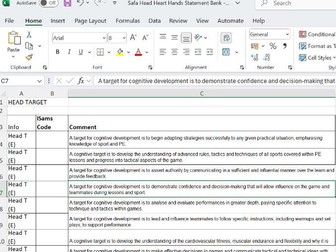
Head, Heart, Hands Statement Bank for PE Reports - Excel This concise statement bank is designed to support teachers in writing meaningful and well-rounded PE reports using the Head, Heart, Hands framework. Head: Reflects students’ understanding of tactics, rules, and strategies. Heart: Highlights attitudes, resilience, teamwork, and sportsmanship. Hands: Focuses on skill execution, participation, and physical performance. Perfect for saving time while ensuring reports capture the cognitive, emotional, and physical aspects of PE. Easy to adapt across key stages and sports.
Assembly/Presentation - The Power of a Positive AttitudeQuick View
MrShepherd_Teaching

Assembly/Presentation - The Power of a Positive Attitude

(0)
This assembly explores how our mindset and attitude can influence every aspect of our lives—from academic performance and relationships to mental health and resilience. Students learn that while we can’t always control what happens to us, we can choose how we respond. The session highlights the benefits of maintaining a positive outlook, such as improved problem-solving, better stress management, and stronger social connections. Practical strategies are shared for developing optimism, including focusing on strengths, using positive self-talk, and learning from challenges. Students are encouraged to view setbacks as opportunities for growth and to recognise that positivity is a skill that can be built with practice. Please review the content and pictures before use.
Assembly/Presentation - Volunteering and Giving Back to the CommunityQuick View
MrShepherd_Teaching

Assembly/Presentation - Volunteering and Giving Back to the Community

(0)
This assembly highlights the value of helping others and being an active, positive force in the community. Students learn about the different ways they can volunteer their time, skills, and energy—whether through school initiatives, local charities, or simple acts of service. The session explores how giving back not only benefits others but also helps young people build empathy, develop leadership skills, and gain a sense of purpose and fulfilment. The focus is on showing students that no action is too small to make a difference and that everyone has something valuable to offer. Please review the content and pictures before use.
Assembly/Presentation - Online Safety and Digital Well BeingQuick View
MrShepherd_Teaching

Assembly/Presentation - Online Safety and Digital Well Being

(0)
This assembly focuses on the importance of staying safe and maintaining a healthy balance while using digital devices and engaging with online platforms. Students learn about the risks associated with social media, online gaming, and internet use, including cyberbullying, privacy issues, and the potential for online predators. The session highlights strategies for protecting personal information, recognizing dangerous situations, and fostering positive online relationships. It also emphasizes the importance of digital well-being—balancing screen time with offline activities, avoiding online distractions, and setting healthy boundaries. The assembly encourages students to be mindful of their digital footprint and how their online behavior can affect their reputation. Finally, students are given practical advice on how to seek help if they experience online harm or distress. Please review the content and pictures before use.
Assembly/Presentation - Public Speaking and Communication SkillsQuick View
MrShepherd_Teaching

Assembly/Presentation - Public Speaking and Communication Skills

(0)
This assembly introduces students to the importance of clear, confident communication and how it can positively influence many areas of life—from school presentations and interviews to friendships and future careers. Students learn about the key components of effective public speaking, including body language, tone of voice, eye contact, and how to structure a message. The session also covers ways to manage nerves and build confidence when speaking in front of others. Emphasis is placed on active listening and respectful dialogue, helping students become not just strong speakers, but also thoughtful communicators. By developing these skills early, students can grow into confident individuals capable of expressing themselves clearly and persuasively. Please review the content and pictures before use.
Assembly/Presentation - Reflection and Looking AheadQuick View
MrShepherd_Teaching

Assembly/Presentation - Reflection and Looking Ahead

(0)
This assembly encourages students to take a moment to reflect on their achievements, challenges, and growth over the term. By looking back, they can appreciate the progress they’ve made, identify areas for improvement, and recognize the skills they’ve developed. The session guides students through the process of self-reflection, helping them set personal and academic goals for the upcoming term. Students are encouraged to think about how they can continue to build on their successes and learn from any setbacks. This is also an opportunity to cultivate a forward-thinking mindset, setting intentions for the future, and understanding that every experience—whether positive or negative—contributes to their overall development. The goal is to inspire students to approach the next term with renewed focus, motivation, and confidence. Please review the content and pictures before use.
Assembly/Presentation - Resilience and Bouncing Back from FailureQuick View
MrShepherd_Teaching

Assembly/Presentation - Resilience and Bouncing Back from Failure

(0)
This assembly focuses on the importance of resilience—the ability to bounce back from challenges, setbacks, and failures—and how it plays a key role in achieving long-term success. Students learn that failure is a natural part of life and provides valuable lessons that help build strength, perseverance, and problem-solving skills. The session highlights strategies for developing resilience, such as maintaining a positive mindset, setting realistic goals, seeking support, and practicing self-compassion. Real-life examples of individuals who overcame significant obstacles—such as athletes, entrepreneurs, and historical figures—are shared to demonstrate how persistence and determination lead to growth. Students are encouraged to view challenges as opportunities for learning, and to keep trying, even when things don’t go as planned. Please review the content and pictures before use.