Science & Technology:Progress or Danger?Quick View
prisgopal

Science & Technology:Progress or Danger?

(0)
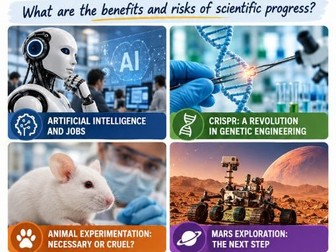
Artificial Intelligence, AI, CRISPR, Genetic Engineering, Animal Testing, Mars Exploration, Science and Technology, Scientific Progress, Ethics, Debate, Reading Comprehension, Jigsaw Reading, ESL, EFL, A2, B1, 3e, Critical Thinking, Writing Skills Is scientific progress always a good thing? This engaging Newsroom Challenge invites students to explore the benefits and potential dangers of modern scientific progress through four highly relevant topics: Artificial Intelligence and Jobs CRISPR and Genetic Engineering Animal Experimentation Mars Exploration Designed for A2+/B1 learners and particularly suitable for French 3e / lower secondary ESL students, this visually engaging worksheet develops reading comprehension, vocabulary, speaking, critical thinking and writing skills through a structured, communicative approach. Students begin by predicting the content of the articles from pictures and headlines, before working on a useful science and technology vocabulary booster. They then read four accessible news-style texts presenting both the advantages and risks of contemporary scientific developments. A Jigsaw Mission turns the reading activity into collaborative learning: each student becomes an expert on one article before sharing the key information with classmates. Sentence starters are included to help students explain ideas, express advantages and disadvantages, and develop their spoken English. The lesson finishes with an opinion task and a short 60–80 word argumentative writing challenge based on the statement: “Science improves our lives, but we must be careful.” Students are encouraged to justify their ideas using examples from the lesson and useful opinion language. Learning objectives Students will learn to: read and understand short news articles; identify benefits, risks and consequences; develop vocabulary connected with science, technology and ethics; share information through cooperative learning; express and justify personal opinions; use linking and opinion expressions; produce a short structured argumentative paragraph. Skills covered Reading • Speaking • Interaction • Vocabulary • Critical Thinking • Writing Why teachers will love it This resource is ready to print and teach, with a colourful, student-friendly layout and a variety of activities that move naturally from prediction → vocabulary → reading → collaboration → debate → writing. It works particularly well as part of a unit on: Science & Technology • Artificial Intelligence • Scientific Progress • Ethics • The Future • Innovation Level: A2+/B1 Suggested age: 13–16 Format: Printable PDF worksheet Suitable for: ESL / EFL / French collège 3e
Planet of the Apes – Reading & ComparisonQuick View
prisgopal

Planet of the Apes – Reading & Comparison

(0)
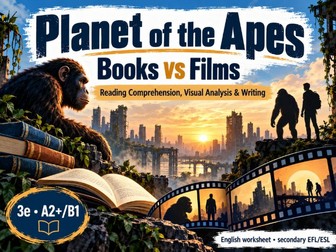
Planet of the Apes reading comprehension and visual analysis worksheet for secondary EFL/ESL learners at A2+/B1 level. Includes books vs films comparison, vocabulary, critical thinking and writing. Explore Planet of the Apes through literature, film and visual analysis with this engaging 4-page English worksheet designed for secondary learners. This resource is ideal for A2+/B1 students, French 3e classes, EFL/ESL learners, or teachers looking for an accessible introduction to dystopian fiction, science fiction and the relationship between humans and animals. Students begin by examining different Planet of the Apes books and films and comparing the way stories are presented through literature and cinema. They then work on a reading comprehension activity based on Pierre Boulle’s novel and explore how the writer reverses the traditional relationship between humans and animals. The resource includes: visual analysis of book covers and film posters books vs films comparison picture description vocabulary prediction activities detailed reading comprehension multiple-choice comprehension sequencing events true/false questions with justification vocabulary development analysis of animal comparisons evidence-finding activities writer’s choices and point of view inference and “read between the lines” questions critical-thinking activities about power, humanity and civilisation language focus on like / as though / resembling guided creative writing a 100–120 word B1 writing challenge The final activities encourage students to reflect on an important question: What happens to the idea of “humanity” when humans are described like animals? fiche 5 This worksheet can be used for: ✓ Reading comprehension ✓ Literature lessons ✓ Science-fiction or dystopian units ✓ Film and literature comparison ✓ Visual literacy ✓ Critical thinking ✓ Independent work ✓ Homework ✓ Revision ✓ Cover lessons Level: A2+/B1 Age: approximately 13–16 Skills: Reading • Writing • Vocabulary • Visual analysis • Critical thinking Format: Printable classroom worksheet A ready-to-use resource that combines literature, cinema, visual literacy and language practice while encouraging students to think critically about power, civilisation and what it means to be human.
What Is Progress? Inventions & DebateQuick View
prisgopal

What Is Progress? Inventions & Debate

(0)
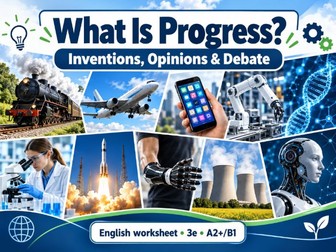
A2+/B1 English worksheet on progress and inventions with vocabulary, opinion writing, critical thinking and a mini-debate for secondary learners. Keywords progress, inventions, technology, artificial intelligence, science, EFL, ESL, A2, B1, 3e, speaking, debate, expressing opinions, vocabulary, critical thinking, secondary English, inventions worksheet, technology lesson What Is Progress? is an engaging A2+/B1 English worksheet for secondary learners exploring inventions, technology and the question: Does progress always make life better? Designed for 3e / lower secondary EFL-ESL students, this ready-to-use lesson encourages learners to identify major inventions, express opinions, develop vocabulary and take part in a simple classroom debate. Students explore a range of inventions and scientific developments, including the train, aeroplane, smartphone, robotics, DNA, laboratory research, rockets, prosthetic technology, nuclear power and artificial intelligence. The worksheet includes: Picture Mystery – identify inventions and explain what they are used for Progress Line – rank inventions from beneficial to potentially dangerous Express Your Opinion – guided sentence starters for speaking and writing Mini-Debate – discuss which invention has changed humanity the most Useful debate expressions such as In my opinion…, I agree because…, On the other hand… Vocabulary Focus – match key inventions and technology vocabulary Wrap-Up Questions – reflect on progress, risks and scientific research Homework task – choose one invention and present it in five sentences The lesson is ideal for developing: ✓ Speaking and interaction ✓ Vocabulary related to inventions and technology ✓ Expressing and justifying opinions ✓ Critical thinking ✓ Debate skills ✓ Short written production Level: A2+/B1 Age group: approximately 13–15 French curriculum: 3e Skills: Speaking • Interaction • Vocabulary • Writing • Critical thinking Topic: Progress • Inventions • Science • Technology • Artificial Intelligence This resource works well as an introductory lesson to a unit on progress, science, technology or artificial intelligence, as a speaking-focused lesson, or as a standalone classroom activity.