


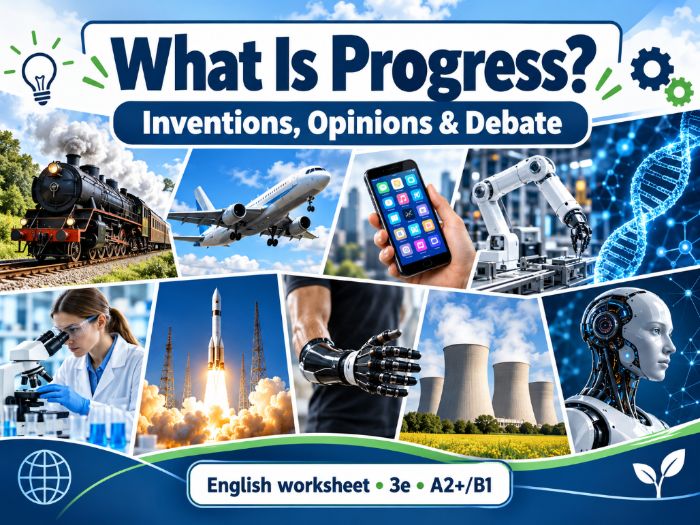
A2+/B1 English worksheet on progress and inventions with vocabulary, opinion writing, critical thinking and a mini-debate for secondary learners.
Keywords
progress, inventions, technology, artificial intelligence, science, EFL, ESL, A2, B1, 3e, speaking, debate, expressing opinions, vocabulary, critical thinking, secondary English, inventions worksheet, technology lesson
What Is Progress? is an engaging A2+/B1 English worksheet for secondary learners exploring inventions, technology and the question: Does progress always make life better?
Designed for 3e / lower secondary EFL-ESL students, this ready-to-use lesson encourages learners to identify major inventions, express opinions, develop vocabulary and take part in a simple classroom debate.
Students explore a range of inventions and scientific developments, including the train, aeroplane, smartphone, robotics, DNA, laboratory research, rockets, prosthetic technology, nuclear power and artificial intelligence.
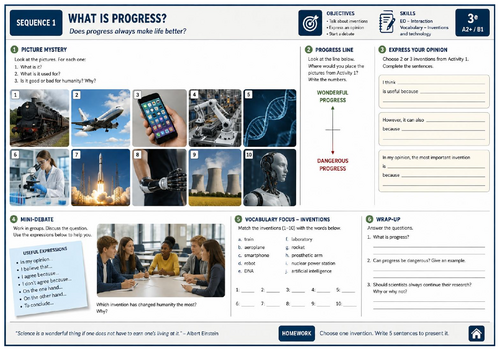
The worksheet includes:
- Picture Mystery – identify inventions and explain what they are used for
- Progress Line – rank inventions from beneficial to potentially dangerous
- Express Your Opinion – guided sentence starters for speaking and writing
- Mini-Debate – discuss which invention has changed humanity the most
- Useful debate expressions such as In my opinion…, I agree because…, On the other hand…
- Vocabulary Focus – match key inventions and technology vocabulary
- Wrap-Up Questions – reflect on progress, risks and scientific research
- Homework task – choose one invention and present it in five sentences
The lesson is ideal for developing:
✓ Speaking and interaction
✓ Vocabulary related to inventions and technology
✓ Expressing and justifying opinions
✓ Critical thinking
✓ Debate skills
✓ Short written production
Level: A2+/B1
Age group: approximately 13–15
French curriculum: 3e
Skills: Speaking • Interaction • Vocabulary • Writing • Critical thinking
Topic: Progress • Inventions • Science • Technology • Artificial Intelligence
This resource works well as an introductory lesson to a unit on progress, science, technology or artificial intelligence, as a speaking-focused lesson, or as a standalone classroom activity.
Something went wrong, please try again later.
This resource hasn't been reviewed yet
To ensure quality for our reviews, only customers who have purchased this resource can review it
Report this resourceto let us know if it violates our terms and conditions.
Our customer service team will review your report and will be in touch.
£6.00