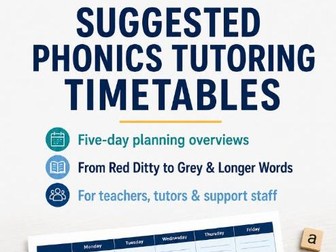
Suggested five-day phonics timetables for teachers and support staff delivering short, structured Read Write Inc. tutoring sessions.
This practical resource provides suggested weekly timetables across different RWI stages, helping staff organise consistent phonics tutoring and intervention.
Included:
Red Ditty timetable
Green to Orange timetable
Yellow, Blue and Grey timetable
Blue and Grey longer-word timetable
Suggested daily teaching sequence
Guidance for reviewing sounds, Green Words and Red Words
Opportunities for spelling, sentence work, partner reading and comprehension
Ideal for phonics leads, class teachers, teaching assistants and tutors who want a clear overview of what to cover during daily sessions.
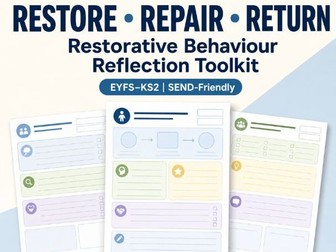
A differentiated restorative behaviour toolkit helping EYFS–KS2 pupils regulate emotions, reflect on choices, repair harm and return to learning.
This practical 11-page behaviour resource supports calm, meaningful restorative conversations following classroom, playground or peer-conflict incidents. It moves beyond punitive “sorry sheets” by helping children understand what happened, recognise the impact of their behaviour and choose an appropriate way to put things right.
The toolkit follows a simple three-step approach:
• Regulate first
• Reflect second
• Repair and return third
The resource includes:
• Staff implementation guide
• Visual reflection sheet for EYFS, SEND, EAL and emerging writers
• Supported KS1 behaviour reflection with sentence stems
• Independent KS2 restorative reflection
• Meaningful apology letter builder
• Menu of restorative repair choices
• Return-to-learning and fresh-start plan
• Five-minute quick reflection sheet
• Adult restorative follow-up record
The differentiated formats allow pupils to point, circle, draw, speak or write depending on their age, communication needs and level of regulation. The resource is therefore suitable for mainstream classrooms, SEND provision, nurture groups, pastoral support, behaviour interventions and inclusion settings.
It can be used following:
• Classroom disruption
• Playground incidents
• Unkind or unsafe choices
• Peer conflict
• Damage to property
• Repeated low-level behaviour
• Dysregulation or emotional outbursts
• Time with a class teacher, teaching assistant, behaviour lead, pastoral lead or SENCO
The toolkit encourages accountability without shame. An apology is presented as one possible repair rather than an automatic or forced consequence. Other repair choices include helping, fixing, restoring a shared space, respecting boundaries, practising the expected behaviour and rebuilding trust.
Provided as both a print-ready PDF and an editable Microsoft Word document, allowing schools to adapt the wording to match their behaviour policy.
Suitable for EYFS, KS1, KS2, primary teachers, teaching assistants, SEND staff, pastoral teams, behaviour leads and senior leaders.
A complete five-day post-phonics reading unit for Year 2, developing fluency, vocabulary, comprehension, word study and written response.
This sample unit answers the common question: What should we teach once children have completed phonics?
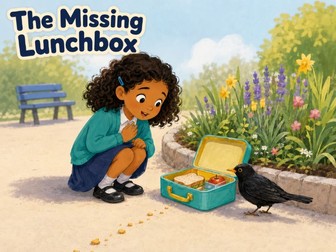
Week 1: The Missing Lunchbox
This complete unit uses one original fiction text across five connected 20–25-minute sessions:
Monday: vocabulary and understanding the text
Tuesday: accurate reading and self-correction
Wednesday: compound words and spelling
Thursday: retrieval, comprehension and explanation
Friday: fluent performance and purposeful writing
The pack includes:
An original age-appropriate reading text
A complete teacher overview
Five detailed lesson plans
Vocabulary teaching cards
Daily fluency practice
Compound-word activity
Comprehension questions
Sequenced written response
Support and deeper-thinking prompts
Suggested answers
Small-group and whole-class adaptations
Editable Word and print-ready versions
Who is it for?
This resource is suitable for:
Year 2 pupils who have completed their phonics programme
Confident Year 1 readers
Lower KS2 pupils requiring additional fluency support
Post-phonics groups
Whole-class reading lessons
Guided reading or targeted intervention
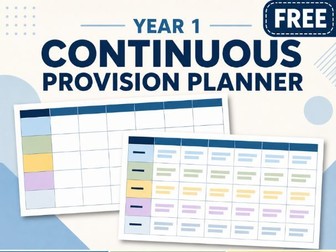
A free editable Year 1 continuous provision planner with staff guidance, a blank weekly template and a fully completed example for inspiration.
This practical planning resource helps Year 1 teachers create purposeful continuous provision that revisits, applies and deepens taught learning.
Rather than filling provision areas with disconnected activities, the resource encourages teachers to begin with assessment evidence, identify a precise learning intention and plan how adults will extend pupils’ learning.
The free resource includes:
• A simple four-step continuous provision planning cycle
• Practical guidance for planning purposeful provision
• An editable weekly planning template
• A fully completed Week 1 example
• Suggested adult roles and questions
• Key vocabulary for each provision area
• Observation and assessment opportunities
• End-of-week review prompts
The completed “Belonging and Baselines” example provides inspiration for:
• Reading and stories
• Writing and mark-making
• Maths provision
• Construction
• Role play
• Creative and fine-motor development• Investigation and outdoor learning
The weekly planner provides space to record:
• Curriculum focus
• Priority pupils and groups
• Key assessment information
• Learning intentions
• Invitations and enhancements
• Adult interactions and prompts
• Key vocabulary
• Observation and assessment focus
• What to keep, remove, simplify or extend
The resource is designed to support a smooth transition from EYFS into Year 1 while maintaining purposeful, age-appropriate learning through provision. It can also support teachers developing a more play-informed or continuous-provision approach in Key Stage 1.
Provided as both a print-ready PDF and an editable Microsoft Word document, allowing teachers to rename provision areas and adapt the planner to their curriculum, pupils and classroom environment.
Suitable for Year 1 teachers, KS1 leaders, teaching assistants, early years practitioners, ECTs, phase leaders and schools developing continuous provision beyond Reception.
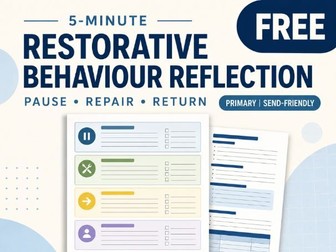
A free restorative behaviour reflection sheet helping primary pupils understand their choices, repair harm and return successfully to learning.
This practical three-page resource supports calm, meaningful conversations following lower-level classroom, playground or peer-conflict incidents.
The reflection follows four simple restorative questions:
• What happened?
• Who was affected?
• How can I put it right?
• What will I do next time?
The free resource includes:
• A concise staff implementation guide
• A five-minute pupil reflection sheet
• An emotional check-in before reflection
• Sentence stems to support pupil responses
• Repair and return-to-learning prompts
• An adult follow-up check
• Information about the complete differentiated toolkit
The pupil sheet provides space for children to reflect on what happened, consider the impact of their behaviour, agree a meaningful repair and identify a better response for next time.
The resource encourages accountability without shame. It is designed as a restorative conversation tool rather than a punishment worksheet or forced apology exercise.
Pupils can write independently or complete the sheet with adult support. Adults may also scribe spoken responses where writing would create an unnecessary barrier.
It can be used following:
• Classroom disruption
• Playground disagreements
• Peer conflict
• Unkind choices
• Interrupted learning
• Lower-level behaviour incidents
• Emotional dysregulation once the pupil is calm
• Restorative conversations with a teacher or teaching assistant
The resource is suitable for primary classrooms, pastoral support, SEND provision, nurture groups, behaviour interventions and inclusion settings.
A final information page introduces teachers to the complete Restore, Repair, Return toolkit, which contains differentiated visual, supported and independent reflections for EYFS, KS1, KS2, SEND and EAL pupils.
Provided as both an editable Microsoft Word document and a print-ready PDF.
Suitable for primary teachers, teaching assistants, SEND staff, pastoral teams, behaviour leads and senior leaders.
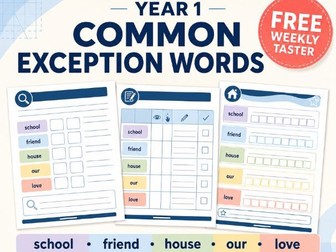
A free Year 1 common exception words weekly taster with five morning activities, mirrored homework and editable classroom worksheets.
This practical eight-page resource provides one complete week of meaningful spelling practice focusing on five Year 1 common exception words:
• school
• friend
• house
• our
• love
Each short activity revisits the same words in a different way, helping pupils move from recognising the correct spelling towards accurate, independent retrieval and use.
The resource includes:
• Teacher guidance and suggested weekly routine
• Monday word-recognition activity
• Tuesday look, cover, write, check practice
• Wednesday missing-letter and word-building tasks
• Thursday sentence and contextual application
• Friday independent spelling check
• Pupil self-assessment and next-step reflection
• Mirrored homework for family practice
• Information about the planned complete half-term booklet
The five-day sequence follows a simple progression:
• Read and recognise
• Notice and remember
• Build the word
• Use it in context
• Retrieve it independently
The repeated activity structures reduce explanation time and allow pupils to concentrate on spelling. Tasks are suitable for morning work, early-finisher activities, spelling practice, literacy interventions, homework or short lesson starters.
The mirrored homework uses familiar classroom routines so pupils can practise confidently at home without families needing to learn a completely different format.
Activities include:
• Identifying correctly spelled words
• Spotting common misspellings
• Finding focus words within sentences
• Look, cover, write, check
• Completing missing letters
• Unscrambling words
• Selecting words to complete sentences
• Writing original sentences
• Independent spelling retrieval
• Pupil reflection and correction
The resource is suitable for Year 1 pupils, KS1 spelling practice, SEND support, EAL learners, teaching-assistant interventions and pupils who need additional repetition.
Provided as both an editable Microsoft Word document and a print-ready PDF.
This free resource offers a sample of the Blue Print Education approach to a future six-week Year 1 Common Exception Words Morning Work and Homework Booklet.


 Quick View