Year 6 The Piano Flashback NarrativeQuick View
HelenTrickey

Year 6 The Piano Flashback Narrative

(0)
Overview: In this unit, pupils will create a complete narrative inspired by the short film The Piano by Aidan Gibbons. The story follows an old man at his piano, whose music triggers powerful memories of his wife, his time at war, and his childhood. Through description, mood-building, flashbacks, and reflection, pupils will learn how to move fluently between present and past, how to use grammar for precision and effect, and how to leave the reader with a thought-provoking, emotional ending. Narrative Aim: To write a multi-paragraph narrative that blends present-day description with flashbacks, showing contrast between warmth, loss, chaos, and youthful energy, before returning to a reflective present. Key Grammatical Skills Covered Expanded noun phrases with adjectives and prepositional phrases for rich description. Relative clauses (who, which, where, when, whose, that) to add precision and detail. Fronted adverbials of time, place, and manner (with commas) to guide mood and flow. Commas to avoid ambiguity (distinguishing extra vs identifying information). Tense shifts (present → past simple/past perfect → return to present) to signal flashbacks. Dialogue punctuation (inverted commas, commas before reporting clause, new speaker/new line) used sparingly to show character and emotion. Dashes (–) for sudden shifts in thought or action, particularly in tense war flashbacks. Sentence variety (long sentences for atmosphere; short sentences for impact). Tricolons (power of three) for rhythm and emphasis in description, emotion, and contrast. Comparative structures (then vs now) to highlight the difference between memory and present.
The Arrival by Shaun Tan Week 1Quick View
HelenTrickey

The Arrival by Shaun Tan Week 1

(0)
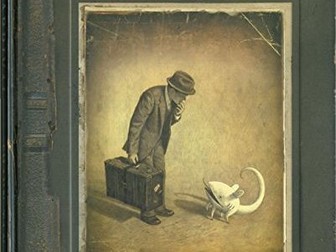
Week by Week Planning and outline resources for The Arrival by Shaun Tan. Graphic Novel The Arrival tells a universal story of immigration. The story is about a man leaving his home to find work and support his family, whose home has apparently become unsafe. In the new land, the man goes through a lengthy administrative process and manages to find a small living space.
What can we learn from religions about deciding what is right and wrong LKS2Quick View
HelenTrickey

What can we learn from religions about deciding what is right and wrong LKS2

(0)
This is a full scheme of work with all resources. Smart notebook teaching slides Task sheets for pupils. Differentiation for SEND where appropriate This investigation enables pupils to think about guidance that people follow to help them live their lives. It starts off by looking into the Golden Rule and how it is seen in Christianity, Humanism and Judaism. Pupils then look at guidance for living from all three of these worldviews, examining how Christians, Humanists and Jewish people might decide what is ‘right’. The unit moves on to look at teachings about temptation in Christianity and Judaism, helping pupils to think about what religious stories show about temptation. Finally, pupils investigate the life of a religious figure, looking at how teachings from religion may affect the actions of a believer.
MFL French Progression in Skills Document KS2Quick View
HelenTrickey

MFL French Progression in Skills Document KS2

(0)
A progression in skills overview of French for KS2. This overview outlines objectives, key skills and knowledge to be covered term by term to ensure there is a clear progression throughout KS2. During a recent ofsted inspection the document which provides an overarching overview of the curriculum intent within this subject was heavily praised.
Venus Flytrap Descriptive WritingQuick View
HelenTrickey

Venus Flytrap Descriptive Writing

(0)
GENRE: Short Piece of Descriptive Writing CONTEXT: Linked to learning about the rainforest. Using A David Attenborough short clip as a stimulus the children write a short descriptive peice through the eyes of the venus flytrap. Not only does this peice elicit some really good descriptive phrases and higher level vocabulary but it is amazing for getting the children to master the impact of variation in sentence length. It also gives an opportunity to use a range of punctuation independently. I have used some of the lessons before in observation and always received excellent feedback. Children love the clip and ask to watch it over and over again.
Waterfall ArtQuick View
HelenTrickey

Waterfall Art

(0)
Sketch, pastel or paint a waterfall, colourful slide give lots of examples of beautiful waterfalls easily achievable with step by step tutorials along the way. Ideal as an art lesson linked to The Water Cycle.