Language Analysis Lesson - Roald Dahl ExtractQuick View
Kstockton_

Language Analysis Lesson - Roald Dahl Extract

(0)
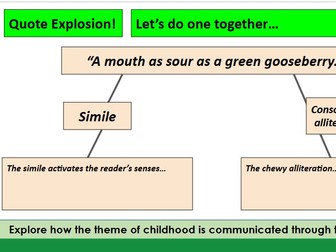
This 1-hour lesson teaches students how to use analyse new extracts through reading a Roald Dahl extract for techniques. This lesson should fit effortlessly into your own GCSE English Language preparation SOW. The aim of this lesson is to get students to cooperatively generate inferences from an extract they have not previously read. Target group: Key Stage 3 (Years 7–9), but easily adaptable for upper KS2 or KS4. Lesson Includes: Handout A4 sheet with extract Differentiated practice tasks with opportunities for live modelling. Engaging main task through paired work and whole class cooperation NB: Use of mini-whiteboards are encouraged for this lesson
Developing Inferences using Song: Love Armed by Aphra BehnQuick View
Kstockton_

Developing Inferences using Song: Love Armed by Aphra Behn

(0)
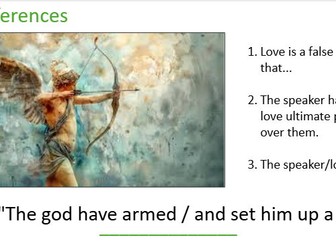
This 1-hour lesson teaches students how to generate inferences from Aphra Behn’s poem Song: Love Armed. It uses sentence starters and leveled models as well as explanation what makes a good inference. It addresses both inference from language and structure techniques. This lesson should fit effortlessly into your own preparation for Literature GCSE poetry modules. Target group: Key Stage 4 (Years 10-11), but easily adaptable for KS3.
London by William Blake -  Context, Poem Understanding & Introducing AnalysisQuick View
Kstockton_

London by William Blake - Context, Poem Understanding & Introducing Analysis

(0)
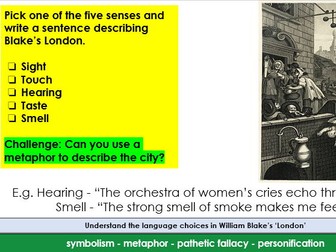
This 1-hour lesson teaches students the context of London in the 18th century, explains the language of the poem to improve student’s understanding of the text, and introduces using the five senses to generate language analysis. It uses mixed activities, chunked learning and images to provoke responses. This lesson should fit effortlessly into your own preparation for GCSE poetry modules. Target group: Key Stage 4 (Years 10-11), but easily adaptable for KS3.
Lady Macbeth - Act 1 Scene 5 - Analysing SoliloquyQuick View
Kstockton_

Lady Macbeth - Act 1 Scene 5 - Analysing Soliloquy

(0)
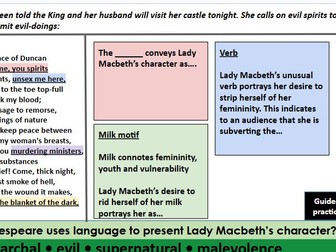
This 1-hour lesson teaches students how to understand and analyse Lady Macbeth’s ‘unsex me here’ soliloquy from Macbeth, Act i, Scene v. It uses chunked questioning, sequenced learning, images and sentence starters to engage learners of all levels. It addresses both inference from language and structure techniques. This lesson should fit effortlessly into your own preparation for the Literature GCSE Shakespeare paper. Target group: Key Stage 4 (Years 10-11), but easily adaptable for KS3.
Inferences Practise - GCSE English LanguageQuick View
Kstockton_

Inferences Practise - GCSE English Language

(0)
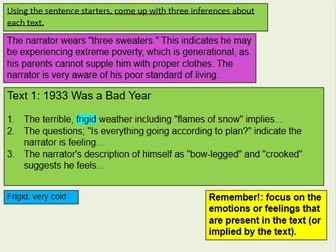
This 1-hour lesson teaches students how to generate inferences from fiction and non-fiction extracts. It uses sentence starters and leveled models as well as explanation what makes good inferences. Plenary activity encouraging paired learning. This lesson should fit effortlessly into your own preparation for GCSE modules. Target group: Key Stage 4 (Years 10-11), but easily adaptable for KS3. Plenary activity encouraging peer review and active listening.
Teaching Subordinate Clauses using Gothic Fiction - KS3Quick View
Kstockton_

Teaching Subordinate Clauses using Gothic Fiction - KS3

(0)
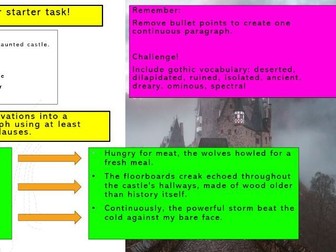
This 1-hour lesson teaches students how to use subordinate clauses effectively through the engaging and memorable task of writing a piece of Gothic fiction. This lesson should fit effortlessly into your own Gothic Fiction modules. The lesson blends grammar instruction with imaginative writing, helping students see punctuation as a tool for clarity and impact. Target group: Key Stage 3 (Years 7–9), but easily adaptable for upper KS2 or KS4. Lesson Includes: Handout A4 sheet with differentiation Clear explanations of how to implement subordinate clauses, including common misconceptions Engaging starter task using sound immersion Differentiated practice tasks with model answers A creative writing activity: students write their own piece of Gothic fiction Engaging main task through horror movie clip (age appropriate and not too frightening) Descriptive language focus, with prompts for imagery, tone, and stylistic devices (e.g., alliteration) Plenary activity encouraging peer review and active listening. NB: Use of mini-whiteboards are encouraged for this lesson
Writing Like a Museum Curator - Using Colons and Semicolons in Descriptive Writing / KS3Quick View
Kstockton_

Writing Like a Museum Curator - Using Colons and Semicolons in Descriptive Writing / KS3

(0)
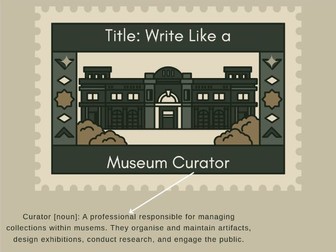
This 1-hour lesson teaches students how to use colons and semicolons effectively through the engaging and memorable task of writing a museum plaque for an artefact of their choice. The lesson blends grammar instruction with imaginative writing, helping students see punctuation as a tool for clarity and impact. Target group: Key Stage 3 (Years 7–9), but easily adaptable for upper KS2 or KS4. Lesson Includes: Clear explanations of how to use colons and semicolons, including common misconceptions Differentiated practice tasks with model answers A creative writing activity: students write their own museum plaque, applying what they’ve learned Descriptive language focus, with prompts for imagery, tone, and stylistic devices (e.g., alliteration) Plenary activity encouraging peer review and active listening Learning Objectives: By the end of the lesson, students will be able to: Understand and explain the correct use of colons and semicolons Apply these punctuation marks accurately in their own writing Use descriptive language to engage a reader and evoke tone Write a concise, informative and imaginative museum-style text