If you have ever finished a school day wondering how to better reach that one student who cannot sit still, loses focus mid sentence, or seems to be working twice as hard as everyone else just to keep up, this guide was written with you in mind. It is a full, practical resource for understanding A.D.H.D and turning that understanding into real classroom strategies you can use tomorrow.
What’s Included
This is a comprehensive 6.3 page guide for educators, broken into five clear sections:
Understanding A.D.H.D, including what it is, common symptoms in the classroom, co-existing conditions like anxiety and learning disabilities, and the most common myths worth clearing up
Building a Supportive Environment, covering classroom setup, routines, inclusive classroom rules, and how to create calm down spaces for emotional regulation
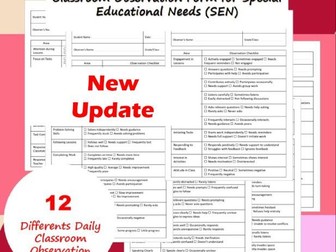
Watching a student find their voice is one of the best parts of this job, and this set of 1.2 checklists is built to help you notice and track exactly that. Whether you’re working in a resource room, a general education classroom, or pulling small groups for S.E.L, these observation forms give you a simple, consistent way to see how students are growing in self-advocacy and confidence, one check.box at a time.
What’s Included
This bundle contains 1.2 printable checklist and tracking forms, each focused on a different piece of self-advocacy and confidence:
Self-Advocacy Skills Monitoring Checklist
Confidence Building Activities Observation Form
Self-Awareness and Strengths Checklist
Asking for Help and Support Tracker
Expressing Needs and Preferences Log
Decision-Making and Independence Checklist
Self-Esteem and Positive Self-Talk Monitoring Form
Goal Setting and Progress Tracking Checklist
Handling Feedback and Mistakes Observation Form
Peer Interaction and Speaking Up Checklist
Accommodations and Self-Advocacy Request Tracker
Personal Growth and Confidence Reflection Checklist
Each form is organized by observation area with clear checklist items and a notes column, plus space for the student’s name, date, observer’s name, and grade or class, so they’re ready to drop straight into a binder, data folder, or I.E.P progress notes.
Why Teachers Love This
These forms take something that can feel abstract, like confidence or self-advocacy, and break it into specific, observable behaviors you can actually check off. That makes them useful for progress monitoring, I.E.P goal tracking, R.T.I documentation, or just keeping a running record of how a student is doing over the course of a semester. Special education teachers, school counselors, S.L.P.s, and general education teachers all use these in slightly different ways, which is part of what makes the set so flexible.
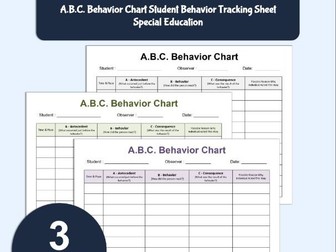
This pack provides clear A.B.C. Behavior Charts designed for SEN and Autism support to help teachers document antecedents, behaviors, consequences, and possible reasons.
This resource includes structured templates that make behavioral data collection more consistent and useful for decision-making. Each chart is intentionally simple, readable, and practical for daily use in classrooms, support rooms, and intervention settings. It is well-suited for individual students, small groups, and any situation where understanding the function of behavior is essential.
You will receive a complete set of A.B.C. Behavior Charts in both printable and editable formats. The pack includes one fully completed example showing how to document a real scenario using the A.B.C. framework, including Time and Place, Antecedent, Behavior, Consequence, and Possible Reasons for the students actions
This example helps teachers understand how to write clear, objective notes that can be shared during parent meetings, I.E.P discussions, or consultations with support staff.
In addition, you will find multiple blank versions of the A.B.C. chart with identical structure. Each version provides sections for Time and Place, Antecedent, Behavior, Consequence, Possible Reason, and Student, Observer, and Date fields, allowing you to print as many copies as needed for ongoing data collection
These charts are suitable for use in early years, primary, and special education settings. They support Functional Assessments, daily incident tracking, communication with parents and therapists, and documentation for I.E.P.s. The A.B.C. format helps teachers identify patterns, understand triggers, and plan interventions that respond to the function rather than the surface-level incident.
The resource can be used during lessons, transitions, unstructured social times, or targeted intervention sessions. Because the layout is consistent, all staff members can contribute to the same documentation system, making tracking more reliable and helping teams make informed decisions.
You will receive the files in both P.D.F format for printing and P.P.TX format for typing directly into the template, depending on your preferred method of use.
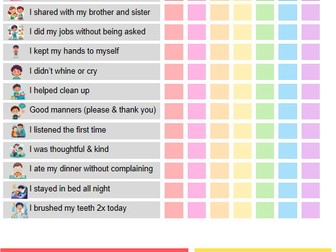
The Engaging Behavior Chart for Kids is an effective tool designed to help children develop positive behaviors while making the learning process fun. This brightly colored, interactive chart is perfect for both parents and educators looking to encourage good habits and track progress.
Key Features:
Daily Tracking: Organized with check boxes for each day of the week, making it easy to follow and mark progress.
Positive Reinforcement: Features a rewards section to motivate and encourage children towards sustaining good behavior.
Comprehensive Coverage: Monitors a variety of behaviors from sharing and brushing teeth to staying in bed and more.
Clear Guidelines: Includes a “Things to Avoid” section to clearly define undesirable behaviors.
Customizable: Offers spaces to personalize with a child s name and tailored rewards, enhancing the personal connection.
Benefits:
Fun and Interactive: Designed to make behavior management an engaging activity for children, increasing their involvement and enthusiasm.
Effective Tool: Assists in reinforcing positive behavior and correcting the negative, fostering better habits.
Versatile Use: Ideal for use in homes, classrooms, or therapeutic settings, it serves as a versatile resource for parents, teachers, and therapists alike.
Introduce a structured yet enjoyable approach to behavior management with our Engaging Behavior Chart for Kids. It’s a pivotal resource for creating a supportive environment that promotes good habits and personal growth in children.
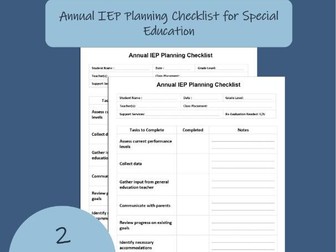
A professional Annual I.E.P Planning Checklist designed to help special education teachers stay organized and compliant during yearly I.E.P meetings.
This printable Annual I.E.P Planning Checklist is an essential tool for special education teachers preparing for I.E.P review meetings. It provides a clear, step-by-step structure to document student information, assess current performance levels, review goals, gather input from general education teachers, and ensure parent communication is completed on time.
Each section helps teachers collect and organize the most important details needed for a thorough and compliant I.E.P process. The checklist includes space for notes, completion tracking, and documentation of re-evaluation needs.
Perfect for classroom teachers, case managers, and support staff, this form saves time and ensures that every I.E.P meeting is fully prepared and professional.
Included in this download:
Printable one-page I.E.P planning checklist (P.D.F and Power Point formats)
Editable fields for teacher customization
Organized layout with check.boxes and notes columns
Sections for goals, accommodations, and parent communication
Recommended for:
Special education teachers
Case managers
School psychologists
I.E.P team members
File types: P.D.F and editable Power Point (.p.p.t.x)
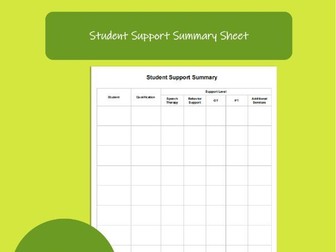
A clear, one-page Student Support Summary form to document services, accommodations, and support levels for special education students.
This Student Support Summary is a professional, easy-to-use form that helps special education teachers and case managers organize critical information about each students support needs. Its designed to provide a clear overview of qualifications, support levels, and related services such as speech therapy, occupational therapy (OT), physical therapy (PT), and behavioral support.
Teachers can use this summary sheet during I.E.P meetings, data collection, or student reviews to ensure that all services and supports are accurately tracked and communicated across the team. The simple layout makes it ideal for keeping in student binders, caseload folders, or shared team files.
Included in this download:
One-page Student Support Summary form (P.D.F and Power Point formats)
Editable fields for customization
Sections for student qualification, service levels, and additional supports
Organized structure for quick reference during meetings
Recommended for:
Special education teachers
Case managers
Related service providers (speech, OT, PT, behavior specialists)
I.E.P and support teams
File types: P.D.F and editable Power Point (.p.p.t.x)
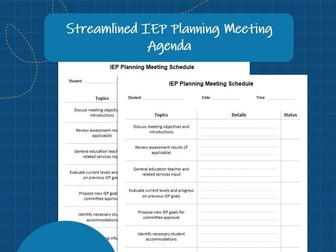
A structured I.E.P Planning Meeting Agenda to guide teachers and teams through each step of the I.E.P process with clarity and organization.
The I.E.P Planning Meeting Agenda is a professional form designed to help special education teachers, case managers, and I.E.P team members plan and conduct effective I.E.P meetings. It outlines each major discussion topic, from introductions and assessment reviews to setting new goals, identifying accommodations, and planning placements and services for the upcoming year
I.E.P Planning Meeting Agenda
Each section includes space for detailed notes, helping staff document input from general education teachers, related service providers, and families. The checklist format ensures no important step is missed during the meeting and that all decisions are clearly recorded.
Included in this download:
One-page I.E.P Planning Meeting Agenda (P.D.F and Power Point formats)
Editable fields for student information, meeting details, and notes
Organized discussion topics with space for status updates
Clean, printable layout suitable for documentation and record-keeping
Recommended for:
Special education teachers
Case managers
Related service providers
I.E.P and school support teams
File types: P.D.F and editable Power Point (.p.p.t.x)
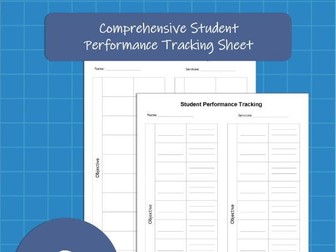
A printable Student Performance Tracking form to document objectives, progress dates, and services for special education students.
The Student Performance Tracking sheet is a practical and professional tool designed to help special education teachers, therapists, and support staff monitor student progress throughout the year. This easy-to-use form includes structured sections for objectives, service types, and progress updates, allowing educators to maintain clear records and align data with I.E.P goals
Student Performance Tracking
Ideal for classroom use, therapy sessions, or progress review meetings, this tracker supports consistent data collection and helps teachers stay organized when preparing reports or updates.
Included in this download:
One-page Student Performance Tracking form (P.D.F and Power Point formats)
Editable layout for objectives, dates, and progress notes
Clean and structured design for daily or weekly updates
Perfect for I.E.P goal tracking, service documentation, or data collection binders
Recommended for:
Special education teachers
Speech, OT, and PT providers
Case managers and paraprofessionals
I.E.P and data collection teams
File types: P.D.F and editable Power Point (.p.p.t.x)
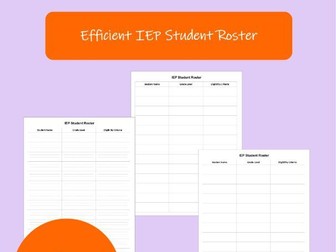
An organized I.E.P Student Roster form to help special education teachers track students, grade levels, and eligibility criteria throughout the school year.
The I.E.P Student Roster is a simple yet powerful tool for special education teachers to keep track of all students on their caseload. This one-page roster provides a clear structure for listing each students name, grade level, and eligibility criteria, helping teachers maintain accurate records for compliance and planning.
Perfect for organizing I.E.P information at a glance, this form can be printed, edited, or shared digitally to streamline daily management tasks. Its ideal for use in I.E.P binders, teacher planners, or data notebooks.
Included in this download:
One-page I.E.P Student Roster (P.D.F and Power Point formats)
Editable layout for quick customization
Sections for student names, grade levels, and eligibility categories
Clean, professional design for classroom or administrative use
Recommended for:
Special education teachers
Case managers
School administrators
Support staff and I.E.P teams
File types: P.D.F and editable Power Point (.p.p.t.x)