 Quick View
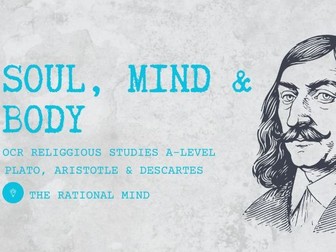
Soul, Mind & Body OCR A-Level Religious Studies Philosophy Revision
An exploration of the nature of the soul, mind and body, including dualism, materialism, and debates about identity, consciousness and life after death.
This topic explores philosophical and religious debates about what it means to be human, focusing on the relationship between the soul, mind and body. It examines classical and modern theories, alongside religious views about life, death, and personal identity.
The Concept of the Soul
The soul as the essence or animating principle of a human being
Religious understandings of the soul (particularly within Christianity)
The soul as the seat of identity, personality, and morality
Distinction between soul, mind, and body
Plato and the Soul
Plato’s dualistic view of body and soul
The soul as immortal and pre-existent
The tripartite soul: reason, spirit, appetite
The soul’s imprisonment in the body and its release at death
Influence on later religious thought
World of the forms and Plato’s cave
Aristotle and the Soul
Rejection of Plato’s dualism
The soul as the form of the body
Different types of soul: Vegetative (plants), Sensitive (animals) and Rational (humans)
The soul as inseparable from the body
Mind-Body Dualism
René Descartes’ substance dualism
Problems with interaction between mind and body
Materialist Views
The view that only physical matter exists
Mind as a product of brain processes
Challenges to belief in an immaterial soul
Type-Identity Theory
Implications for life after death and personal identity
Dawkins’ criticisms
Gilbert Rule and category error and the ghost in the machine
Life After Death
Resurrection vs immortality of the soul
Religious views on the afterlife
Philosophical problems of personal identity over time
Evaluation and Debate
Strengths and weaknesses of dualism and materialism
Whether humans can exist without a body
The relationship between science, philosophy, and religion
Is belief in the soul coherent in a modern scientific worldview?
Essay questions and guide to answering