


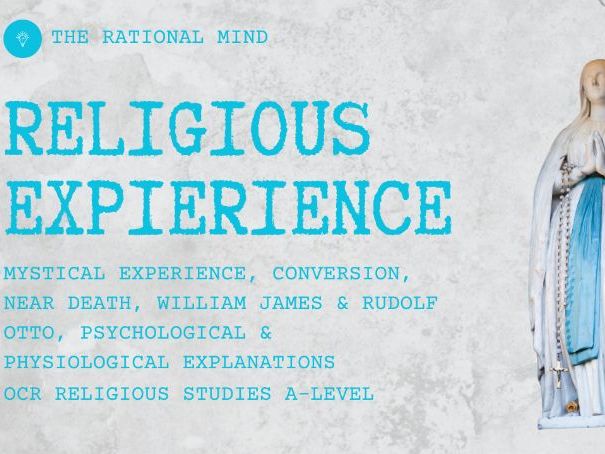
An exploration of religious experience, including visions, conversion, mysticism and challenges to their validity and interpretation.
This topic explores the nature, types, and validity of religious experience, examining how such experiences are understood, interpreted, and evaluated within philosophy of religion. Students consider whether religious experiences provide credible evidence for the existence of God.
- What Is Religious Experience?
- Definition of religious experience as an encounter with the divine or transcendent
- Religious experience as personal, subjective, and often transformative
- Distinction between public and private experiences
- Types of Religious Experience
a. Visions
Corporeal visions – physical appearances seen with the senses
Imaginative visions – experienced through the mind or imagination
Intellectual visions – non-sensory awareness of divine truth
Examples from religious traditions (e.g. biblical visions and modern day examples)
b. Conversion Experiences
- Sudden conversion (e.g. St Paul)
- Gradual conversion
- Psychological and emotional dimensions
- Near death conversions
c. Mystical Experiences
- Union with the divine or ultimate reality
- Ineffability, transcendence, and unity
- William James’ features of mystical experience: Ineffability, Noetic quality, Transiency and Passivity
- Characteristics of Religious Experience
- William James’ criteria for genuine religious experience
- Rudolf Otto’s explanation of religious experiences
- The role of emotion, perception, and interpretation
- The impact of religious experiences on belief and behaviour
- Arguments in Favour of Religious Experience
- The principle of credulity (Swinburne): we should trust experiences unless we have reason not to
- The principle of testimony: we should trust others’ reports of experience
- Religious experiences as cumulative evidence for belief in God
- Challenges and Criticisms
- Psychological explanations (e.g. Freud, Jung)
- Physiological explanations (brain states, drugs, illness) with examples such as Persiger’s helmet.
- Cultural conditioning and expectation
- Conflicting religious experiences across traditions
Essay questions and brief outline guidance in answering.
Get this resource as part of a bundle and save up to 22%
A bundle is a package of resources grouped together to teach a particular topic, or a series of lessons, in one place.
Something went wrong, please try again later.
This resource hasn't been reviewed yet
To ensure quality for our reviews, only customers who have purchased this resource can review it
Report this resourceto let us know if it violates our terms and conditions.
Our customer service team will review your report and will be in touch.
£5.00