 Quick View
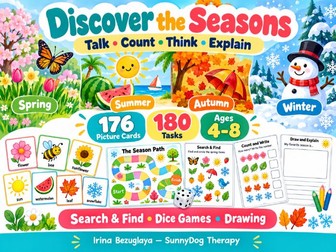
Discover the Seasons 176 Picture Cards, Search-and-Find Activities and Dice Games
Discover the Seasons
176 Picture Cards, Search-and-Find Activities and Dice Games for Talking, Counting and Explaining
Why might an umbrella belong to more than just autumn? Which clue points to winter? And what changes when spring arrives?
This versatile activity pack helps children explore the four seasons through pictures, conversations and varied tasks. They search, count, sort, draw and tell stories — while learning to explain their choices.
For children aged approximately 4–8, with adult guidance. Suitable for nursery, preschool, early primary school, language development and shared activities at home.
What’s Included
176 numbered picture cards across 11 A4 sheets for cutting out, sorting and storytelling.
9 ways to play with the picture cards, including guessing the season, making connections, comparing clues and telling stories.
16 different search-and-count pictures, with an answer key.
19 additional activity sheets featuring season cards, sorting and thinking grids, drawing tasks, sequencing activities and three more search-and-find pictures.
6 colourful activity grids with 180 tasks in total, covering spring, summer, autumn, winter, weather and the seasons.
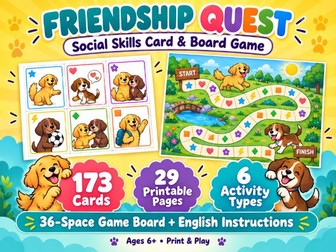
A 48-space game path, in both colour and black and white.
Detailed instructions in German, sample answers, a complete picture-card directory and a quick-start overview.
More Than Naming the Seasons
The activities encourage children to look closely and think further:
✓ Expand vocabulary and build complete sentences
✓ Find objects, count them and compare quantities
✓ Recognise similarities and differences
✓ Put changes into a meaningful sequence
✓ Choose clues and explain decisions
✓ Explore and discuss other possibilities
There is room for different answers: a butterfly may fit more than one season, and a watermelon can also be bought in winter. What matters is how the child explains their idea.
Flexible and Easy to Prepare
Start with a few cards or a single activity sheet. Younger children can name and point to objects; older children can compare several clues, explain connections or invent a story.
The pack is suitable for individual work, small groups, learning stations and short sessions focused on specific skills. The picture-card games can be played without dice. For the game path, you will need a standard six-sided die and small playing pieces.
Format
A digital download pack supplied in one ZIP file: PDFs for A4 printing, editable instructions in Word format and individual PNG files. Many of the picture resources are in black and white and can also be coloured in.
No physical product will be shipped.
Created by Irina Bezuglaya — SunnyDog Therapy
Psychologist, speech therapist and dog-assisted therapy specialist.
For personal use or use with one class, therapy group or your own professional clients. The digital files may not be shared or resold.