


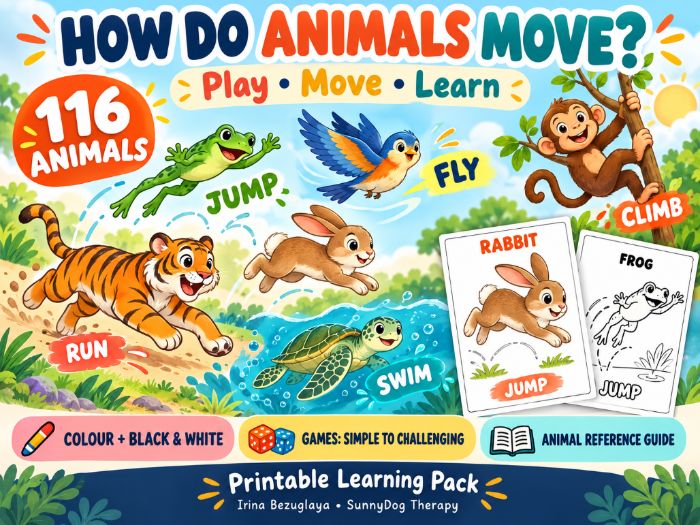
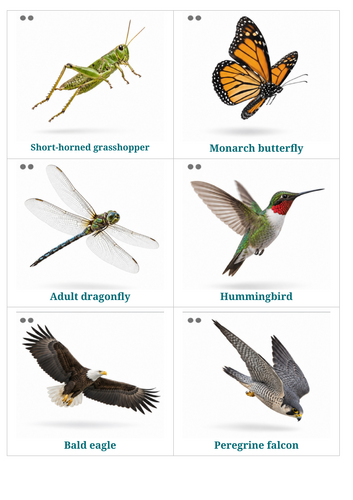
How Do Animals Move? — 116 Animals for Play, Learning and Language Development
How does a tiger move? What about a capybara? Can the same animal walk, run and swim? Turn learning about animals into an engaging game in which children explore pictures, name movements, act them out and explain their choices.
“How Do Animals Move?” is a printable resource that combines learning about the natural world, movement activities, language development and English practice. One pack, many activities — from naming a simple action to comparing animals and describing how they move!
What’s included?
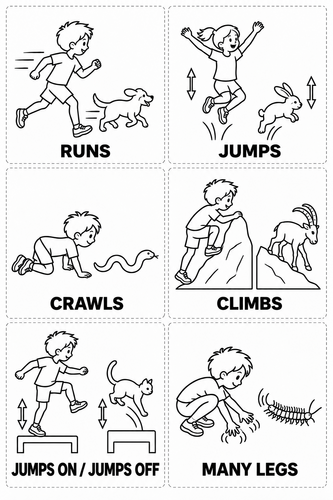
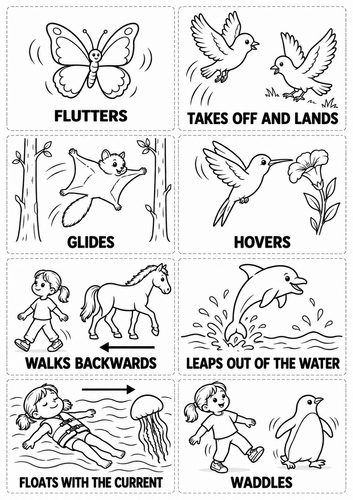
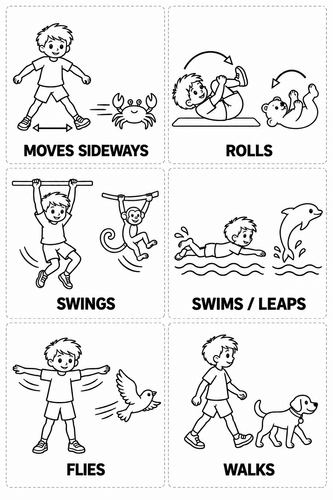
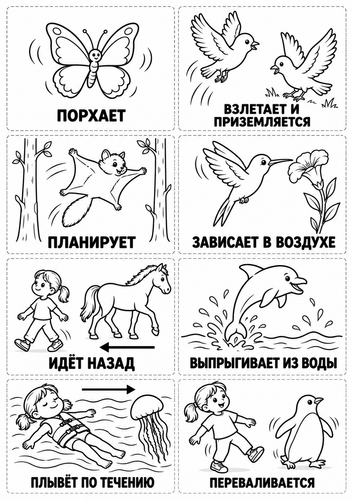
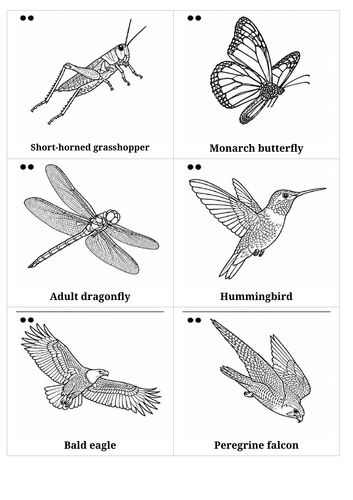
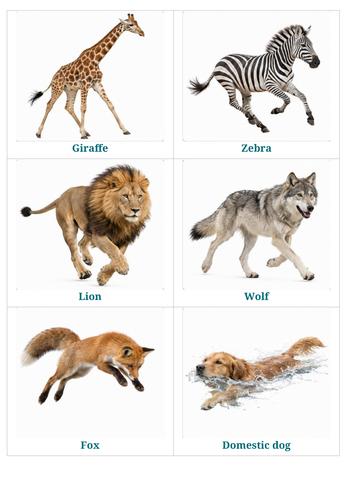
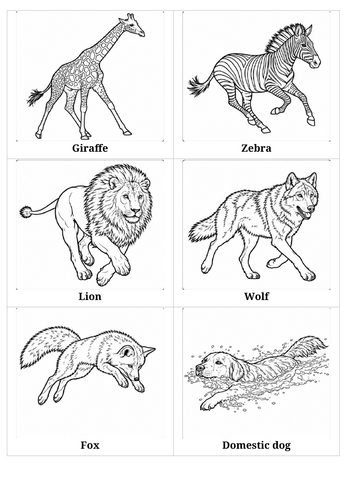
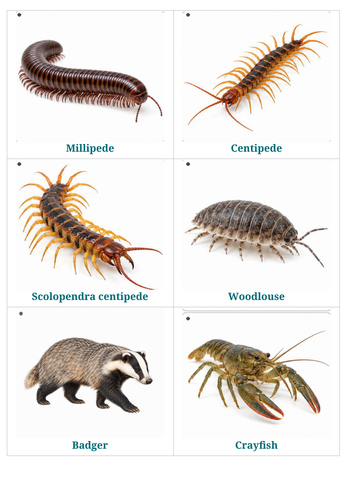
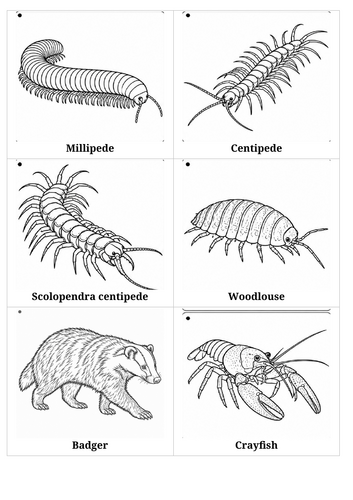
- 116 animals in colour and black and white — for picture-based games, colouring and creative activities.
- Game rules and variations, from simple to more challenging — to help you choose activities that suit the children’s skill levels.
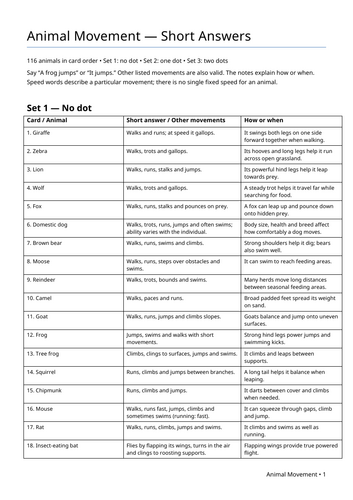
- A brief animal reference guide — to support learning and discussions about how animals move.
What can you do with the pack?
In science and nature activities, children discover familiar and unusual animals and explore how they move: walking, running, jumping, crawling, flying, swimming and climbing. Questions such as “Can this animal move in more than one way?” and “What helps it swim or climb?” encourage children to compare animals and explain their thinking.
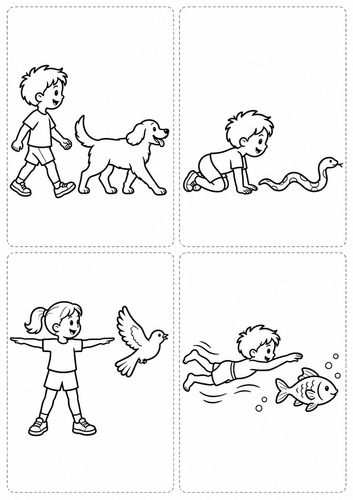
In movement games, children choose a picture and demonstrate an action: waddle like a penguin, stretch like a cat or flap their arms like a bird. Other players guess the animal or name the movement. Activities can progress from one simple action to a sequence that others watch, remember and repeat.
For language development, the pictures support sentences, descriptions and short stories: “A frog jumps”, “A bird flies”, or “Both animals can swim, but they move differently on land”. Children can describe an animal’s movements for others to guess, ask questions and discuss answers in pairs.
In English lessons, the pack helps children practise animal names and action verbs, ask questions and give complete answers:
How does a frog move? — A frog jumps and swims.
Can a tiger swim? — Yes, it can!
Children can progress from individual words to sentences, then to short descriptions of what their chosen animal can do.
The black-and-white pictures are ideal for colouring, creating a personal animal movement book and reinforcing learning after the game.
Where can you use it?
In preschool and primary school, English lessons, language development groups, movement sessions, clubs and at home. The pack works well for individual activities, pair work, small groups and whole-class games.
Print the materials, choose a difficulty level and get moving! First, children name the actions; next, they demonstrate and compare them; then, they describe how animals move in English.
Something went wrong, please try again later.
This resource hasn't been reviewed yet
To ensure quality for our reviews, only customers who have purchased this resource can review it
Report this resourceto let us know if it violates our terms and conditions.
Our customer service team will review your report and will be in touch.
£2.00