A lesson powerpoint which, although it was designed to complement the Year 9 Mindset booklet ("High challenge, low threat") could also be used as a stand alone lesson exploring feedback and resilience with KS4 students.
This is a booklet for year 9 students in P.S.H.E. with a focus on looking ahead to KS4 and how the Growth mindset can help us to move out of our comfort zone and into the learning zone, looking at the role of feedback in long term success. Looking at success stories such as Jay-Z and Michael Jordan this unit explores how failure is the necessary route to success and mistakes are to be celebrated. Students are also asked to consider what a “High challenge, low threat” learning environment looks like and how they could take more risks with their learning to increase motivation and self-belief. Key concepts such as “marginal learning gains” are revisited alongside the use of Aesop’s fable “The tortoise and the hare” as a way of understanding how competition, perfectionism and comparison with others can be detrimental to long term success and fulfilment of potential.
NB - This booklet forms part of a spiral curriculum year 7 through to year 9 to help a wide range of challenging and disadvantaged students build their resilience to perceived failure within the school system, and increase their window of tolerance towards assessments and work within the classroom. It was created following training and support given by the Psychology department and Research Team at Portsmouth University, led by researchers in the field within UK cognitive & educational Psychology and within the context of “Changing Mindsets” research funded by the Education Endowment Fund and The National College of Teaching and Learning. However, the design and implementation within these resources is all my own creation.
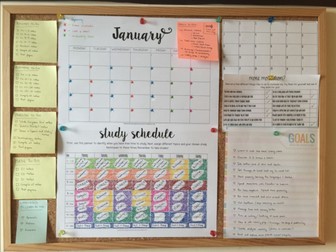
This resource is designed for use after a mock week/previous exam week as part of a Study SKills Masterclass with a teacher of Psychology who could share knowledge around research into memory and the most recent insights from neuroscience relating to effective revision techniques, explaining the theory underlining different techniques. It can be used in a drop-down day or as part of a series of PSHE lessons for reflection as well as forward planning for a future exam week.
This booklet is for Year 8 students in P.S.H.E. lessons, building on prior learning from the Year 7 unit and booklet.
The learning objectives are to help students embed their existing knowledge and understanding in their academic studies, beginning to think ahead to the academic pressure they might face in the exam years in KS4. This booklet focuses on how many people might hold a mixture of Growth and fixed mindsets seeking to demonstrate how students can move themselves towards a Growth-dominant mindset using a range of athletes and famous people to illustrate how performance can decline or improve based upon how we think about our learning exploring the role of mistakes, failure, grit and determination by investigating how the British cycling team have inspired the concept of “marginal learning gains” and developing understanding of the brain as a learning machine with particular focus on the process of forming neural connections.
NB - This booklet forms part of a spiral curriculum year 7 through to year 9 to help a wide range of challenging and disadvantaged students build their resilience to perceived failure within the school system, and increase their window of tolerance towards assessments and work within the classroom. It was created following training and support given by the Psychology department and Research Team at Portsmouth University, led by researchers in the field within UK cognitive & educational Psychology and within the context of “Changing Mindsets” research funded by the Education Endowment Fund and The National College of Teaching and Learning. However, the design and implementation within these resources is all my own creation.
This is an introductory unit and booklet for P.S.H.E. that helps students understand the key tenets of the Growth Mindset, ideally planned an hour a week for year 7 (or any year group that has no understanding of Fixed and Growth Mindsets) to show them how mindset impacts on learning and achievement).
Learning objectives are to understand how mindset can influence learning, achievement and success in many areas of life, and to enable students to identify ways of thinking that can hold them back and prevent them from achieving their potential.
NB - This booklet forms part of a spiral curriculum year 7 through to year 9 to help a wide range of challenging and disadvantaged students build their resilience to perceived failure within the school system, and increase their window of tolerance towards assessments and work within the classroom. It was created following training and support given by the Psychology department and Research Team at Portsmouth University, led by researchers in the field within UK cognitive & educational Psychology and within the context of “Changing Mindsets” research funded by the Education Endowment Fund and The National College of Teaching and Learning. However, the design and implementation within these resources is all my own creation.
These booklets form part of a spiral curriculum year 7 through to year 9 to help a wide range of challenging and disadvantaged students build their resilience to perceived failure within the school system, and increase their window of tolerance towards assessments and work within the classroom. These booklets and the unit of work (see separate resources such as power points and word documents) was created following training and support given by the Psychology department and Research Team at Portsmouth University, led by researchers in the field within UK cognitive & educational Psychology and within the context of “Changing Mindsets” research funded by the Education Endowment Fund and The National College of Teaching and Learning. However, the design and implementation within these resources is all my own creation.
This resource is an assessment designed to align with the year 8 Mindset booklet and accompanying powerpoint lessons.
This assessment sheet should be paired with other resources entitled “Year 8 Mindset” and any Reflection style resources to enable students to discuss and consider opportunities for application of the learning across the rest of the academic year and across all of their learning.


 Quick View