


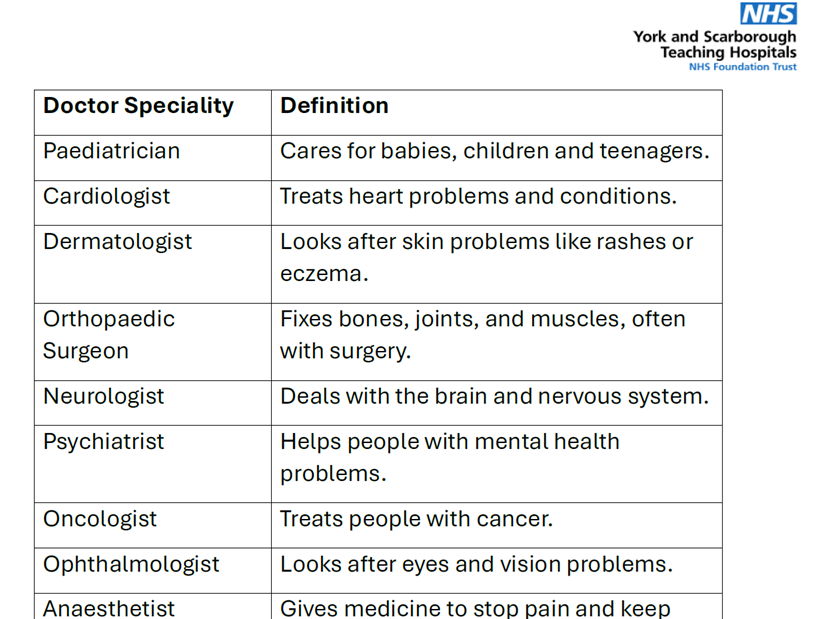
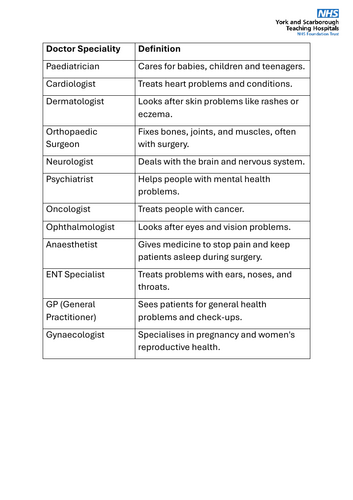
A cut and stick matching activity for KS2 students which introduces the different types of doctors. This is a good opportunity to discuss the range of people who help us when we are sick and to explore professions in healthcare beyond what most students have personally experienced.
There are many different types of doctors in the NHS. There are 4 main types of doctors in the NHS: General Practitioners (GPs), Medical Doctors, Surgeons, and then people who have done a PhD. This matching activity focuses on the patient-treating type of doctor, rather than the academic kind!
A General Practitioner is the doctor most of us have had the most interaction with. They are well trained to know a little bit about a lot of problems, and are the first port-of-call for patients with less serious problems.
Medical doctors specialise in internal medicine - they normally specialise in a part of the body (e.g. cardiologists specialise in the heart) or illness (e.g. oncologist specialise in cancer). If the doctor is an ‘-ologist’, they are likely a medical doctor.
Surgeons do the slicing and dicing! They are in the operating theatre, completing the surgeries. Like medical doctors, they will specialise in a particular type of surgery or doing surgery on a particular part of the body.
Although it is tempting to call these doctors’ “specialities”, the term is actually “specialties”. “Specialty” is the term for a specific branch of medicine. Although the doctors have specialised in the area, and that area is their ‘speciality’, the noun form of the term is ‘specialty’.
…Confusing, we know.
Something went wrong, please try again later.
This resource hasn't been reviewed yet
To ensure quality for our reviews, only customers who have downloaded this resource can review it
Report this resourceto let us know if it violates our terms and conditions.
Our customer service team will review your report and will be in touch.
£0.00