


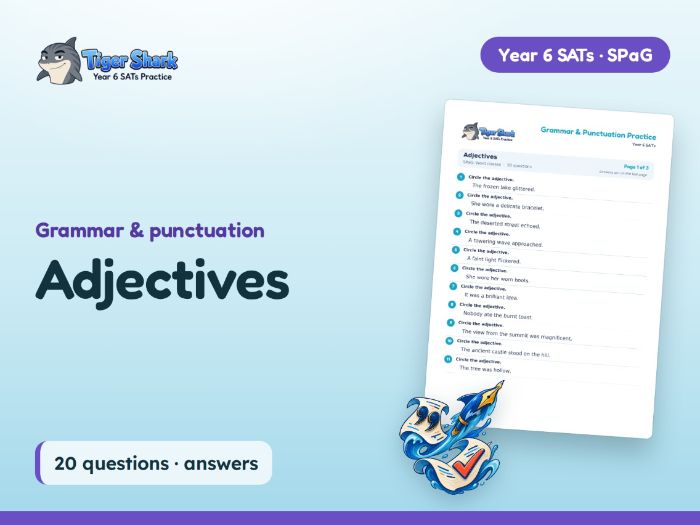
Year 6 SATs SPaG worksheet on adjectives: 20 questions in the style of the SATs, with answers. Free PDF.
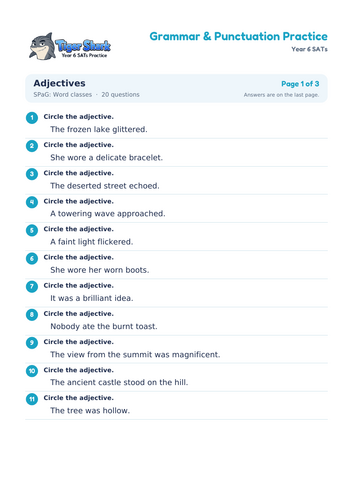
3-page A4 PDF from the Tiger Shark Education question bank (Word classes): two pages of questions (circle or underline) and an answer page. Example questions: Circle the adjective. The frozen lake glittered. / Circle the adjective. She wore a delicate bracelet.
What is an adjective? An adjective is a word that describes a noun, giving more information about it: a gigantic wave, the old house. Adjectives can come before the noun (attributive) or after a verb such as is or seems (predicative): The sky was grey. They can also be compared using -er and -est, or more and most (taller, most beautiful). In the SATs, children circle adjectives and sometimes need to identify them after a verb.
Common mistakes and tips: The most common error is missing predicative adjectives, which come after the verb (The soup tasted salty). Children also mistake adverbs for adjectives, or think that any ‘describing word’ is an adjective even when it describes a verb. Ask pupils which noun the word is describing; if there isn’t one, it may be an adverb. Numbers and possessives (three, my) are determiners in the test, not adjectives, which surprises many children.
Questions on this topic appear often in the SATs. The skill also counts in teacher assessment of writing at the end of Year 6, so children benefit from both practice in test style and from using it in their own writing.
Ways to use this worksheet: as a lesson starter or plenary, as a quick assessment before teaching a topic, for intervention groups, or as SATs revision homework. The answer page lets children self-mark. After marking, ask pupils to write two of their own sentences using the skill, so they apply it rather than just recognise it.
Using the correct terminology: the SATs use the terms in the National Curriculum glossary, and children need to recognise them quickly. Display the key term for this topic with a clear definition and an example, and use it consistently in lessons and feedback. When children explain their answers, encourage them to use the term in a full sentence. Short, regular retrieval practice, such as a two-minute quiz on terms from previous weeks, keeps knowledge fresh across the year. Because grammar topics build on one another, gaps from earlier years cause difficulties later, so this sheet is also useful for checking that Year 6 pupils have secure foundations from Years 3 to 5.
Something went wrong, please try again later.
This resource hasn't been reviewed yet
To ensure quality for our reviews, only customers who have downloaded this resource can review it
Report this resourceto let us know if it violates our terms and conditions.
Our customer service team will review your report and will be in touch.
£0.00